
BKPM Pushes to Expand Tax Incentives for Seaweed Downstreaming
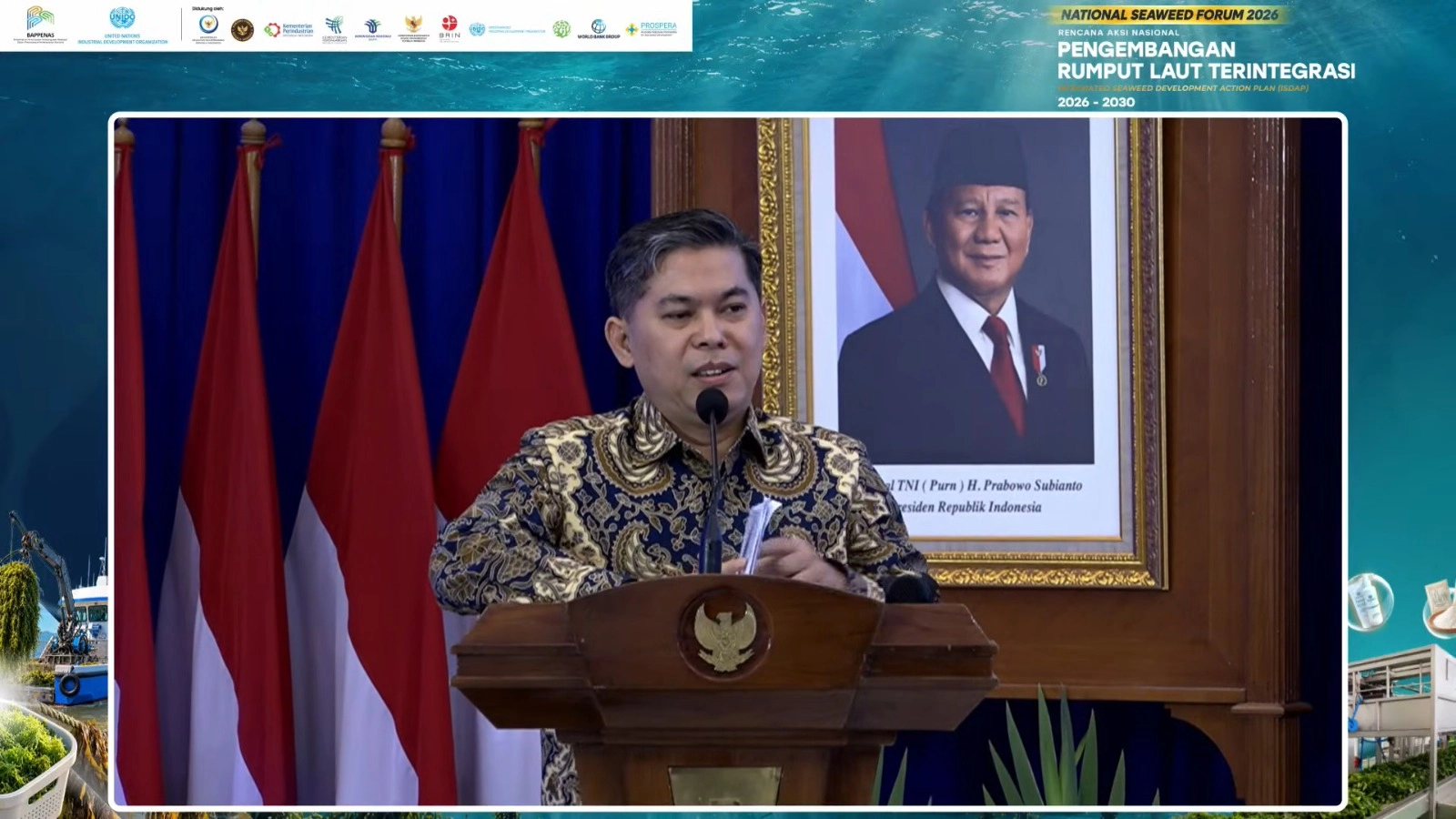
JAKARTA, DDTCNews — The Ministry of Investment and Downstreaming/Investment Coordinating Board (BKPM) is pushing to expand fiscal incentives to attract investment in the seaweed downstreaming sector.
Mohamad Faizal, the ministry’s director of fisheries and marine downstreaming, said more attractive fiscal incentives were needed to encourage investors to develop seaweed-derived products in Indonesia. At present, the tax allowance for downstream seaweed industries is available only to the refined carrageenan industry.
“We need fiscal incentive support for businesses developing seaweed. If we invite businesses, we need a sweetener to encourage investors to come and invest in Indonesia,” he said at the National Seaweed Forum 2026, as quoted on Friday (16 October 2026).
Faizal outlined three fiscal incentive schemes that could support the development of downstream seaweed industries. First, a tax allowance under Government Regulation (PP) 78/2019 provides a deduction from net income equal to 30% of investment in tangible fixed assets, including land. The deduction is spread over six years, at 5% each year.
Investors may also receive accelerated depreciation on tangible fixed assets and accelerated amortisation on intangible fixed assets acquired for the investment. Other provisions include a 10% income tax rate on dividends, or a lower rate under an applicable tax treaty, and an extension of the tax loss carry-forward period by five to 10 years, subject to the rules.
Second, import duty exemptions are available under Finance Minister Regulation (PMK) 176/2009, as amended by PMK 188/2015. The exemption covers imports of machinery, goods and materials for the establishment or development of an industry as part of an investment. It applies for two years, or four years for companies that use at least 30% locally produced machinery, subject to applicable requirements.
Third, a super tax deduction under PP 45/2019 provides a deduction from gross income of up to 200% of costs for vocational education and training, and up to 300% of costs for certain research and development activities in Indonesia. The incentive is intended to strengthen workforce skills and promote industrial research and innovation.
BKPM said the tax allowance specifically available to a downstream seaweed industry currently applies only to refined carrageenan. Extending incentives to other derivative products is therefore seen as a way to make the sector more attractive to investors.
Faizal hopes the tax facilities will eventually cover not only refined carrageenan but other seaweed-derived products as well, enabling investment in seaweed processing to grow and generate greater added value domestically.
He said seaweed downstreaming is in line with President Prabowo Subianto’s direction to expand downstream development beyond energy and minerals to agriculture and fisheries.
“Downstreaming is often associated with mining today — nickel, tin, copper and others. But we need to start shifting towards other commodities, namely plantation and fisheries commodities, especially seaweed,” he said.
Seaweed is among 15 priority downstreaming commodities listed in the 2025–2029 National Medium-Term Development Plan (RPJMN). The government is targeting Rp2.79 trillion in investment in seaweed downstreaming over that period.
BKPM data show that realised investment in seaweed downstreaming reached Rp232 billion in the first half of 2026, about 43.8% of this year’s Rp530 billion target.
Faizal said seaweed downstreaming needed to be integrated with stronger upstream production, as the availability of raw materials was essential to sustaining processing industries.
BKPM recorded 12,898 investment projects in the fisheries sector in the first half of 2026. However, their investment value was only Rp2.1 trillion, or around 0.21% of the national total of Rp1,010.6 trillion. By investment value, fisheries ranked 23rd.
Faizal said the large number of fisheries projects had not translated into substantial investment because they were relatively small in scale. Strengthening the upstream sector, he said, should help increase investment in fisheries processing, including seaweed.
Source: jawawa.id (https://jawawa.id/newsitem/bkpm-pushes-to-expand-tax-incentives-for-seaweed-downstreaming-1792140639)
Originally published by news.ddtc.co.id (https://news.ddtc.co.id/berita/nasional/1823322/bkpm-dorong-perluasan-insentif-pajak-hilirisasi-rumput-laut), translated from Indonesian