
BKPM Pushes Tin Downstreaming to Produce Industrial Chemicals
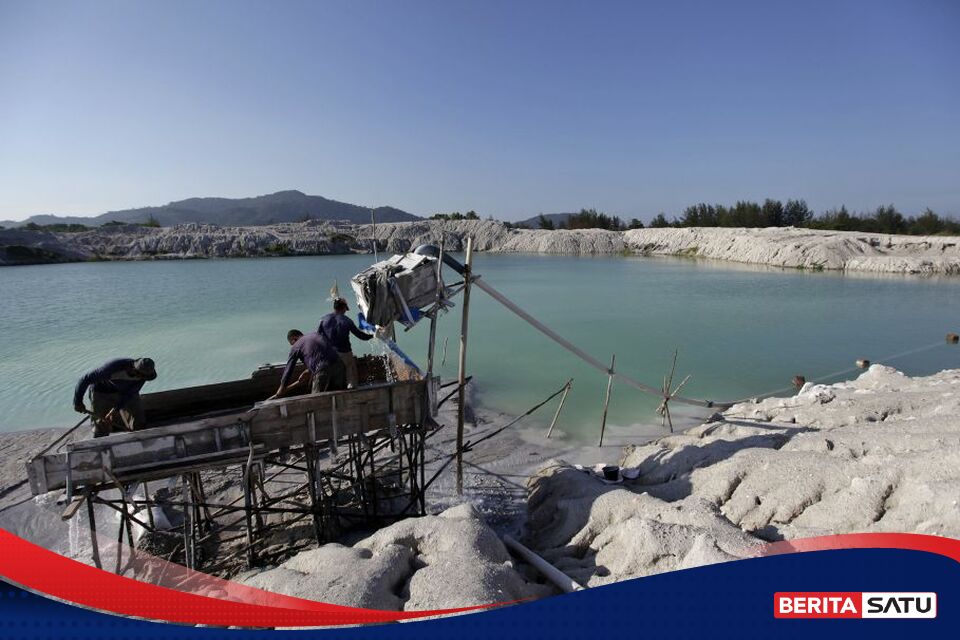
The Ministry of Investment and Downstreaming/BKPM is encouraging the development of tin-processing industries so that production does not stop at solder. The government wants downstreaming to be expanded to include tin chemicals, or tin compounds, to meet manufacturing needs, including those of bottle and equipment producers.
Heldy Satrya Putera, Deputy for Strategic Investment Downstreaming at the Ministry of Investment and Downstreaming/BKPM, said developing derivative tin products was necessary to increase domestic use of the commodity.
“We would like to see tin chemicals developed. These are needed by the bottle industry and for other equipment containing tin,” Heldy said, according to Antara on Thursday (5 November 2026).
Heldy said Indonesia has substantial resources to develop a downstream tin industry. According to his presentation, Indonesia ranks second in the world for tin reserves, with a share of about 16.3%.
He said this potential should be harnessed to build processing industries that produce higher-value goods, so that tin use is not limited to solder production.
Heldy said the development of downstream tin industries could also help drive growth in the national electronics sector. Domestic availability of raw materials could provide a basis for Indonesia to build an electronics industry capable of competing with other countries.
“The ultimate hope is that Indonesia’s electronics industry can grow rapidly compared with those of other countries, because we have all the raw materials,” Heldy said.
He cited the successful development of the nickel industry, which has helped establish a nickel-based electric vehicle battery ecosystem in Indonesia. Heldy hopes a similar development model can be applied to tin.
“Everyone talks about nickel, and even today it is an example. I hope tin can become like that too,” he said.
In terms of output, PT Timah recorded improved performance in the first half of 2026. The company produced 12,232 tonnes of tin ore, measured as Sn, up 75% from the same period a year earlier. Refined tin production stood at 10,865 metric tonnes, a year-on-year increase of 58%.
The company also plans to continue working with task forces and law enforcement officials, and to make greater use of technology to strengthen its internal security system.
Previously, Investment and Downstreaming Minister and BKPM Head Rosan Roeslani said Indonesia’s realised investment had reached Rp1,539.2 trillion by September 2026. The investment generated 2.19 million new jobs.
Investment realised in downstream sectors from January to September 2026 totalled Rp480 trillion. Minerals accounted for the largest share, at Rp335.1 trillion, covering nickel, bauxite, iron and steel, copper, and silica sand.
Investment in plantations and forestry reached Rp83.6 trillion, oil and gas Rp54 trillion, and fisheries and marine industries Rp7.3 trillion. “However, investment realised outside Java accounted for 78% of total downstream investment,” Rosan said.
Source: jawawa.id (https://jawawa.id/newsitem/bkpm-pushes-tin-downstreaming-to-produce-industrial-chemicals-1793893832)
Originally published by beritasatu.com (https://www.beritasatu.com/ekonomi/3039005/bkpm-dorong-hilirisasi-timah-hingga-jadi-bahan-kimia-industri), translated from Indonesian