
BKPM Prepares Three Strategies to Attract Foreign Investment into the Downstreaming Sector
The Ministry of Investment and Downstreaming/Investment Coordinating Board (BKPM) is preparing strategies to attract and channel foreign direct investment (FDI) into the downstreaming sector, which can create added value for the Indonesian economy.
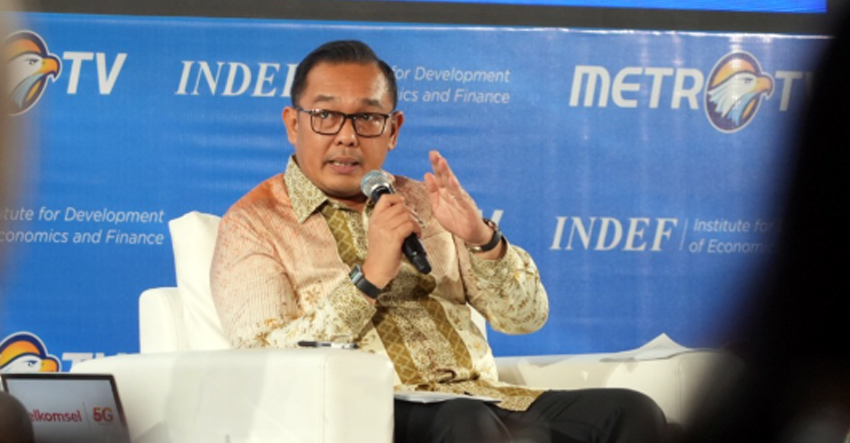
Deputy Minister of Investment and Downstreaming/Deputy Head of BKPM, Todotua Pasaribu, said the government is taking three strategic steps to ensure that investment entering Indonesia has an impact on strengthening domestic industry and creating a supply chain ecosystem. The three steps are planning, execution and the provision of incentives.
“When we talk about the role of the Ministry of Investment and Downstreaming/BKPM, we are talking about strategic planning, how to execute well, and also incentives. The guiding principle is that incoming investment must be competitive and sustainable. We are not only focused on how much investment comes in, but also on its impact on job creation and the supply chain ecosystem in Indonesia,” said Todotua in a statement issued on Monday (7/9/2026).
As a strategic step, the Ministry of Investment and Downstreaming/BKPM has drawn up the “Downstreaming Investment Strategic Roadmap 2022–2023”, which covers 28 commodities across eight main sectors. The roadmap records an investment potential of up to US$618.1 billion and the opportunity to create around three million new jobs. In addition, the document maps regions across Indonesia according to their commodity advantages and natural resource potential.
“Indonesia already has strong fundamentals. Few countries possess such a diverse range of natural resources spanning four sectors (oil and gas, mining and minerals, plantations and forestry, and fisheries and marine resources), supported by large reserves and substantial quantities like Indonesia,” he said.
According to the Deputy Minister, the provision of incentives is considered essential because technology is one of the keys to taking downstreaming to the next level.
“Investment entering Indonesia needs to be directed not only towards building production facilities, but also towards bringing in technology transfer, research and innovation, as well as mastery of more complex production processes,” he concluded.
The implementation of downstreaming in Indonesia needs to be supported by legal certainty and ease of doing business through strengthening the investment climate and refining licensing policy. These efforts are being carried out by implementing risk-based business licensing, simplifying the authority for issuing permits, improving business certainty, and cutting licensing process stages. Regulatory refinement is also ongoing, including through the issuance of Government Regulation No. 28/2025 on Risk-Based Business Licensing. Through the risk-based approach, licensing processes are no longer applied uniformly to all business activities, but are tailored to the risk level of each sector.
The implementation of this system, which is integrated with the Online Single Submission (OSS), is expected to reduce the potential for overlapping authority while creating a more structured, transparent and measurable licensing process.
In addition to strengthening ease of doing business, the government, through the Ministry of Investment and Downstreaming/BKPM, is also providing various fiscal incentives to encourage value-added investment into the downstreaming sector. These incentives are provided, among others, through tax allowance, tax holiday, masterlist, and super tax deduction schemes. The super tax deduction in particular is directed at encouraging technology transfer and improving the quality and capacity of the domestic workforce.
The scheme provides a reduction in gross income as the basis for calculating income tax by a certain amount, linked to education and training costs as well as research and development (R&D) activities carried out by businesses. According to Deputy Minister Todotua, providing these incentives is important because mastery and development of technology is one of the key factors in improving the quality of Indonesia’s downstreaming.
The implementation of these three strategies is expected to increase investment realisation, particularly in the downstreaming sector, and to enlarge downstreaming’s contribution to Indonesia’s economic growth. In the first half of 2026, investment realisation in the downstreaming sector was recorded at Rp300.1 trillion, contributing 29.7% of total national investment. This figure grew 6.9% compared to the same period the previous year.
Downstreaming investment realisation was dominated by foreign investment (PMA) of Rp212.8 trillion, or 70.9% of total downstreaming investment. Meanwhile, domestic investment (PMDN) reached Rp87.3 trillion, or 29.1%. In terms of regional distribution, downstreaming investment is also helping to spread economic development more evenly. Some 75.7%, or around Rp227.3 trillion, of the total investment realisation flowed into projects located outside Java.