
BKPM Considers Evaluating Fiscal Incentives for the Nickel Industry
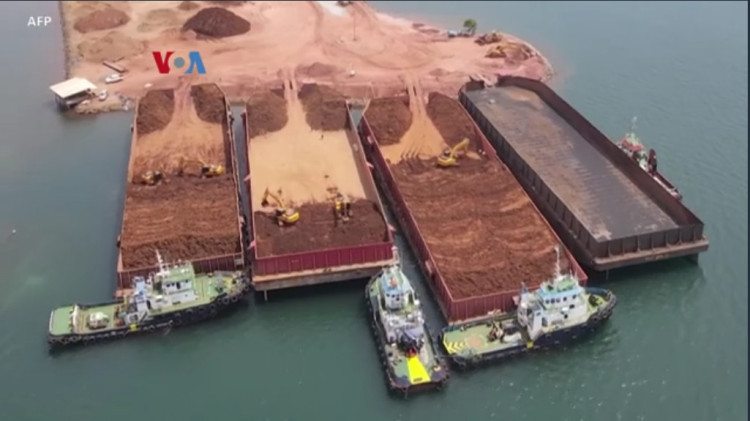
The government, through the Ministry of Investment and Downstreaming/Investment Coordinating Board (BKPM), has signalled that it will re-evaluate the provision of fiscal incentives for the nickel industry. This step is taken in light of the assessment that the nickel industry and electric vehicle battery ecosystem in Indonesia has formed strongly.
Minister of Investment and Downstreaming/Head of BKPM, Rosan P. Roeslani, revealed that incentive policies going forward will experience a paradigm shift. The government will no longer rely solely on the magnitude of investment value, but will prioritise social impacts, especially in terms of employment absorption.
In a press conference held at his office in South Jakarta on Thursday (23/4/2026), Rosan acknowledged that the nickel sector has so far been one of the main recipients of incentives. However, given its maturity, the effectiveness of those incentives is now being reviewed.
“Currently, the government is still providing incentives to certain sectors, one of which is the nickel industry. However, we see that the nickel industry ecosystem up to electric batteries has now developed quite well. Therefore, the government is open to the possibility of re-evaluating incentive policies for sectors whose ecosystems have already formed,” said Rosan.
In replacement, the government will redirect the focus of fiscal support to companies that can create jobs on a large scale. Rosan cited the renewable energy sector as one of the fields with great potential to receive such support if it can absorb a lot of labour.
“In the past, an investment of US$100 million might not receive incentives because its value was considered not large. But if we look at its high labour absorption, we finally see the potential to provide incentives as well,” he added.
This evaluation step marks a new chapter in the government’s downstreaming strategy. The focus now shifts from merely attracting large capital (capital intensive) to equitable welfare through job availability (labour intensive).
With this policy, BKPM hopes that investments entering Indonesia not only strengthen the national industrial structure but also provide significant direct impacts on reducing unemployment rates.