
BKPM Addresses Stalled Mineral Exports, Pushes for Domestic Rare Earth Processing
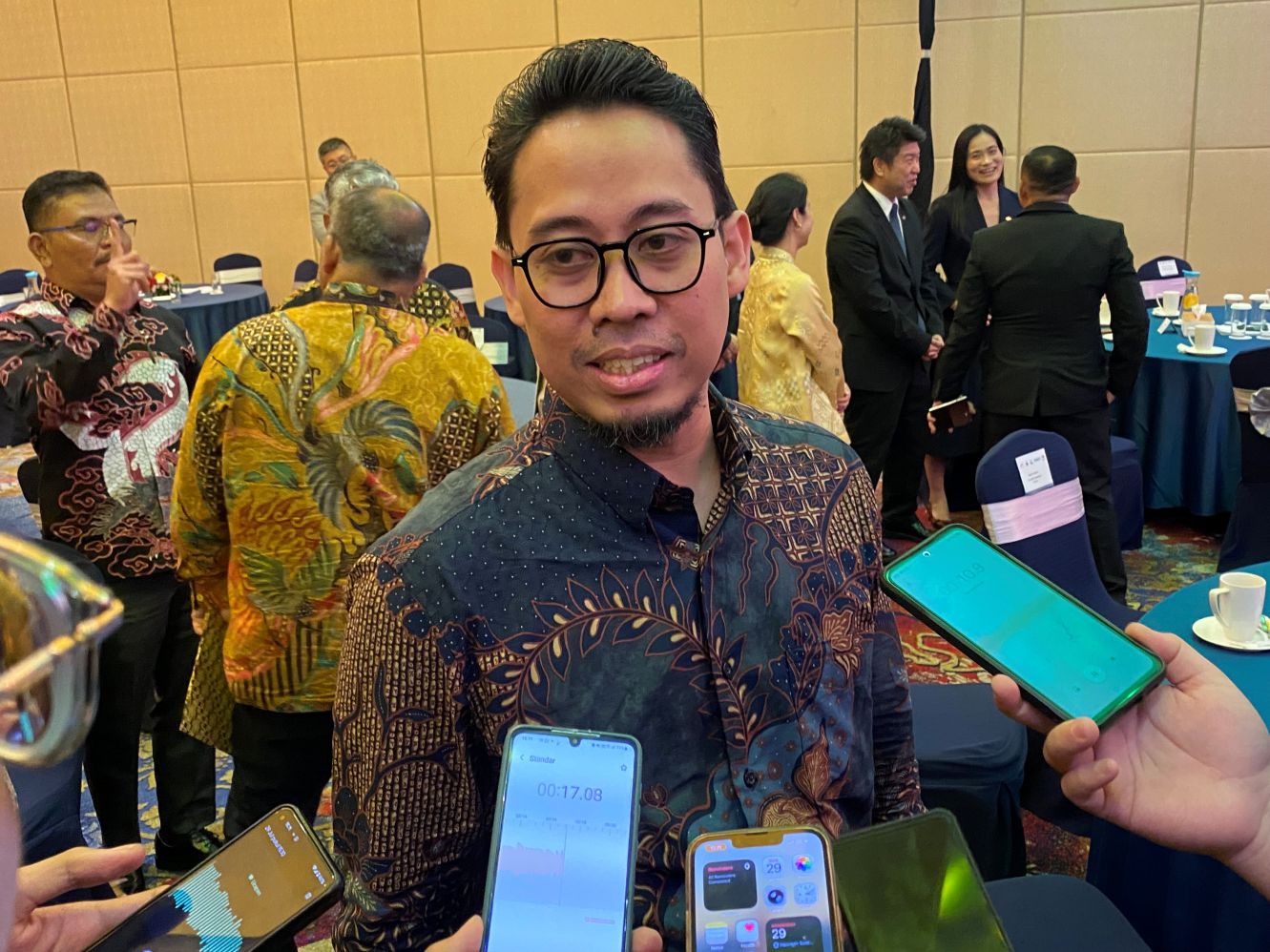
The Ministry of Investment and Downstream Industry/Investment Coordinating Board (BKPM) is pushing for the development of rare earth metal (LTJ) downstream processing.
Rizwan Aryadi, Director of Mineral and Coal Downstream Industry at BKPM, said the government in principle supports the development of the downstream industry and will help resolve various obstacles that could potentially hinder investment realisation.
“In principle, we do support the downstream investment industry. If there are obstacles in facilitating investment, we will address them,” said Rizwan when met in Jakarta, quoted on Thursday (30/7/2026).
Rizwan said the government’s policy direction is not only to encourage downstream processing of major commodities, but also to develop processing that yields higher value-added products, including the domestic utilisation of rare earth metals.
“That is the hope for downstream processing. So all existing commodities, whether minerals, coal and others, can be processed or have their value added in Indonesia,” he said.
He explained that downstream processing should not stop at intermediate products such as Nickel Pig Iron (NPI), ferronickel, or Mixed Hydroxide Precipitate (MHP).
The government hopes an industrial ecosystem can develop to produce downstream products with higher added value. “The hope is that the ecosystem can grow, that the supply chain can grow,” said Rizwan.
He also affirmed that the government wants to encourage businesses to develop the domestic utilisation of rare earth metals, given the commodity’s strategic value across various industrial sectors.
According to him, developing the rare earth metal industry is important because the mineral plays a strategic role as a raw material for various high-tech industries, including the defence industry and other manufacturing sectors.
“Rare earth metals are indeed quite strategic in the context of the defence industry and possibly other industries,” he concluded.
As previously reported, Head of the Presidential Staff Office, Dudung Abdurachman, asserted that law enforcement officials (APH) must not take actions that obstruct the flow of national exports, as long as businesses have violated no regulations.
“If rare earth metals are not yet regulated, law enforcement must not fabricate issues. No law enforcement officials, including the TNI, should obstruct exports if no rules have been broken,” said Dudung after leading a cross-ministerial and inter-agency coordination meeting at the Bina Graha Building, Presidential Palace complex, Jakarta, quoted on Tuesday (28/7/2026).
The firm statement was in response to numerous reports of by-product mineral exports being held up due to the absence of regulations on the maximum content of rare earth metals (LTJ). He argued that law enforcement officials must not make their own interpretations, which only frighten business operators on the ground.
“Today I chaired a coordination meeting on the governance of critical mineral exports containing rare earth metals. I received reports from several businesspeople about obstructed mineral exports. I coordinated this cross-ministerial/inter-agency meeting to strengthen the governance of critical mineral exports containing rare earth metals,” he explained.
Dudung said regulatory uncertainty over the content of by-product rare earth metals was the main trigger for the legal problems harming foreign trade activity, as recently occurred in the regions.
“Exports containing rare earth metals as by-products have become a problem, as in the case in Pangkal Pinang. This is because there is a regulatory gap on the maximum permissible content of by-product rare earth metals,” he said.