
BKN Chief Relocates 38 Civil Servants to Work Near Their Homes, Here's How
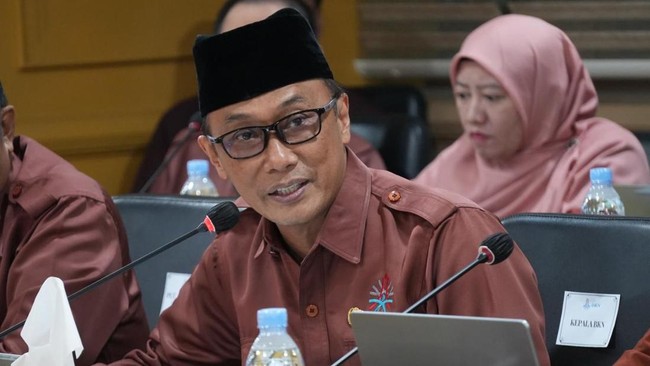
The Head of the National Civil Service Agency (BKN), Zudan Arif Fakrulloh, has executed a programme to place civil servants closer to their families and domiciles, based on BKN Head Decree Number 842 of 2026, enacted on 27 July 2026. Zudan stated that the programme’s second phase has been carried out, involving a total of 38 civil servants relocated near their domiciles. In the first phase, 27 BKN employees were moved, followed by 11 employees in the second phase. These workplace transfers were conducted between work units within the Central BKN, Regional BKN, and BKN Technical Implementation Units across Indonesia.
“This programme will continue as part of civil servant management oriented towards improving performance as well as employee welfare,” he said in a written statement on Wednesday (29/7/2026). Zudan emphasised that this policy is not merely about moving employees closer to their families but remains grounded in organisational needs and the quality of public services. He also stressed three main principles in implementing the policy: every civil servant must be ready to be placed anywhere according to organisational needs; every civil servant must be encouraged to deliver their best performance to advance their careers; and the welfare and happiness of civil servants are important foundations for increasing work productivity.
“If we as leaders cannot yet provide an increase in income for civil servants, then we must strive to reduce the burden of employee expenses. Placements closer to family and domicile are expected to enable civil servants to work more optimally, be happier, and be more prosperous,” Zudan remarked. The programme represents BKN’s commitment to building adaptive civil servant management oriented towards human resource needs by balancing organisational interests and employee welfare. BKN hopes this good practice can inspire other ministries, institutions, and local governments to implement similar policies according to their organisational needs without reducing the quality of public services. He assessed that as long as public services are maintained, structuring civil servant placements closer to family and domicile can be a strategy for building a productive and humane bureaucracy. Managing civil servants by maintaining a balance between organisational interests and employee welfare is an important investment in realising an adaptive, high-performing, and increasingly professional bureaucracy in serving the public. “BKN seeks to present policies that not only strengthen organisational performance but also help reduce the burden of employees’ living costs, such as transport, housing, and household expenses. Thus, civil servants are expected to have better space to improve focus, motivation, and the quality of service to the public,” he explained.