
BKN Assures Work-Near-Home Programme Will Boost ASN Productivity and Welfare
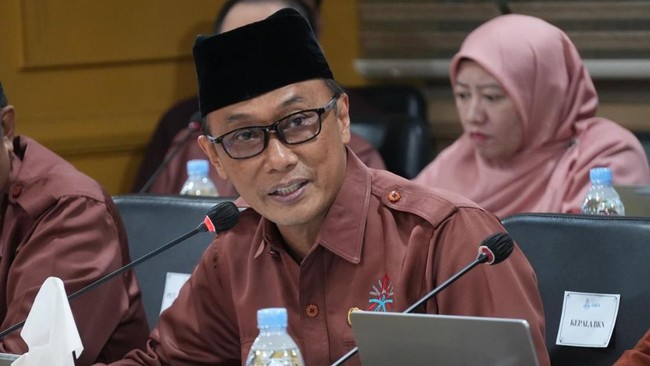
Jakarta, CNBC Indonesia – The Head of the State Civil Service Agency (BKN), Zudan Arif Fakrulloh, has assured that allowing civil servants (ASN) to work closer to home will not reduce the productivity of public services.
According to him, the programme will instead create a working environment that is more productive, effective, and oriented towards employee happiness and welfare.
He believes that employees with a balance between family life and work, or work-life balance, will be able to deliver more optimal performance.
By working closer to their families, Zudan is confident that civil servants can increase their work motivation whilst also having better space to fulfil their roles as parents and family members.
“For the initial stage, BKN is piloting this programme for its own staff so that employees can perform at a higher level because they feel happier after being with their families,” Zudan said in a press release on Friday (24/7/2026).
Beyond improving employees’ quality of life, Zudan said the programme is also an effort by BKN to help civil servants achieve household spending efficiency.
Zudan noted that many civil servants have had to live apart from their families due to their work postings, shouldering the costs of travel, accommodation, and household needs in two separate locations.
With postings closer to their place of residence, this burden is expected to fall significantly.
“In addition, employees can better manage their finances because they are no longer burdened by transport and accommodation costs arising from living far from their families.”
Zudan also explained that this step is a policy innovation relevant to current conditions. When improving welfare through salary adjustments cannot be carried out in the near term, he hopes that reducing expenditure burdens can serve as one solution that can be pursued without compromising the quality of public services.
For the time being, the programme is still being trialled within BKN itself. During its implementation going forward, BKN will evaluate its impact on employee productivity, organisational effectiveness, and the quality of services delivered to the public. The evaluation results may later become a best practice in civil service management based on welfare and performance.
“We hope this innovation not only benefits BKN employees, but can also inspire ministries, agencies, and regional governments in designing civil service management policies that are increasingly adaptive to employees’ needs without setting aside the principles of professionalism and accountability. We hope BKN’s programme can inspire regional governments as well as ministries and agencies. May it be beneficial,” he asserted.
Through this pilot programme bringing civil servants closer to their families and places of residence, BKN aims to introduce an innovation in civil service management that is oriented not only towards improving organisational performance, but also towards employee welfare as the bureaucracy’s primary asset.
With happier employees who are closer to their families and carry lighter economic burdens, work productivity and the quality of public services are expected to improve further.