
BKHIT Maluku Supports Local Shrimp Farms to Ensure Fisheries are Free from Quarantine Pests
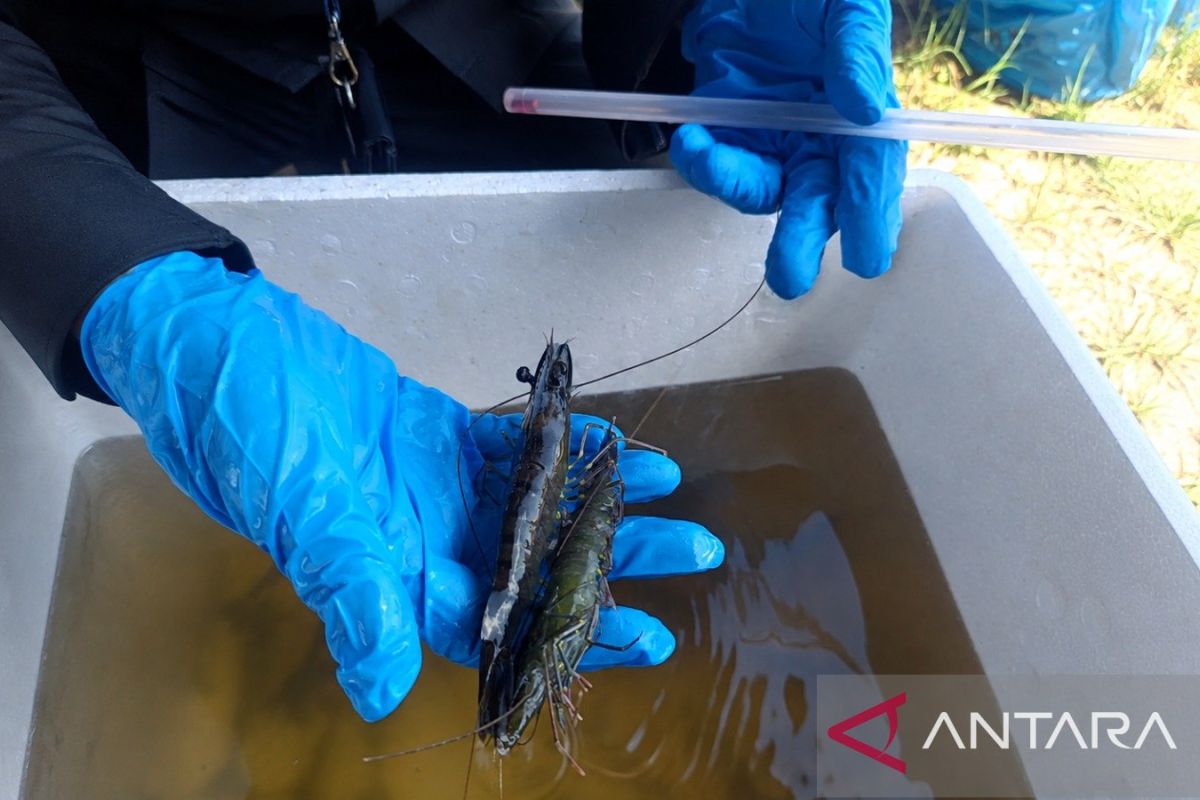
The Maluku Animal, Fish, and Plant Quarantine Agency (BKHIT) is strengthening its support for local shrimp farms through the monitoring of Quarantine Fish Diseases (HPIK) in the community shrimp farming areas of Buru Regency.
“This assistance is carried out by officers to ensure that fishery commodities remain healthy, productive, and free from diseases that could hinder trade,” said the Head of BKH_KIT Maluku, Willy Indra Yunan, in Ambon on Saturday.
He stated that the activity serves as an early detection effort against potential diseases in fishery commodities, while simultaneously providing guidance to farmers to consistently implement good aquaculture practices and biosecurity systems.
“Monitoring HPIK is a preventive step to ensure farmed shrimp remain healthy so that productivity can be maintained and the resulting commodities meet health requirements for trade, both in domestic and export markets,” he added.
He explained that as a technical implementation unit of the Indonesian Quarantine Agency, BKHIT Maluku is tasked with performing quarantine actions on carriers of animal, fish, and plant pests and diseases. Additionally, BKHIT conducts biosafety supervision, laboratory testing, health certification, and provides assistance to business actors to ensure traded commodities meet health and safety standards.
According to him, the quarantine system functions not only to prevent the entry and spread of pests or diseases but also to provide health guarantees for commodities, thereby enhancing the competitiveness of Maluku’s fishery products in the market.
During the activities in Buru Regency, BKHIT Maluku officers performed clinical examinations of the physical condition of the shrimp, measured pond water quality, and collected shrimp samples for laboratory testing to ensure there were no indications of HPIK. In addition to technical inspections, officers also engaged in dialogue with farmers to obtain information regarding disease history, maintenance patterns, and the implementation of biosecurity at the farming sites.
“Through direct communication in the field, we can provide education on disease prevention steps so that the risk of losses due to disease attacks can be minimised,” he said.
According to local government data, Buru Regency possesses significant potential for the development of Vannamei shrimp aquaculture. The local government is optimising approximately 1,000 hectares of brackish water pond land, including areas in Kaki Air Village, Namlea District, supported by the coastal ecosystem of Kaiely Bay and its surroundings.
This potential, he continued, must be balanced with sustainable fish health supervision to maintain aquaculture productivity. This is particularly important given that shrimp is a high-value economic commodity, with medium-sized fresh shrimp prices at the Namlea Public Market hovering around Rp130,000 per kilogram.
He expressed hope that through routine monitoring and assistance to business actors, farmed shrimp from Buru Regency can continue to meet health standards, remain safe for consumption, and possess stronger competitiveness in both national and international markets.
Source: jawawa.id (https://jawawa.id/newsitem/bkhit-maluku-supports-local-shrimp-farms-to-ensure-fisheries-are-free-from-quarantine-pests-1785567284)
Originally published by Antara (Indonesian) (https://www.antaranews.com/berita/5675593/bkhit-maluku-dampingi-tambak-rakyat-pastikan-perikanan-bebas-hpik), translated from Indonesian