
BKHIT Maluku strengthens laboratory staff competence to detect animal diseases
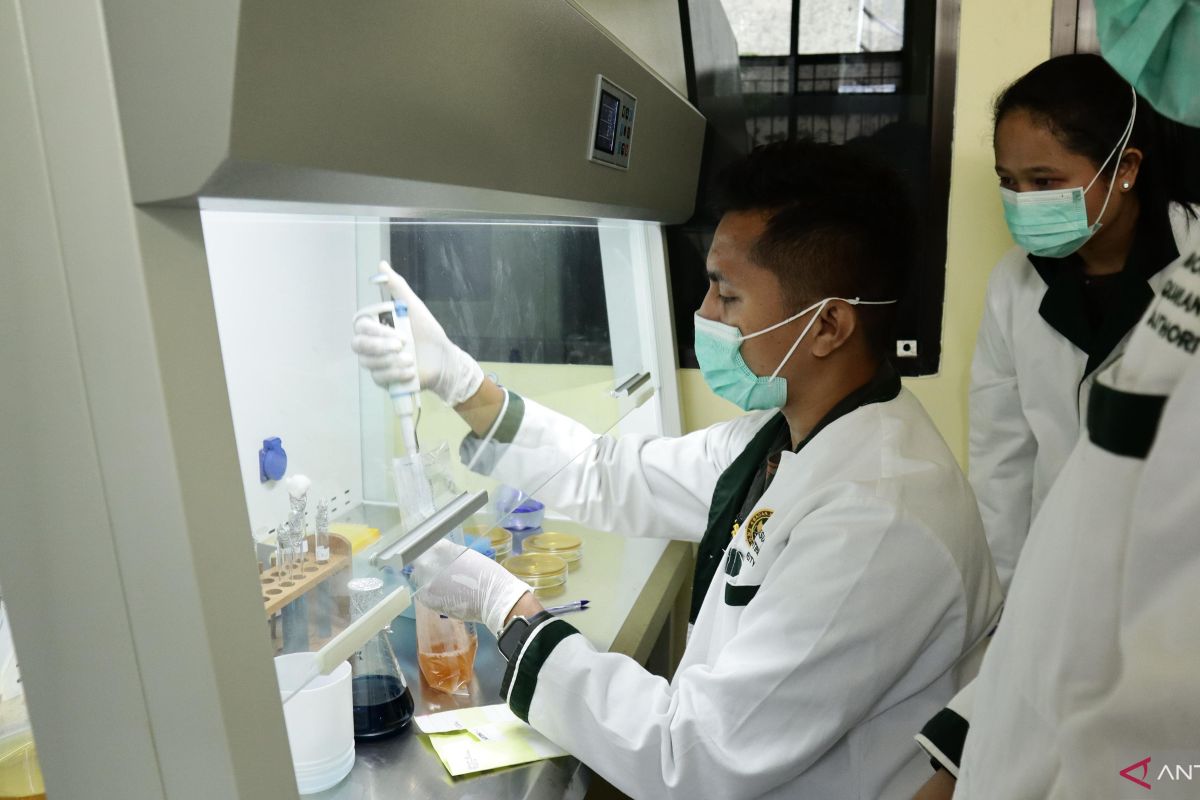
The Animal, Fish and Plant Quarantine Centre (BKHIT) in Maluku is strengthening the competence of laboratory personnel in detecting animal and fish diseases quickly and accurately by improving biomolecular testing capabilities using the Real Time Polymerase Chain Reaction (RT-PCR) method.
Head of BKHIT Maluku Willy Indra Yunan in Ambon on Saturday said that strengthening laboratory staff capacity is an important part of ensuring that examinations of animals, fish and plants can be carried out properly and with a level of accuracy that can be accounted for.
“Human resource competence is one of the main keys in maintaining the quality of laboratory services. Therefore, technical capability improvements must continue to be carried out so that test results are increasingly accurate and reliable,” he said.
The competence strengthening was carried out through In House Training (IHT) on the Application of the RT-PCR Method in Biomolecular Testing and was attended by technical officers within the Maluku Quarantine environment.
He explained that the training not only emphasises theoretical understanding, but also technical skills in every stage of laboratory examination.
Participants received instruction on sample preparation, extraction processes, amplification, instrument operation, result interpretation, and the application of test quality control.
“What we hope is not merely understanding the method, but that participants are able to apply it in their daily work, so that the quality of laboratory examination results improves,” he said.
A number of disease agents that are the subject of testing using the RT-PCR method include Viral Nervous Necrosis (VNN), White Spot Syndrome Virus (WSSV), Megalocytivirus, Edwardsiella ictaluri, Salmonella sp., and Avian Influenza (AI).
He said the ability to detect these various disease agents has a direct link to the implementation of the quarantine function in preventing the entry, exit and spread of animal and fish diseases.
With increasingly better laboratory capabilities, he said, examination results can become a stronger basis for determining quarantine actions on commodities that have the potential to carry disease.
He encouraged participants to share the knowledge and skills obtained with other officers, so that capacity building does not stop with the training participants, but develops throughout the BKHIT Maluku work environment.
“We want continuous capacity building to occur. The knowledge obtained must be passed on to colleagues so that laboratory testing capabilities become more evenly distributed,” he said.
He emphasised that laboratory capacity building and technical staff competence will continue to be directed towards supporting quarantine services that are fast, precise, accurate and reliable.
“Test quality must be a shared concern, because laboratory results are an important part of decision-making in the quarantine sector,” he said.