
Bitter Gift for America's Birthday: Ringgit and Rupiah Lead Asia in Kicking the Dollar
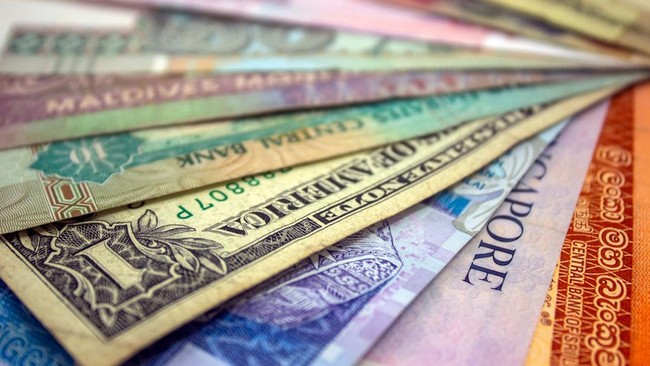
Most Asian currencies strengthened against the United States (US) dollar in trading on Friday (3/7/2026) ahead of the weekend. The weakening of the US dollar index provided room for regional currencies to move more positively. This depreciation is a bitter gift for the US, which will commemorate its 250th Independence Day on Saturday (4/7/2026). According to Refinitiv data as of 09.15 WIB, of the 10 Asian currencies, seven managed to beat the strength of the US dollar, while three others weakened. The Malaysian ringgit was the currency with the sharpest strengthening in Asia this morning. The ringgit strengthened 0.37% to MYR 4.062/US.Therupiahalsomovedpositively.TheGarudacurrencystrengthened0.28. This position moved the rupiah away from the psychological level of Rp18,000/US$ after previously approaching that level at the previous close. The South Korean won also strengthened 0.16% to KRW 1,537.6/US, followedbytheChineseyuanwhichrose0.14. The Thai baht also strengthened 0.12% to THB 33.16/US, thePhilippinepesorose0.07, while the Singapore dollar edged up 0.05% to SGD 1.291/US.However, notallAsiancurrencieswereabletostrengthen.TheTaiwandollarwasthecurrencywiththedeepestdepreciationafterfalling0.11. The Japanese yen also weakened 0.04% to JPY 161.14/US, whiletheVietnamesedongcorrected0.04. Meanwhile, the US dollar index (DXY) was observed to have weakened slightly by 0.01% to 100.846 at the same time. Although this morning’s depreciation was limited, the US dollar has been under considerable pressure since the previous trading session. At the close of trading on Thursday (2/7/2026), the DXY closed sharply lower by 0.53%. This depreciation was one of the factors that opened up room for a number of Asian currencies to strengthen this morning. The US dollar is also heading for its biggest weekly decline in nearly three months. Pressure on the greenback emerged after US labour data for the June period showed a sharp slowdown. US nonfarm payrolls in June only added 57,000 jobs, far below market expectations of 110,000 jobs. In addition, the labour force participation rate fell to 61.5%, the lowest level in more than five years. The weaker labour data caused market participants to lower expectations for a near-term interest rate hike by the US central bank (The Federal Reserve/The Fed). Based on the CME FedWatch, the market now prices in a 52% chance of a rate hike at the September meeting, down from 64% in the previous session. Sim Moh Siong, FX strategist at OCBC, assessed that the labour data gave a more dovish signal to the market. ‘Marginally, this is dovish, helping to ease concerns about an overheating labour market and the need for more aggressive policy tightening,’ Sim said. Even so, he assessed that the outlook for the US dollar in general is still quite constructive, especially against low-yielding currencies, as long as expectations of The Fed’s tightening have not completely disappeared.