
Bitter Facts: 6 in 10 Indonesians Earn a Living in the Informal Sector
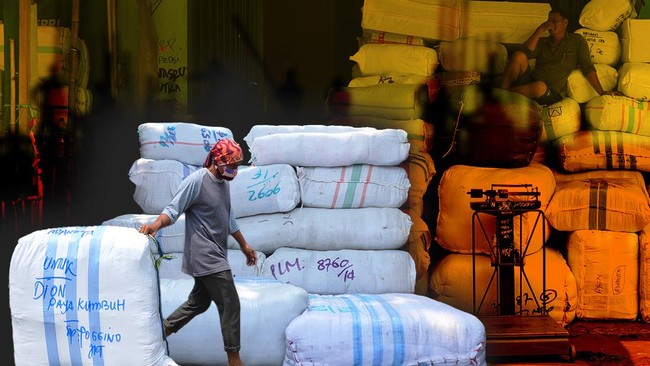
Almost six out of every ten working Indonesians, or 60 per cent, still earn a living in the informal sector. The high proportion of workers in informal employment shows that indicators such as the unemployment rate or the number of hours worked alone are insufficient to fully describe labour market conditions. In February 2026, the proportion reached 59.42 per cent. This figure was virtually unchanged from 59.40 per cent a year earlier. However, after having fallen to 57.80 per cent in August 2025, the proportion has risen again. This suggests that improvements in the labour market have not been fully accompanied by a shift towards more formal employment.
The composition of the labour market did move towards formality throughout 2025. The share of formal employment rose from 40.60 per cent in February 2025 to 42.20 per cent in August 2025. However, this trend did not continue. By February 2026, the share had fallen back to 40.58 per cent, while the informal sector once again dominated at 59.42 per cent. In other words, around six out of every ten working people in Indonesia remain outside formal employment relationships.
The term ‘informal sector’ is often misunderstood as referring to the unemployed. In reality, they are working and earning an income. This group includes, among others, own-account workers, family workers, casual workers in both agriculture and non-agriculture, and small-scale business operators who generally do not yet have formal employment relationships. What distinguishes them is not their work activity, but the form of their employment relationship. Compared to formal workers, this group generally lacks employment contracts, labour protections, and social security at the same level. Therefore, the large share of the informal sector is often used as an indicator to assess the quality of the labour market structure, rather than simply the number of people employed.
There are also distinct demographic patterns. In February 2026, men still dominated both sectors. In the formal sector, their share reached 65.96 per cent, compared to 34.04 per cent for women. Meanwhile, in the informal sector, the composition was more balanced, with 56.10 per cent men and 43.90 per cent women. This difference indicates that women’s participation is relatively higher in the informal sector than in the formal sector. One reason is the inherently more flexible nature of informal work. Many women work through their own businesses, family enterprises, or jobs with arrangements that are easier to adapt to domestic and caregiving responsibilities.
The distinction between formal and informal work goes beyond just the place of employment. Formal jobs generally offer clearer employment relationships, including contracts, fixed wages, and labour and social security protections. Conversely, many informal workers rely on daily income, self-employment, or more flexible working arrangements, but with more limited protections. That is why an increase in the share of formal employment is often seen as a sign of improving labour market quality, not merely an increase in the number of people working.
In recent years, Indonesia’s labour market has been moving towards a more formal structure. However, the pace remains relatively slow. As of February 2026, nearly six out of ten working people still earn a living in the informal sector. This means the majority of Indonesia’s workforce remains in jobs that generally offer limited protection. Ultimately, the challenge for Indonesia’s labour market is no longer just about creating new jobs. What is increasingly important is expanding employment that is more productive, better protected, and capable of providing certainty for those who depend on it for their livelihoods.
Source: jawawa.id (https://jawawa.id/newsitem/bitter-facts-6-in-10-indonesians-earn-a-living-in-the-informal-sector-1782795106)
Originally published by CNBC Indonesia (https://www.cnbcindonesia.com/research/20260630055018-128-746677/fakta-pahit-6-dari-10-warga-ri-cari-nafkah-di-sektor-informal), translated from Indonesian