
Bitcoin ETF Inflows Rise, but Futures Risks Should Not Be Ignored
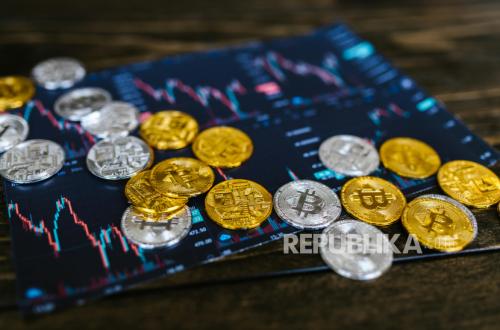
Bitcoin’s movement within the $80,000 range is occurring alongside an increase in institutional fund flows into Bitcoin-based investment products. This condition has also heightened attention towards futures trading, even though this instrument possesses different characteristics and risks compared to spot transactions.
Based on CoinMarketCap’s analysis regarding Bitcoin’s rise above $80,000, institutional demand through Bitcoin-based investment products is one of the factors supporting price momentum. Data from Farside Investors shows that Bitcoin spot ETFs in the United States recorded net inflows of approximately $999 million on 21 September 2026, $714.7 million on 22 September 2026, and $346.9 million on 23 September 2026.
This increase in fund flows occurred as Bitcoin trading activity also strengthened. However, price movements continue to face risks of volatility and changes in sentiment, meaning liquidity conditions and instrument characteristics must be considered before determining trading strategies.
Bittime’s Chief Operating Officer, Ryan Lymn, stated that the increase in trading activity can make price movements more dynamic. According to him, market participants need to pay attention to more than just the direction of the price.
“When institutional fund flows and trading activity increase, price movements can become more dynamic. Such conditions require traders to look not only at the price direction, but also at liquidity, volatility, and the risks of the instruments being used,” Ryan said on Saturday (3/10/2026).
Futures trading allows market participants to gain exposure to price movements through contracts without directly purchasing the underlying asset. In perpetual contracts, traders can take both long and short positions using a margin system.
According to the CME Group, futures transactions use margin, which is a portion of the contract’s notional value. This mechanism allows market participants to gain exposure without providing the full contract value upfront, but simultaneously makes positions more sensitive to price changes.
Risk is a crucial aspect of using futures because leverage can magnify both potential profits and losses. If the price moves against a position, the margin can deplete rapidly, and the position may face liquidation.
Market participants also need to understand funding rates, margin requirements, and the differences between isolated margin and cross margin. Understanding these mechanisms is vital because the risk levels of futures differ from spot trading.
“Futures have different mechanisms and risk levels compared to spot. Leverage can provide exposure with a specific margin, but it can also magnify losses when the market moves against a position. Therefore, the use of leverage needs to be adjusted to each user’s understanding and risk tolerance,” said Ryan.
Amidst these developments, Bittime provides perpetual contract trading through Bittime Futures. This service complements the spot and staking options available on the company’s platform.
Bittime Futures provides long and short positions as well as cross margin and isolated margin mechanisms. For certain pairs, leverage of up to 25 times is available, providing options for position management but also increasing sensitivity to price changes.
The company also implements Know Your Customer (KYC), Know Your Transaction (KYT), and Anti-Money Laundering (AML) protocols, as well as assessments before users can access futures features. These steps are implemented alongside the need for education regarding the characteristics and risks of digital asset derivative instruments.
“The development of futures in Indonesia needs to proceed alongside education. Users need to understand margin, leverage, liquidation, funding, and position sizing before conducting transactions. Access to products must be accompanied by adequate understanding of their characteristics and risks,” Ryan continued.
The development of futures trading expands the choice of instruments in the digital financial asset market. On the other hand, the growth of instruments with more complex mechanisms makes understanding risk, leverage, and position management increasingly important for users.