
Birth Certificates Now Issued Instantly After Delivery via Digital Integration
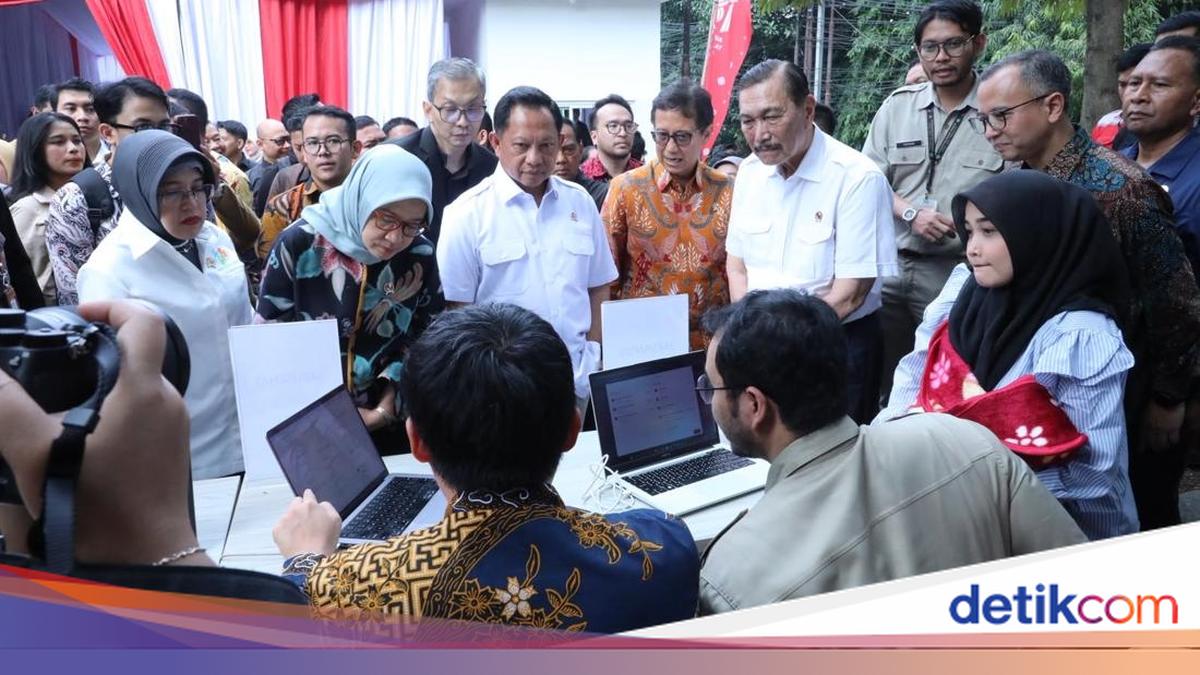
The government has launched the digitalisation of birth certificate issuance through the integration of the Population Administration Information System (SIAK) at the Pasar Minggu Community Health Centre. Through this integration, a birth certificate can be issued automatically and sent online immediately after a baby is born at a health facility.
Minister for Administrative and Bureaucratic Reform Rini Widyantini stated that this integration allows birth data from health facilities to be connected with the civil registration process. Consequently, the issuance of civil documents, ranging from birth certificates and family cards to child identity cards, becomes more integrated.
“The principle is simple. It is the data that moves, not the people. This is the change we want to drive, from an ego-system to an ecosystem. Government agencies no longer work based on the boundaries of their own systems and authorities, but are connected to provide a seamless service experience to the public,” Rini said in a written statement on Tuesday (11/8/2026).
Rini emphasised that a birth certificate is not merely an administrative document. It serves as the first gateway for a child to obtain an identity, access health services, education, and various forms of state protection. Through this integration, the Ministry of Administrative and Bureaucratic Reform ensures that the public is not burdened with numerous procedures or required to fill in the same data repeatedly.
“The public should not be burdened with understanding the boundaries of authority between agencies, moving from one service to another, or filling in the same data over and over again,” she said.
Rini expressed hope that this integration would bring the government closer to the people. She noted that the true measure of digital government transformation is not the number of applications built, but whether services become easier, more connected, and more beneficial for the public. “One of the earliest moments when the state’s presence is needed is when a child is born. The state must not arrive late; it must be present from the very first day of the child’s life,” she added.
Meanwhile, Health Minister Budi Gunadi Sadikin said that data integration will simplify the issuance of civil documents for newborns. He noted that approximately 4.8 million babies are born in Indonesia each year, or around 13,000 babies per day. “Therefore, birth registration needs to be integrated so that the baby’s civil documents can be issued more quickly,” he said. “Now, birth data can be directly integrated with the civil registry data or SIAK, so that when a mother gives birth, the birth certificate and family card can be issued directly in digital form.”
Minister of Home Affairs Muhammad Tito Karnavian explained that the digital birth certificate can be received directly at the health facility where the birth takes place, whether a community health centre or a hospital. The document can also be sent via the parents’ email or WhatsApp for self-printing, which he said would help eliminate illegal levies. “As soon as the baby is born, the birth certificate is issued immediately because the systems are connected. It can be handed over directly at the health centre or hospital, or sent digitally via email or WhatsApp for the parents to print themselves,” he explained.
Chairman of the Committee for the Acceleration of Digital Government Transformation, Luhut Binsar Pandjaitan, stated that data integration and data-based planning are crucial for efficiency. He noted that the use of technology, including artificial intelligence, to integrate data makes service processes faster and more accurate. “All the data communicates with each other, supported by AI which cleans and integrates it, making the process very fast,” he concluded.