
Bird's Eye Chilli Contributes the Highest Inflation in March in Bali and NTB
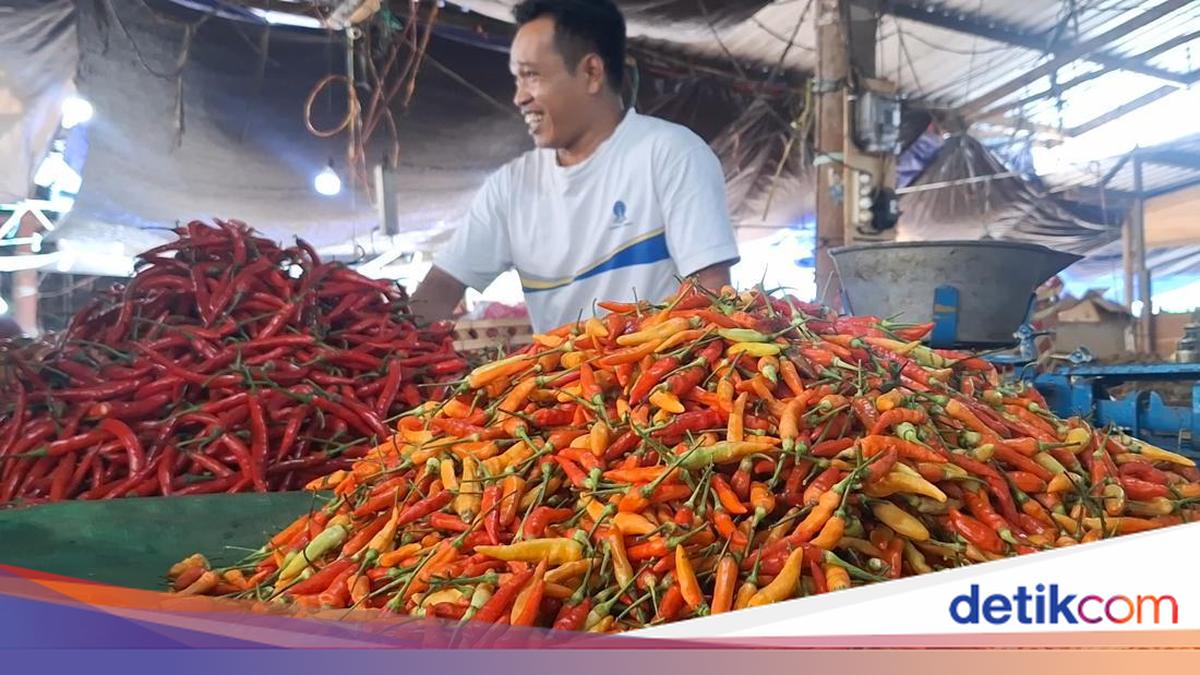
The commodity of bird’s eye chilli became the highest contributor to inflation in the provinces of Bali and West Nusa Tenggara (NTB) during the March 2026 period. The Bali Provincial Statistics Indonesia (BPS) even recorded that over the past three years, bird’s eye chilli has consistently experienced inflation in March.
“Historically, bird’s eye chilli has indeed always experienced inflation in the month of March,” said the Head of BPS Bali Province, Agus Gede Hendrayana Hermawan, during a press conference in Denpasar on Wednesday (1/4/2026).
In March 2026, bird’s eye chilli experienced the highest inflation of 15.98% compared to the previous month. Agus mentioned that the price increase in bird’s eye chilli was influenced by high demand and low production.
“So, if you want to plant bird’s eye chilli, do it before March so that it can be harvested in March. But with the caveat that the harvest is successful,” he added.
BPS Bali also recorded monthly inflation (month-to-month) in March 2026 at 0.56% compared to February 2026. This condition is considered normal due to various holidays falling in that month.
“Indeed, in March because of various factors mentioned earlier, such as holidays that fall in that month, there is a tendency for inflation to occur. In the past three years, there has always been relatively high inflation,” he added.
Agus detailed that the food, beverages, and tobacco group became the largest contributor to inflation in March with an increase of 1.08% and a contribution of 0.36. This was followed by the transportation group, which rose 0.70% (contribution 0.07), housing, water, electricity, and household fuels rising 0.49% (contribution 0.07), and personal care and other services rising 0.56% (contribution 0.05).
Meanwhile, the top six commodities supporting inflation in March 2026 included bird’s eye chilli with a contribution of 0.11 and the highest inflation of 15.98%. This was followed by red chilli, which experienced inflation of 13.54% with a contribution of 0.03%, and petrol rising 1.28% with a contribution of 0.06%.
There was also the drinking water tariff from PAM experiencing inflation of 2.58% with a contribution of 0.05, pork at 2.55% with a contribution of 0.02%. Followed by intercity transport experiencing inflation of 20.99% and a contribution of 0.02.
Bird’s Eye Chilli in NTB Remains Expensive
Meanwhile, the price movement of commodities in NTB also experienced inflation of 0.81% in March 2026. The persistently high price of bird’s eye chilli became one of the main triggers for this inflation.
The Head of BPS NTB, Wahyudin, stated that this March 2026 inflation was driven by price increases in the food materials group. Particularly in commodities such as bird’s eye chilli, cabbage, chicken meat, tomatoes, and eggplant.
“The price increase was triggered by limited supply. This condition occurred alongside increased community consumption during the month of Ramadan and Eid al-Fitr. Community demand tends to increase, thus driving up food prices in the market,” said Wahyudin during a press conference in Mataram on Wednesday.
“Bird’s eye chilli contributed 0.14% to inflation,” he continued.
In addition to bird’s eye chilli, several other commodities also contributed to inflation in NTB in March 2026. These commodities included white cabbage at 0.12%, broiler chicken meat at 0.09%, tomatoes at 0.05%, and eggplant at 0.04%.
“Other commodities that also made a significant contribution to inflation were petrol and intercity transport tariffs. In March 2026, there was an increase in motor vehicle fuel prices, particularly Pertamax, Pertamax Turbo, Dexlite, and Pertamina Dex,” added Wahyudin.
Meanwhile, he continued, the increase in intercity transport tariffs was influenced by high demand during the provincial homecoming flow. For example, routes from Mataram City to Sumbawa Regency, Dompu, and Bima City.
On the other hand, BPS also recorded several commodities that experienced deflation in March 2026. The commodities that saw price decreases included anchovies at 0.05%, air transport at 0.05%, flying fish at 0.03%, river transport at 0.01%, and oranges at 0.01%.
“The tariff reductions are the impact of transport subsidies provided by the government during the Eid al-Fitr period,” he explained.
In terms of regions, the highest inflation occurred in Sumbawa Regency at 0.91% with a Consumer Price Index (CPI) of 112.62. This was followed by Mataram City at 0.85% with CPI 112.22. Meanwhile, Bima City recorded inflation of 0.29% with CPI 112.38.
“Inflation occurred in all regencies/cities in March 2026,” he revealed.
Wahyudin then explained several commodities that made a large contribution to inflation in the NTB CPI regions. These commodities included bird’s eye chilli, broiler chicken meat, gold, shallots, mackerel, white cabbage, tomatoes, eggplant, live chicken, fresh shrimp, and red snapper.