
Biofuel Ambitions Risk Pressuring Forests if Dependent on Palm Oil
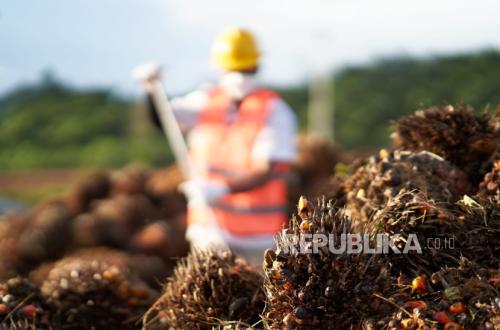
Indonesia’s ambition to increase the use of biofuels (BBN) is considered to be facing ecological limits as it remains reliant on crude palm oil (CPO). Dependence on large-scale land-based raw materials risks driving plantation expansion into forests, peatlands, and areas of high biodiversity value.
These findings were presented in a joint study by the MADANI Sustainable Foundation, the Institute for Essential Services Reform (IES_ESR), Koaksi Indonesia, and the Landscape Alliance, titled “Measuring Ambition and Reality: The Future of Indonesia’s Biofuel within a Just Energy Transition Framework,” launched in Jakarta.
The study notes that the upper limit for national palm oil plantation area, based on Environmental Carrying Capacity and Capacity (D3TLH) assessments, reaches approximately 18.15 million hectares. Meanwhile, existing palm oil plantations have already reached approximately 17.8 million hectares.
At the same time, domestic CPO consumption for biodiesel has exceeded consumption for food since 2023. The study estimates that the implementation of B50 would require approximately 17.9 million tonnes of CPO.
Executive Director of MADANI Sustainable Foundation, Nadia Hadad, stated that increasing biodiesel mandates should not necessarily be accompanied by the expansion of palm oil land. However, the government needs to account for supply limitations, forest and land fires, export interests, and Indonesia’s climate commitments.
“If biofuels only rely on palm oil with increasingly ambitious targets without clear preparation and safeguards, Indonesia’s forest cover could be threatened,” said Nadia on Tuesday (29/09/2026).
Nadia stated that the 18.15 million hectare limit must serve as a guide in the development of palm-based biofuels. Beyond this limit, she noted, plantation expansion faces ecological carrying capacity issues.
The MADANI study notes that there are still approximately 7 million hectares of palm oil plantations aged over 20 years. This land is considered to have room for productivity increases through rejuvenation, meaning production increases do not necessarily have to be achieved by opening new land.
Supply issues are also evident in IESR modelling. By 2030, the biodiesel requirement for land transport, assuming full substitution of diesel, is estimated to reach approximately 42 million kilolitres. Meanwhile, the biodiesel supply in the National Energy Policy is projected to be only around 26.6 million kilolitres.
The gap widens further by 2050. The demand for biodiesel is expected to reach approximately 81.6 million kilolitres, whereas the aggregate supply of biofuels is actually projected to drop to around 24.3 million kilolitres. A similar pattern occurs with bioethanol. Throughout 2020-2050, the projected supply is unable to keep pace with the demand for petrol and aviation fuel.
The study assesses that Indonesia’s dependence on palm oil needs to be reduced by developing non-food raw materials and waste. Used cooking oil, rubber seeds, and nyamplung (tallowwood) are considered not yet seriously developed despite their potential as biofuel sources.
MADANI, IESR, Koaksi Indonesia, and the Landscape Alliance propose three directions for biofuel development. First, community-based biofuels to strengthen public energy access while increasing local economic benefits.
Second, biofuels should be prioritised for sectors that are difficult to electrify, such as shipping, aviation, heavy logistics, and heavy machinery. This development is directed from FAME-based biodiesel towards Hydrotreated Vegetable Oil (HVO) and Sustainable Aviation Fuel (SAF) using non-food raw materials and waste.
Third, biofuels can be developed through non-food energy crops on degraded land, provided that natural forests are not sacrificed and community management rights are strengthened.