
Bioflok Fish Farmers in Cilamaya Kulon Turn Astacita Vision into Reality
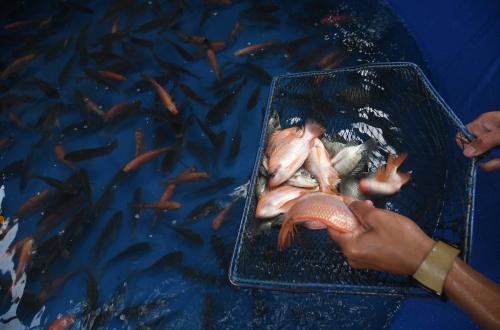
An inspiring story emerges from Sumurgede Village, Cilamaya Kulon District, Karawang Regency.
The Pusaka At Taqwa Fish Farming Group (Pokdakan) has demonstrated that President Prabowo Subianto’s national food security program, known as Astacita, directly impacts rural economies.
On Sunday, 31 May 2026, the group successfully harvested 1.2 tonnes of tilapia using a bioflok system.
This success is notable as the group transformed from a regular religious study community into a productive fish farming enterprise.
Anwar Sadad, known as Neko and chairman of Pokdakan Pusaka At Taqwa, stated that this success stems from genuine government support.
Initially, none of the members had professional fish farming backgrounds.
‘We never initially considered entering tilapia farming. But thanks to President Prabowo’s assistance, alhamdulillah, we now have a productive venture. We are committed to supporting President Prabowo’s Astacita programme, which is people-oriented, to achieve national food security,’ Neko said.
In this first harvest, the group harvested 12 quintals (1.2 tonnes) of tilapia from eight bioflok ponds.
The fish produced are of prime quality, averaging 250 grams per fish. This achievement has placed Pokdakan Pusaka At Taqwa as the second-best bioflok fish farmer in West Java Province, after Cirebon.
This success was due to intensive guidance from fisheries extension officers at the Bogor Freshwater Aquaculture Research and Fisheries Extension Centre (BRPBATPP), Laila Yunita Indah, S.Pi.
Laila admitted she initially doubted the group’s sustainability. However, the members’ determination dispelled her doubts.
‘I wasn’t sure if Pokdakan would last long, but I was wrong. They have high enthusiasm and proved to be very cohesive. For beginners, what Pokdakan Pusaka At Taqwa has achieved is highly successful and inspiring,’ Laila said.
This success is concrete proof that government support through bioflok farming not only boosts food production but also effectively creates new jobs and reduces poverty at the village level.