
Bioenergy development has potential to create 150,000 jobs
PT PLN Energi Primer Indonesia (PLN EPI) has stated that the development of bioenergy has the potential to create 150,000 new jobs within the next few years. Hokkop Situngkir, Director of Biomass at PLN EPI, noted in Jakarta on Thursday that the massive utilisation of biomass in the electricity sector will deliver significant economic, social, and environmental impacts.
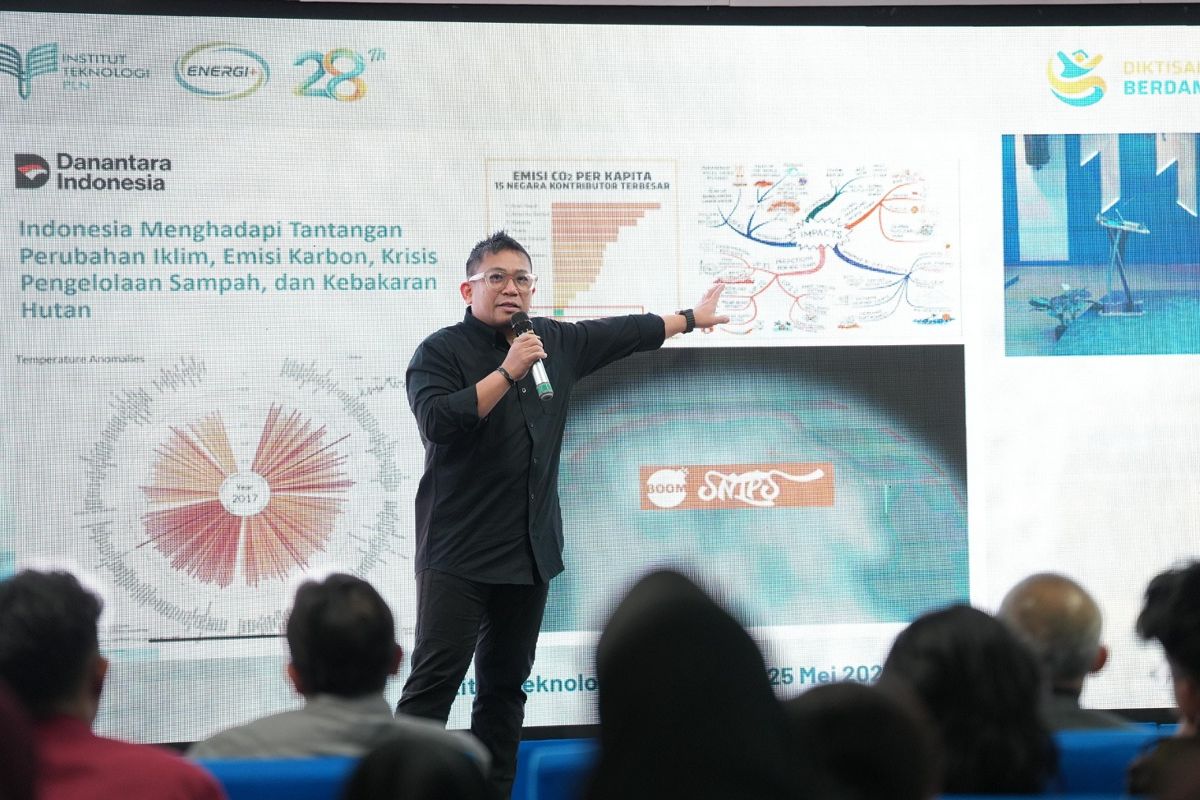
“If biomass implementation reaches 10 million tonnes per year in power plants, the economic value could reach Rp11 trillion. Emission reductions would be approximately 12 million tonnes of CO2, and the potential workforce created could reach 150,000 people within three to four years,” he said. Speaking at the Seminar Series #3 titled “BioEnergy Utilisation in PLN to Support Indonesia’s Energy Security” at the PLN Institute of Technology Jakarta, Hokkop explained that biomass is a rapid-implementation energy transition solution through co-firing programmes in coal-fired power plants (PLTU).
Under this scheme, a portion of coal usage is replaced with biomass derived from agricultural, plantation, and forestry waste, as well as other organic waste. “Bioenergy is not intended to replace fossil power plants entirely in the short term, but rather to serve as a transition solution that allows for gradual emission reductions without compromising the reliability of the national electricity supply,” he clarified.
Currently, PLN has implemented biomass co-firing in 52 PLTUs across various regions in Indonesia. Throughout 2025, biomass utilisation reached approximately 2.35 million tonnes, contributing to an emission reduction of 2.57 million tonnes of CO2 equivalent. PLN has utilised at least 14 types of biomass with an average calorific value of 3,152 kcal/kg, including palm kernel shells, rice husks, corn cobs, sawdust, wood waste, and processed household waste used as alternative fuel.
Hokkop also revealed that Indonesia possesses vast biomass potential, reaching 83.4 million tonnes per year. This potential is distributed across various regions, notably Sumatra with 42.8 million tonnes, Kalimantan with 18.9 million tonnes, and Java with 13.1 million tonnes per year. However, national bioenergy utilisation remains relatively low; current consumption in Indonesia is only 0.35 gigajoules per capita per year, far below the potential of 6.5 gigajoules per capita per year.
“Indonesia has enormous biomass resources. The challenge lies in building an integrated supply ecosystem so that this potential can provide economic added value for the community and support national energy security,” said Hokkop. Additionally, PLN EPI is developing bioenergy utilisation based on biogas and biohydrogen, such as utilising methane from palm oil mill effluent (POME) as an alternative to natural gas. By capturing methane, which has a higher global warming potential than CO2, the company aims to produce clean energy while reducing greenhouse gas emissions.
Furthermore, PLN EPI is developing an Artificial Intelligence (AI) based digitalisation system to monitor the biomass supply chain and co-firing operations across Indonesia. Hokkop emphasised that biomass development is not only about energy supply but also opens new business opportunities in the upstream sector, ranging from raw material collection and biomass processing to logistics and renewable energy technology development. Consequently, PLN EPI continues to encourage the involvement of communities, farmers, village business groups, cooperatives, and the younger generation in the national biomass supply chain.