
Biodiversity Monitoring Expanded Amid Nickel Mining Activity in Halmahera
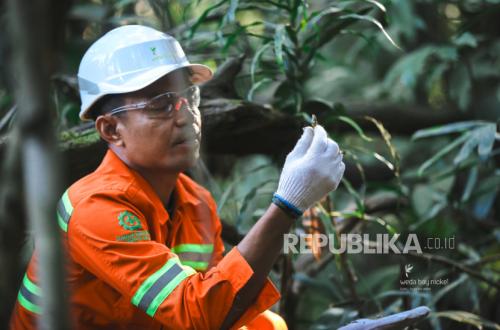
REPUBLIKA.CO.ID, HALMAHERA — Mining activity in areas of high biodiversity requires continuous ecosystem monitoring. In Halmahera, North Maluku, flora and fauna monitoring has been expanded to track changes in biodiversity conditions whilst also serving as a foundation for habitat management within the mining operational area.
PT Weda Bay Nickel (WBN), together with Khairun University, is now conducting biodiversity monitoring at 40 points, an increase from the previous six. The research collaboration has been running for approximately four years.
Khairun University researcher and lecturer M. Natsir Tamalene said the expansion of monitoring points is important because Halmahera lies within the Wallacea region, a transitional zone with high levels of endemism. A number of species in the area also have restricted geographic distributions.
“For that reason, repeated monitoring at multiple points is essential to observe changes in biodiversity conditions over time, rather than only obtaining a snapshot of a single period,” said Natsir.
Through this monitoring, the research team has verified around 249 plant species. Of these, 8.8 percent are locally endemic, 5.6 percent have regional distributions extending as far as Papua, and 1.2 percent are spread across regions as far as the Philippines. Around 63 percent of plant species were found in primary habitat.
The monitoring also identified 53 bird species, 28 insects, eight mammals, eight amphibians, four ground-dwelling fauna, and three reptiles. In addition, there are 35 fauna trigger species and 18 species protected by the Indonesian government.
One finding of particular concern is the Boki Mekot spiny rat (Halmaheramys bokimekot), a mammal endemic to Halmahera with an extremely limited distribution range. The species was recorded through camera traps and Sherman traps at one of WBN’s monitoring points.
Natsir explained that the characteristics of each fauna group require tailored monitoring methods. Birds are observed through direct sightings and sound, whilst mammals are monitored using camera traps, among other methods. Bats, reptiles, small mammals, and nocturnal fauna are also monitored using methods and traps suited to their respective characteristics.
Weda Bay Nickel’s Senior Rehabilitation Superintendent, Fitri Rahmadani Ritonga, said biodiversity monitoring is not carried out merely to fulfil the company’s obligations. The data obtained is used as a basis for determining the management and development of biodiversity programmes.
According to Fitri, monitoring results can identify areas with higher biodiversity value. That information then informs the planning of biodiversity programmes and environmental management set out in the Weda Bay Nickel Biodiversity Action Plan.
WBN is also strengthening its biodiversity database through a Critical Habitat Assessment (CHA). The study covers surveys of 146 target species classified as Critically Endangered, Endangered, Vulnerable, as well as species protected by the Indonesian government.
Of the assessment, 111 species were identified as critical habitat triggers. The results serve as one of the foundations for formulating the Biodiversity Action Plan.
Natsir said habitat change and fragmentation can have differing impacts on each species. Animals with limited mobility, or those dependent on ecological corridors and roosting trees, for instance, are more vulnerable when their habitat undergoes change.
The same applies to plants with restricted geographic distributions or those dependent on specific habitat conditions. Habitat loss can increase the risk to the survival of such species.
For this reason, monitoring results and habitat assessments are used to identify areas of high biodiversity value and to support the planning of preservation zones within the company’s operational area.
At the operational level, WBN also enforces wildlife protection rules for workers and business partners, including a prohibition on capturing and trading wild animals. Mitigation is carried out through operational activity management procedures, the management of high-biodiversity-value areas, and the installation of wildlife protection signs and warning boards.
Fitri said field monitoring, collaboration with academics, habitat assessments, and the implementation of the Biodiversity Action Plan are directed at strengthening data-driven biodiversity management.
“These steps form part of efforts to preserve the ecological function of the area whilst supporting environmental sustainability amid mining operations in Halmahera,” said Fitri.