
Biodiversity Key to Indonesia's Long-Term Economic Growth: Bappenas
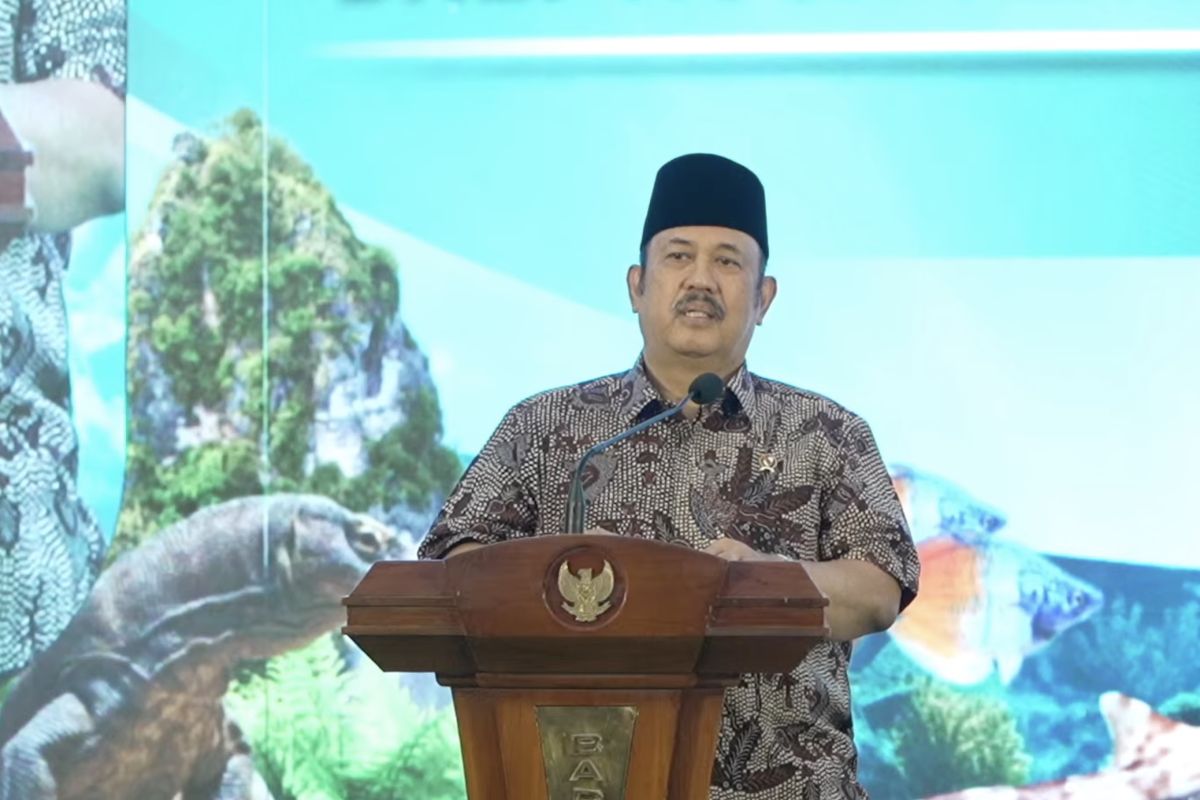
Speaking at the launch of the Biodiversity Status Document for the Bali, Nusa Tenggara, Java, Maluku, and Papua regions, Pambudy urged a fundamental shift away from raw resource extraction toward sustainable, high-value downstream development.
“Biodiversity is something that seems very ordinary every day, like forests, wildlife, or conservation areas,” he remarked.
“Yet, whether we realize it or not, this biodiversity is the source of our future. Every day we enjoy sources of food, fisheries, spices, and medicines—biological resources that are an inseparable part of who we are,” Pambudy emphasized.
Underlining biodiversity’s integration into national development plans, he highlighted the immense value already generated by Indonesia’s ecosystems, which comprise 22 distinct ecosystem types, over 31,000 flora species, and nearly 745,000 fauna species.
To support the Golden Indonesia 2045 vision, Pambudy outlined the critical economic contributions of the nation’s biological resources, which are already delivering substantial financial returns.
Environmental services and wild species utilization generated Rp348 billion (around US$19.45 million) in non-tax state revenue, while exports of wild species and bioprospecting reached Rp8.48 trillion (around US$474.22 million).
Complementing these terrestrial gains, marine fisheries exports contributed a staggering US$6.27 billion (around Rp112.12 trillion) to the economy.
Beyond immediate trade revenues, Indonesia holds immense potential in emerging global markets, particularly through its vast blue-green ecosystems that store 17 percent of the world’s carbon.
Tapping into this asset could unlock an estimated US$17 billion (around Rp303.99 trillion) carbon credit market. Furthermore, shifting focus toward downstream value-added industries is projected to attract US$46.4 billion (around Rp829.72 trillion) in new investment while creating 180,000 jobs.
Finally, the minister highlighted the untapped opportunities within clean energy, noting that vast bioenergy reserves, including biogas and biodiesel, remain largely undeveloped.
With only 0.08 percent of the country’s total bioenergy capacity currently being utilized, expanding this sector represents a crucial frontier for both economic growth and sustainable development.
Central to the government’s long-term roadmap is the Indonesia Biodiversity Strategic Action Plan (IBSAP) 2025–2045, designed to anchor national policy in precise scientific data.
Furthermore, with 52 percent of the nation’s land area containing irreplaceable carbon sinks, biodiversity conservation directly aligns with global climate mitigation commitments.
To advance technology transfer and downstream capabilities, Bappenas is collaborating with international partners, including the German government.
“We want our biodiversity to one day be like a Mercedes or a BMW,” Pambudy said, emphasizing that refined quality and technical precision must drive the next generation of Indonesian growth.
Related news: Indonesia explores bid to host COP18 biodiversity summit
Related news: Indonesia and UK boost biodiversity and conservation funding
Translator: M. Baqir Idrus Alatas, Yashinta Difa