
Biodiversity and DNA Sustainability Also Threatened by Forest and Land Fires
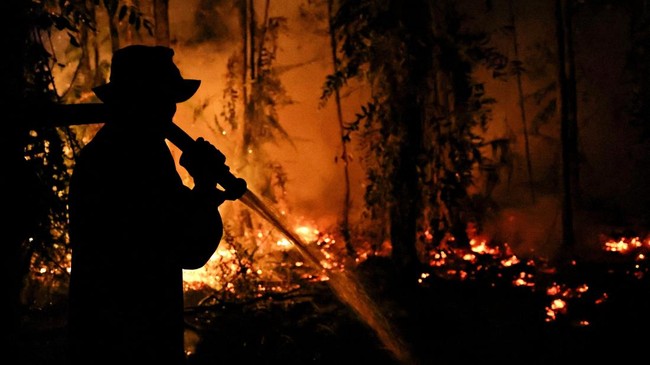
When forest and land fires (karhutla) occur, public attention usually focuses on the area of land burnt, the number of hotspots, smoke, carbon emissions, and economic losses. However, one question is rarely discussed: what is the value of the biodiversity and DNA sustainability that is also burnt?
This question is important for Indonesia. As one of the countries with high biodiversity wealth, Indonesia’s forests hold far more than just trees and carbon. Forests hold habitats, flora, fauna, genetic resources, water, soil, food, medicines, and various ecosystem services. For indigenous peoples and communities living directly with the forest, the forest is also a living space, a source of livelihood, cultural identity, and in certain contexts has a very important value as local wisdom in the form of DNA sustainability. Therefore, when forests burn, what is lost is not merely vegetation cover. What also burns is natural capital and part of Indonesia’s living heritage.
Do Not Only Count the Burnt Area
So far, the area of burnt land has been one of the main indicators used to describe the impact of fires. Yet two areas that both burn 1,000 hectares do not necessarily have the same ecological value. The first area may have relatively low biodiversity. The second area could be a habitat for endemic species, an important area for wildlife, an ecological corridor, a peatland area, a water source, and a living space for local communities. In numerical terms, both are 1,000 hectares, but the value lost can be very different. Therefore, we need to change the question from: “How many hectares of forest burned?” to: “What was inside that area and what value was lost when the ecosystem burned?”
This is the importance of including biodiversity value, natural capital value and local wisdom in calculating the impact of fires. What burns is not only trees; forest fires can cause the loss of several layers of value at once.
First, species value. Flora and fauna can die or lose habitat and food sources. Second, habitat value. Habitat damage can disrupt reproduction, food chains, and wildlife movement. Third, genetic value. Every species carries genetic resources that may have benefits for food, medicine, technology, and science in the future.
Fourth, ecosystem service value. Forests regulate water systems, protect soil, store carbon, support pollination, and perform various ecological functions. Fifth, social and cultural value, known as local wisdom as Indonesia’s DNA sustainability, which has so far been relatively difficult to include in economic calculations. This means the price of burnt timber is not the true value of a forest. Forests are natural capital.
The Fire Is Out, the Impact Is Not Over
Another mistake is to assume the problem is over once the fire is extinguished. In fact, fires can cause a chain effect within the ecosystem. Vegetation is reduced. Insects lose habitat. Birds lose food sources. Mammals lose living space. Predators lose prey. The food chain is disrupted.
The forest may appear green again a few years later, but it does not necessarily regain the ecological structure and function it had before the fire. Therefore, an extinguished fire does not always mean the ecosystem has recovered. The recovery time of each ecosystem differs. In certain conditions, some biodiversity and ecological functions may even require a very long time to return or may not fully return to their original state. In other words, a fire is not only a fire event, but a natural capital loss event.
Do Not Reduce Forests to Merely Carbon Value
Carbon is currently one of the main concerns in forest protection. This is very important because forests store carbon and fires can release it into the atmosphere. However, there is a risk if we view forests only as carbon stock. Forests are: Carbon + Biodiversity + Water + Soil + Ecosystem Services + Social-Cultural Value. Carbon is only one component of natural capital. If our attention is only on carbon, we may forget that within forests there are species, habitats, water sources, knowledge, and ecological relationships that also have value. Therefore, Indonesia needs to move from merely carbon management towards natural capital management.
Indonesia Needs a Biodiversity Data Bank
The next issue is data. Indonesia needs an Indonesia Biodiversity Data Bank, an integrated and continuously updated biodiversity data system. Ideally, such data should not only record species names, but also habitat, endemic and threatened species, genetic resources, ecological corridors, carbon stock, ecosystem services, fire history, land cover change, population conditions, sensitive areas, and restoration data.
Why is this data important? Without a baseline, after a fire we can only say: “1,000 hectares of forest burned.” With biodiversity data, we can know which species were affected, which habitats were lost, which ecological functions were disrupted, how much carbon stock was affected, and how the recovery process is proceeding. Indonesia does not only need forest cover maps. We need maps of Indonesia’s biodiversity value and natural capital.
Forests Are a Living Library
There is one wealth that is often overlooked in biodiversity discussions, namely the knowledge of communities living with the forest. Indigenous peoples and local communities in various regions have knowledge of medicinal plants, water sources, seasons, wildlife behaviour, utilisation of forest products, and areas that must be protected. From this perspective, forests can be seen as a living library.