
Biodiesel B50 Becomes Indonesia's Strategy to Strengthen Industry and Energy Security
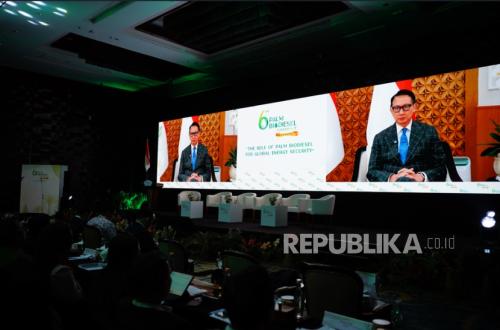
Indonesia continues to increase the utilisation of palm oil-based biodiesel as part of a strategy to strengthen energy security while enhancing national economic added value. The Deputy Minister of Foreign Affairs of the Republic of Indonesia, Arif Havas Oegroseno, stated that the palm oil-based energy transition is not merely about energy security, but also represents Indonesia’s strategic position in the global economic and geopolitical landscape.
“Indonesia’s biodiesel programme is moving very rapidly from B20, B3uit30, B35, B40, and is now moving towards B50. Our primary objectives are to reduce dependence on imported fossil fuels, return higher added value to the national economy, strengthen state revenue, and build domestic industrial capabilities,” Havas asserted during the 6th Palm Biodiesel Conference 2026 in Nusa Dua, Bali, on Thursday (17/09/2026).
Havas noted that the concept of energy security has undergone a shift. Whereas previously energy security focused on access to oil and gas supplies, it now encompasses the development of value chains, resilience, technological mastery, and independence in the responsible utilisation of industrial resources.
In the context of international trade and sustainability regulations, Havas emphasised that Indonesia encourages the implementation of fair, scientific, and non-discriminatory rules. He highlighted several World Trade Organization (WTO) regulations regarding the treatment of palm-based vegetable oils. According to Havas, Indonesia does not reject environmental protection principles, but rejects the application of double standards that are deemed to be tools for geographical protectionism.
“The question is no longer whether sustainability standards exist, but who creates them and whether those standards are based on objective scientific data. Environmental standards must not serve as a proxy for geographical protection, as if vegetable oils from one region are considered correct, while those from another are deemed problematic,” he said.
Havas emphasised that sustainability principles must be applied equally, whether for palm oil in Indonesia, soybean oil in Brazil, or vegetable oils produced in Europe. Environmental impact assessments, he added, must measure real conditions on the ground and account for fairness towards smallholders.
“Through a stronger diplomatic position, Indonesia is encouraging international dialogue to establish a sustainability framework that is transparent, scientifically measurable, and proportional to support fair global biofuel trade,” said Havas.
Regarding biodiesel and energy independence, Vice Chairperson of APROBI, Catra Aradea de Thouars, stated in his opening speech that the global energy market is facing challenges in maintaining energy sovereignty while reducing carbon emissions. In the Southeast Asian region, the development of palm-based biofuels is considered effective in reducing dependence on fossil fuel imports.
“In Southeast Asia, our progress is clearly visible. Indonesia continues to pioneer high blending mandates through the transition from B40 to B50, while Malaysia and Thailand are also expanding their domestic programmes. Palm biodiesel is no longer just an alternative fuel, but a foundation for energy independence and economic stability,” said Catra at Sofitel Bali Nusa Dua, Thursday (17 September 2026).
Catra added that industrial expansion is now not only focused on land vehicles. Development is also beginning to encompass bioethanol, high-concentration B100, and Sustainable Aviation Fuel (SAF).
Source: jawawa.id (https://jawawa.id/newsitem/biodiesel-b50-becomes-indonesias-strategy-to-strengthen-industry-and-energy-security-1790060294)
Originally published by Republika (https://esgnow.republika.co.id/berita/tlr4w1370/biodiesel-b50-jadi-strategi-indonesia-perkuat-industri-dan-ketahanan-energi), translated from Indonesian