
Bio Farma Plans Production Expansion and Vaccine Technology Development
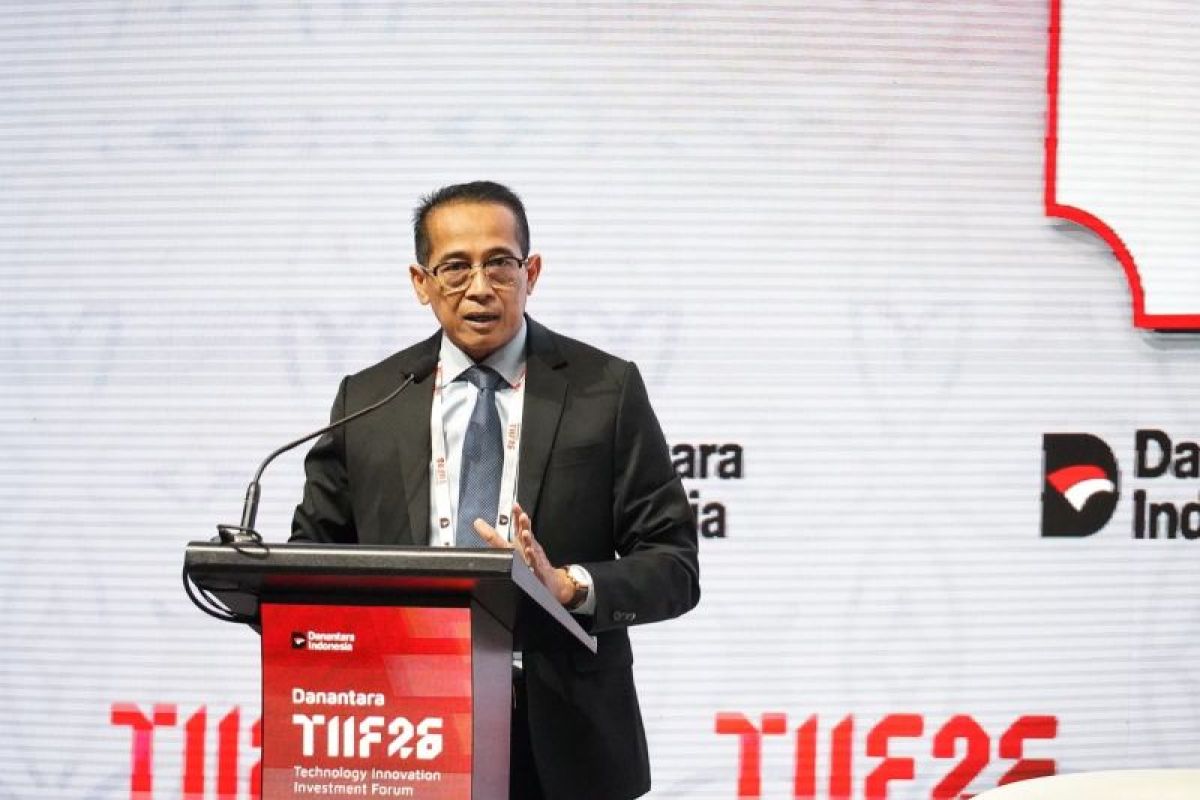
Jakarta (ANTARA) – PT Bio Farma (Persero) is preparing to expand its vaccine production capacity and strengthen its command of technology to support Indonesia’s health self-sufficiency. The plans were presented at the Danantara Technology Innovation and Investment Forum (DTIIF) 2026, held at the Fairmont in Jakarta from 26 to 28 October 2026.
At the forum, Bio Farma outlined plans to build production facilities, commercialise research findings, use digital technology and pursue investment partnerships. The development is intended to strengthen the company’s ability to meet domestic vaccine needs and improve its competitiveness in global markets.
DTIIF 2026, themed “Investing in Tomorrow: Advancing Technology, Innovation, and Sustainable Growth”, brought together more than 1,500 participants from industry, investment, research institutions, technology companies and global strategic partners.
Bio Farma President Director Shadiq Akasya said in a plenary session, “From Laboratory to Industry: How Science Becomes Economic Capability”, that developing the biotechnology industry requires cooperation between the government, universities, research institutions, industry players and international partners.
Shadiq said research findings need to be supported by technological readiness, manufacturing facilities, long-term financing and market access. This support is necessary to ensure innovations can be produced sustainably and benefit the public.
Bio Farma currently supplies 13 of the 14 vaccine types in the National Immunisation Programme, providing more than 120 million doses a year. Since 2001, the company has also reached 153 countries, distributing a total of 86 billion vaccine doses.
To increase its production capacity, Bio Farma is preparing the Bio Shield Nusantara project. At the DTIIF 2026 Investor Showcase, Bio Farma Research and Development Director Dicky Mahardhika Taryono outlined plans to build a new facility outside Bandung. Designed to have capacity for up to 750 million vaccine doses, the facility is targeted to begin producing products between 2029 and 2031.
“For the expansion, we will look to develop a facility outside Bandung. Our current position in Bandung is quite crowded because it is in the middle of the city, so we are looking to open a new site and production facility,” Dicky said on Tuesday (27 October).
Bio Farma also plans to revitalise its production facilities in the Bandung-Pasteur area. Upgrades to Buildings 12 and 43 are expected to add around 145 million doses of capacity, while Building 34 is planned to add approximately seven million doses.
By 2029, Bio Farma aims to meet more than 90 per cent of the National Immunisation Programme’s vaccine needs and reduce dependence on imports of strategic products by at least 50 per cent.
To support the development plans, Bio Farma is inviting investment collaboration with Danantara and other strategic partners. Potential partnerships cover facility construction, increased manufacturing capacity and biotechnology development.
Alongside production capacity, Bio Farma introduced technology to support research, distribution monitoring and employee skills development. One example is Medtrack, a digital system for real-time monitoring of vaccine distribution.
Medtrack enables temperature monitoring during transport and the detection of potential distribution disruptions. The technology strengthens the cold chain, helping to maintain vaccine quality until delivery to recipients.
Bio Farma also presented the use of artificial intelligence (AI) in research and production, as well as virtual reality (VR) to develop staff skills. These technologies form part of the company’s efforts to improve working methods throughout vaccine development, production and distribution.
At the session “Deeptech for All: Innovation, Leadership and Inclusion”, Bio Farma Operations Director Iin Susanti highlighted the importance of industry’s ability to turn research findings into healthcare products that can be manufactured at scale and marketed.
“Research is the first step. But research that cannot be scaled into a product will remain in the laboratory. That is why process engineering and commercialisation are needed,” Iin said.
She said vaccine development is a lengthy process, from research and pre-clinical testing to clinical trials and meeting regulatory requirements. Accelerating the commercialisation of research requires technology, long-term financing, manufacturing facilities and skilled personnel.
One outcome of Bio Farma’s collaboration and technological expertise is the development of the novel oral polio vaccine type 2 (nOPV2), which received prequalification from the World Health Organization (WHO) in 2023.
Bio Farma continues to strengthen cooperation with the WHO, UNICEF, the Gates Foundation and the Coalition for Epidemic Preparedness Innovations (CEPI). It is also working on technology transfer and manufacturing with partners in Senegal and Ghana to strengthen vaccine production capacity and global health resilience.
The partnerships support both product development and improvements in research, manufacturing and technological expertise. Bio Farma says these capabilities are needed to strengthen Indonesia’s domestic biotechnology industry and expand the country’s contribution to the global vaccine supply.
At the conclusion of DTIIF 2026, Bio Farma received the Biomedicine Innovation award for its rotavirus vaccine innovation, “Bio RV: The World’s First Neonatal Rotavirus Vaccine, from Scientific Innovation to National Vaccine Self-Reliance and Industry”, at the Innovation Award event on Wednesday (28 October).
Catur Gunawan, head of the Rotavirus Vaccine Production Working Team, said the vaccine was developed to help prevent diarrhoea in infants.
“Its advantage is that it can provide protection to babies earlier, from the start of life, so they do not have to wait until around two months of age to be vaccinated,” Catur said.
Catur also thanked the various parties that supported the vaccine’s development, including the Ministry of Health, the Food and Drug Authority (BPOM), the Murdoch Children’s Research Institute (MCRI), Gadjah Mada University (UGM) and Bio Farma’s Bio-RV vaccine development team.
Going forward, Bio Farma will continue to develop its vaccine portfolio, including vaccines for HPV, rotavirus, typhoid conjugate, hexavalent, measles-rubella, dengue and hepatitis B. The company is also strengthening its expertise in mRNA and recombinant technologies and exploring life sciences products, including biosimilars and cell therapies.
Under the motto “Advancing Hope, Shaping the Future”, Bio Farma is continuing to develop vaccines and health technologies to meet public needs. Strengthening domestic research and production will help the company broaden immunisation protection and support Indonesia’s health self-sufficiency and resilience.