
Bio Farma Launches Bio-TCV to Strengthen National Vaccine Sovereignty
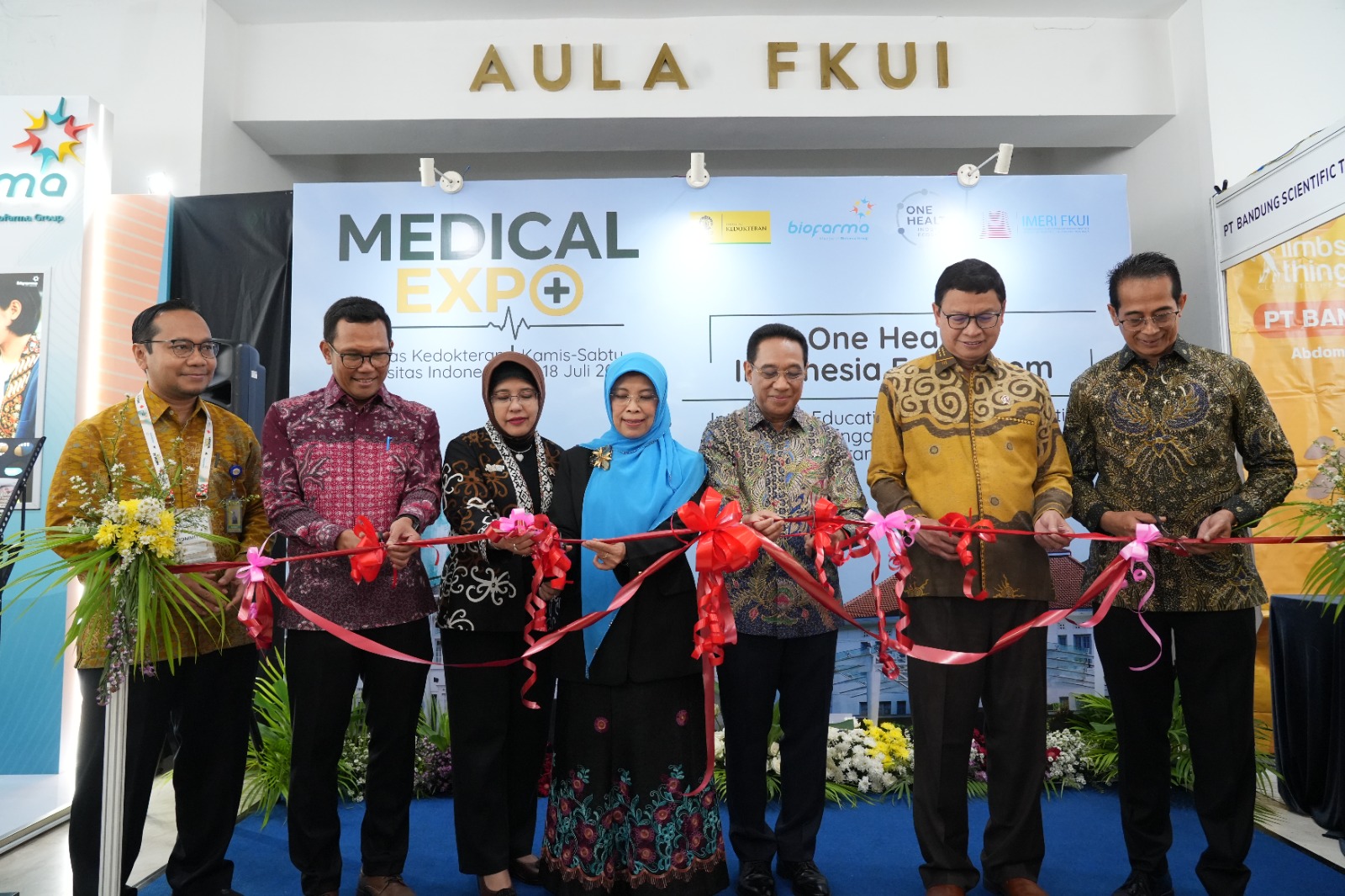
Bio Farma has launched Bio-TCV, a typhoid conjugate vaccine, as part of efforts to strengthen the ecosystem for preventing infectious diseases in Indonesia. Preventing typhoid fever requires an integrated approach linking public health policy, regulatory strengthening, clinical evidence, medical professional recommendations, and responsible expansion of access. Typhoid fever remains a public health challenge, particularly in endemic countries. The disease, caused by the Salmonella typhi bacterium, is closely linked to sanitation, access to clean water, food safety, clean and healthy living behaviours, and appropriate medical management. Therefore, typhoid vaccination must be understood as part of a comprehensive prevention strategy, not as the sole intervention.
Bio Farma’s Commercial Director, Fitri Puspadewi, stated on Saturday (18/7) that the development of Bio-TCV is viewed not only in terms of product availability but also from the perspective of expanding public health benefits through the principles of Availability, Accessibility, Affordability, and Acceptance. Bio Farma ensures Bio-TCV is available sustainably by strengthening national production capacity as the foundation of Indonesia’s vaccine independence. “We are also working to expand access by strengthening the national market and exploring support for the National Immunisation Programme so that more people can obtain protection from typhoid. In terms of affordability, we are committed to providing a quality vaccine at a competitive price to reach more Indonesians. Meanwhile, acceptance is continuously built through collaboration with health professional organisations, healthcare facilities, academics, and education based on scientific evidence so that the benefits of typhoid vaccination are increasingly understood and trusted,” she explained.
The development of a national vaccine requires the support of a strong, credible supervision system based on scientific standards. The role of the Indonesian Food and Drug Authority (BPOM) is crucial in ensuring that vaccine products developed and marketed have undergone evaluation of quality, safety, and efficacy aspects. Head of BPOM RI, Taruna Ikrar, stated that BPOM supports national vaccine innovation and development as long as it meets applicable regulatory standards. BPOM supports the development of national vaccine innovation through regulatory assistance that prioritises the fulfilment of quality, safety, and efficacy standards. “BPOM’s status as a WHO Listed Authority for the regulatory function of vaccine products shows that Indonesia’s vaccine regulatory system has received international recognition. This is an important foundation for strengthening trust in domestically developed vaccine products, while supporting the competitiveness of the national vaccine industry,” he said.
Acting Director General of Disease Control at the Ministry of Health, Andi Saguni, stated that typhoid prevention must be carried out comprehensively by strengthening promotive and preventive efforts, case management, and vaccination in accordance with applicable policies. Typhoid fever remains a concern in the control of infectious diseases in Indonesia. Typhoid control needs to be carried out comprehensively, starting from efforts to create a safe environment such as improving sanitation, food safety, public education, early detection and accurate diagnosis, appropriate medical management, strong surveillance, and prevention including vaccination according to applicable recommendations and policies. “Regarding the possibility of a typhoid vaccine in the national immunisation programme, of course, in accordance with the provisions, the government must conduct a comprehensive study, starting from epidemiological data and the burden of typhoid disease compared to other infectious diseases, expert recommendations, public health benefits, programme readiness, to resource availability,” he said.
The Chair of the Adult Immunisation Task Force of the Indonesian Society of Internal Medicine (PAPDI), Sukamto Koesnoe, said that PAPDI’s recommendation is based on scientific evidence showing that Bio-TCV has a good safety and immunogenicity profile in the adult population in Indonesia. PAPDI recommends typhoid conjugate vaccination for adults aged 18 years and over, especially for groups at high risk of exposure to or transmission of typhoid infection. This recommendation is based on scientific evidence showing that the vaccine has a good safety profile, is capable of generating a strong immune response, and has the potential to provide longer-lasting protection. “We hope vaccination becomes part of integrated preventive efforts alongside education, sanitation, hygiene, and the provision of clean water to reduce the burden of typhoid fever in Indonesia,” he said. Bio-TCV has undergone a lengthy development process, from research collaboration and technology transfer, clinical trials, regulatory evaluation, to marketing approval. The product development process included technology transfer in 2013, preclinical studies, phase I, II, and III clinical trials, up to BPOM registration on 20 August 2023. The phase III clinical trial involved 3,071 subjects ranging in age from 6 months to 60 years.
Source: jawawa.id (https://jawawa.id/newsitem/bio-farma-launches-bio-tcv-to-strengthen-national-vaccine-sovereignty-1784375458)
Originally published by Media Indonesia (https://mediaindonesia.com/jabar/berita/912195/perkuat-kedaulatan-vaksin-nasional-bio-farma-luncurkan-bio-tcv), translated from Indonesian