
Bio Farma Inaugurates CNG Facility, Bolstering Operational Efficiency and Low-Emission Energy Transition
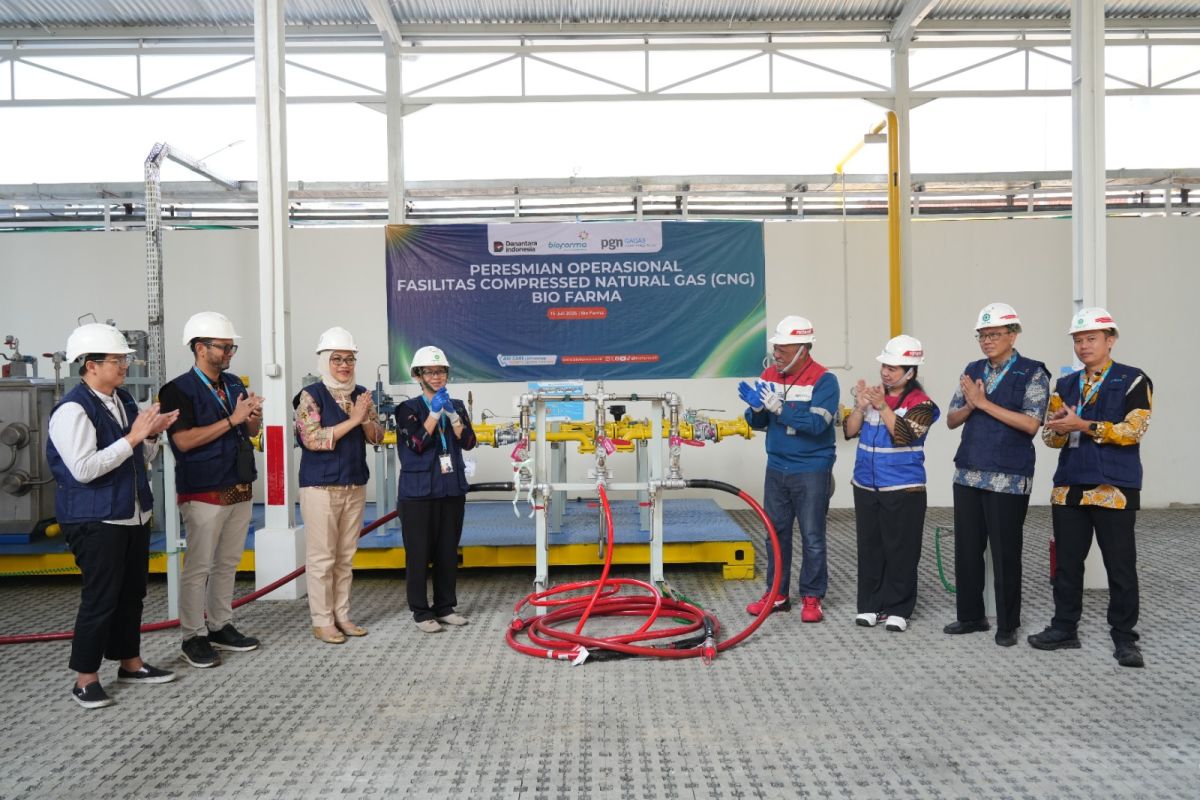
Bandung, 15 July 2026 – PT Bio Farma (Persero) has inaugurated a Compressed Natural Gas (CNG) facility at its premises. The operational launch is part of Bio Farma’s transformation towards more efficient, reliable, and environmentally responsible activities. As part of the Danantara ecosystem, Bio Farma collaborated with PT Gagas Energi Indonesia (“PGN Gagas”) to strengthen energy efficiency, operational reliability, and sustainable value creation. Bio Farma continues to promote corporate management oriented towards enhancing competitiveness, strengthening efficiency, and creating long-term value. The utilisation of CNG is a concrete step to optimise energy use while supporting the transition to operations with lower emission intensity. The CNG facility will support the energy needs of boilers that produce steam for operational activities and production processes. Through the implementation of a dual-fuel system, CNG is used as the primary fuel, while diesel remains available as a backup energy source to maintain operational continuity and reliability. Director of Operations at PT Bio Farma (Persero), Iin Susanti, stated that the operation of the CNG facility is part of the company’s commitment to integrating sustainability principles into its operational transformation. “The operation of the CNG facility is a concrete step by Bio Farma to build business activities that are more efficient, sustainable, and environmentally responsible. As part of the Danantara Indonesia ecosystem, Bio Farma continues to strengthen its corporate fundamentals through effective, measurable, and long-term oriented resource management. This step also strengthens operational reliability, which supports the continuity of the production process and Bio Farma’s contribution to national health resilience,” said Iin. The use of CNG as a replacement for the boiler’s primary fuel is projected to reduce carbon dioxide emissions by approximately 24% compared to using diesel. The implementation of this facility also has the potential to provide energy cost efficiency of around 37% per year, depending on facility utilisation rates, production needs, energy prices, and operational conditions. Bio Farma positions the use of CNG as a stage in the company’s energy transition journey. CNG has a lower carbon emission intensity compared to diesel, so it is expected to support the gradual reduction of operational emissions. “Sustainability is a long-term process that must be realised through concrete, measurable, and accountable steps. Going forward, Bio Farma will continue to evaluate the utilisation of more efficient and low-emission technologies and energy sources, while considering safety, investment feasibility, efficiency, and production reliability. Thus, the transformation undertaken can provide real benefits for company performance while creating sustainable value for the country, society, and the environment,” Iin continued. The facility includes a CNG receiving shelter, a Pressure Regulating Station, a metering system, a distribution pipeline network, and integration with the boiler’s burner and control panel. The entire system is designed to ensure the process of receiving, regulating pressure, distributing, and using CNG takes place safely, reliably, and measurably. Safety aspects have been a priority from the planning stage through to the operation of the facility. The safety system applied includes gas leak detection, automatic flow shut-off, pressure regulation, fire protection, and pipeline integrity testing. “The implementation of the dual-fuel system provides flexibility for Bio Farma in maintaining energy supply continuity. CNG is used as the primary fuel, while diesel remains available as a backup in the event of a supply disruption or operational conditions requiring adjustment. Bio Farma will also conduct periodic inspections, preventive maintenance, equipment testing, and risk evaluations to ensure the facility operates in accordance with technical, occupational health and safety, and applicable environmental requirements,” explained Iin. The development and operation of this CNG facility were realised through collaboration between Bio Farma and PGN Gagas as a partner in providing and managing CNG services. The collaboration includes support for supply readiness, gas receiving and distribution infrastructure, as well as the technical and operational aspects necessary to support the safe and reliable utilisation of CNG. The synergy between Bio Farma and PGN Gagas is expected to strengthen energy supply reliability while supporting the industrial sector’s efforts to increase efficiency and gradually reduce emission intensity. Santiaji Gunawan, President Director of PGN Gagas, stated that the collaboration with Bio Farma is part of PGN Gagas’s support for the utilisation of natural gas as a transition energy. “Collaboration with Bio Farma is part of our commitment to expanding the benefits of CNG to essential sectors that support the basic needs of society, including health. The reliability of energy supply in production facilities like Bio Farma is crucial, as it concerns the continuity of production that directly impacts public health services,” said Santiaji. Going forward, Bio Farma and PGN Gagas will continue to strengthen coordination to ensure supply reliability, facility performance, operational safety, and the sustainability of CNG utilisation. Periodic monitoring will be conducted on energy consumption, emission intensity reduction, cost efficiency, supply reliability, and facility safety performance. The results of this monitoring will serve as the basis for Bio Farma to conduct continuous evaluation and improvement in energy management.