
Binance Cybersecurity Incident Prompts OJK to Address Crypto-Asset Security
Jakarta, CNBC Indonesia – The Financial Services Authority (OJK) said a cybersecurity incident affecting global crypto exchange Binance was a reminder of the importance of information technology governance, access controls, improving staff competence, and effective supervision and internal control systems at companies.
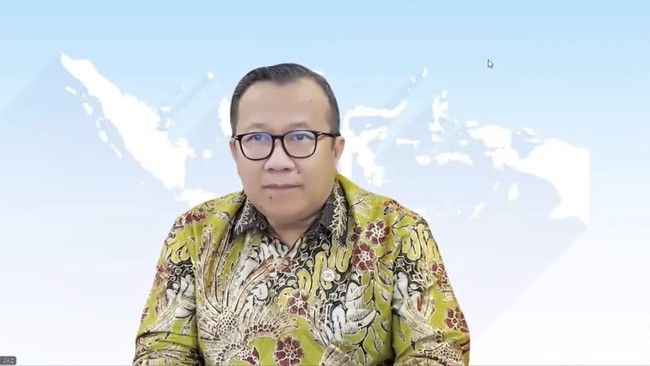
“Public trust must be the foundation for the growth of the digital financial asset industry,” said Adi Budiarso, OJK’s Chief Executive for Financial Technology Innovation Supervision, Digital Financial Assets and Crypto Assets, at a virtual press conference on Thursday (5 November 2026).
He said that, following an incident at a major global exchange, risk mitigation across the domestic industry needed to be strengthened continuously.
The OJK expects licensed Digital Financial Asset (DFA) trading operators in Indonesia—including exchanges, clearing houses, custodians and all other DFA operators—to implement adequate risk-management governance and cyber resilience.
This is intended to prevent an incident at a single global platform from causing widespread concern about Indonesia’s industry.
Adi said Binance uses a risk-mitigation fund called the Secure Asset Fund for Users (SAFU), funded from a portion of trading fees and held in an internally managed wallet. The OJK urged the public to remain calm and trade crypto only through DFA or crypto-asset trading operators licensed and supervised by the authority.
“Learning from Binance, they use risk mitigation and funds from the Secure Asset Fund for their users, SAFU. They set aside a portion of trading fees in a wallet managed internally,” he said.
Adi stressed that the OJK had established various requirements under OJK Regulation (POJK) No. 27 of 2024. These cover stronger governance, risk management, information-system security and consumer protection.
Specifically, the OJK requires at least 70% of customer assets to be held by a storage provider or custodian, while traders may manage no more than 30% themselves. Of the assets managed directly by traders, at least 70% must be kept in cold storage and no more than 30% in hot wallets.
Regarding responsibility for asset losses, Article 91(1) of POJK No. 27 of 2024 stipulates that traders must safeguard customer-owned DFAs held by them and are liable if those assets are lost.
Adi said there was a strong regulatory basis for the responsibilities of operators, exchanges and clearing houses in relation to storage in cold and hot wallets.
Compensation arrangements will take account of the findings of investigations into the cause of any loss and the applicable rules. The OJK said asset security and consumer protection were its top priorities in supervising Indonesia’s DFA industry.
“POJK places asset security and consumer protection at the forefront of supervision of Indonesia’s digital financial asset industry today, while supporting its growth in the future,” he said.
Source: jawawa.id (https://jawawa.id/newsitem/binance-cybersecurity-incident-prompts-ojk-to-address-crypto-asset-security-1793875854)
Originally published by CNBC Indonesia (https://www.cnbcindonesia.com/market/20261105155128-17-782712/ada-insiden-siber-binance-ojk-buka-suara-soal-keamanan-aset-kripto), translated from Indonesian