
Bima’s Bo’ Sangaji Kai Manuscript Recognised by UNESCO as a Memory of the World
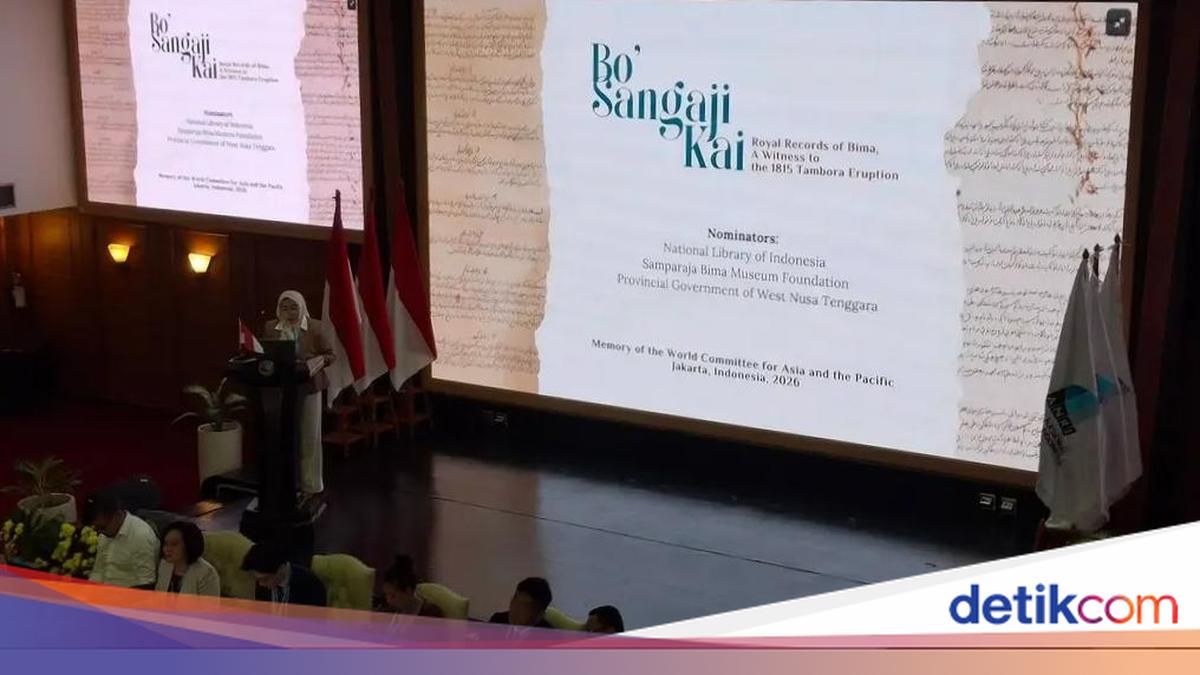
The ancient Bo’ Sangaji Kai manuscript has received international recognition. The record of the Kingdom and Sultanate of Bima, in West Nusa Tenggara (NTB), has been designated a UNESCO Memory of the World (MoW).
“Praise be to God, our hope and dream of having Bo’ Sangaji Kai recognised by UNESCO’s Memory of the World programme has finally come true,” Dewi Ratna Muchlisa, head of the Sampajara Bima Museum, told detikBali on Sunday (8 November 2026).
Dewi said that before the manuscript was designated a UNESCO Memory of the World, she presented it at a meeting of the Memory of the World Committee for Asia and the Pacific (MoWCAP) in Jakarta recently.
“I presented it on Wednesday (4 November 2026), and the following day, Thursday (5 November 2026), it was officially designated a UNESCO Memory of the World for Asia and the Pacific,” said Dewi, a descendant of Bima’s 14th Sultan, Muhammad Salahuddin.
Bo’ Sangaji Kai consists of two words in the Bima language. Bo’ means “book”, while Sangaji Kai was the title of the ruler of Bima before the kingdom became a sultanate. Bo’ Sangaji Kai is therefore a record of the Kingdom and Sultanate of Bima.
The original manuscript was written on lontar palm leaves in the Bima language and script, known as Mbojo. During the reign of Sultan Abil Khair Sirajuddin, who ruled from 1645, it was converted into Malay written in Arabic script.
As well as recording the history of the Kingdom and Sultanate of Bima, Bo’ Sangaji Kai documents history, social life, culture and customs from the 17th to the 19th centuries, said Dewi, who is commonly known as Dae Dewi.
Dae Dewi said Bo’ Sangaji Kai was named a National Collective Memory (IKON) by the National Library of Indonesia in 2024, before receiving UNESCO recognition.
“It became a National Collective Memory two years ago. In 2026, it has now become a UNESCO Memory of the World,” she said.
Dewi said the manuscript was recognised by the National Library and UNESCO because of the importance of its contents. Among other things, it records a global event: the eruption of Mount Tambora in 1815.
“The Bo’ Sangaji Kai manuscript records the eruption of Mount Tambora. The effects of the eruption reached countries in Europe,” she said.
The manuscript also contains information about Bima’s culture, traditions and customs, including Hanta Ua Pua, as well as its laws and system of government, alongside customary practices.
“The Kingdom and Sultanate of Bima are reflected in this manuscript,” she said.
Dae Dewi urged everyone, particularly the people of Bima and younger generations, to continue valuing their culture and remembering the heritage of their ancestors. One way to do so, she said, is by studying the Bo’ Sangaji Kai manuscript.
Source: jawawa.id (https://jawawa.id/newsitem/bimas-bo-sangaji-kai-manuscript-recognised-by-unesco-as-a-memory-of-the-world-1794117021)
Originally published by detikBali (https://www.detik.com/bali/nusra/d-8743451/naskah-kuno-bo-sangaji-kai-asal-bima-resmi-diakui-unesco-sebagai-ingatan-dunia), translated from Indonesian