
Bima Arya Urges Regional Heads to Shift Paradigm to Strengthen Ecological Justice
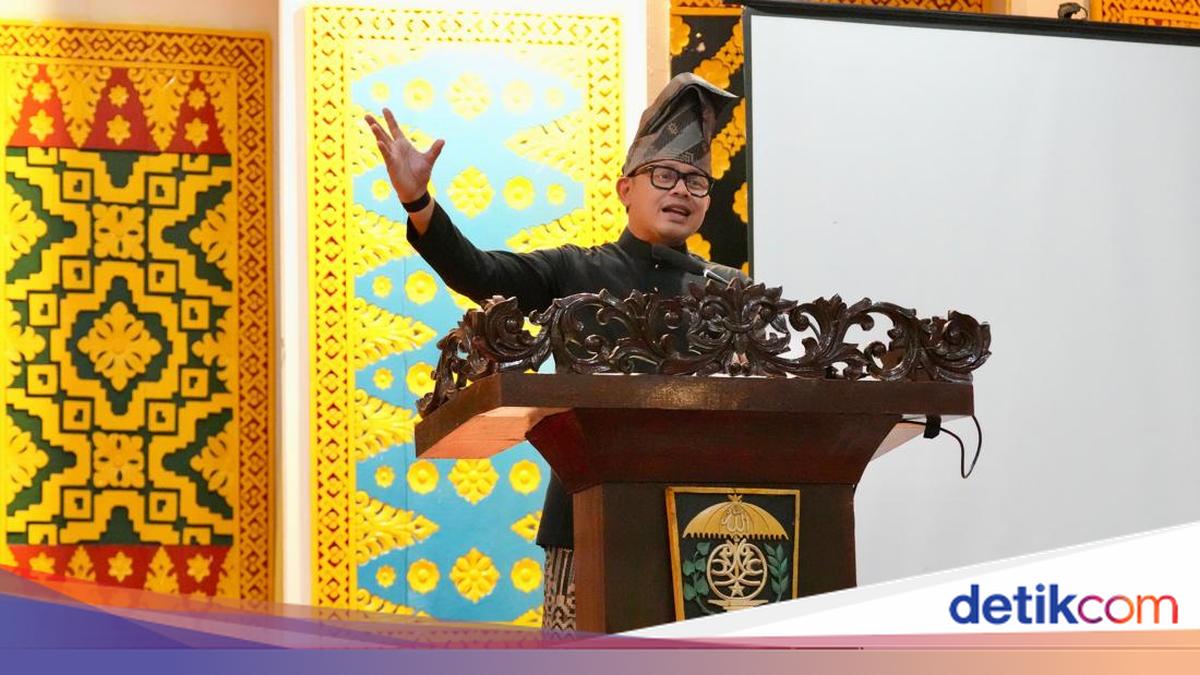
Deputy Home Affairs Minister (Wamendagri) Bima Arya Sugiarto is encouraging regional heads to change their development paradigm so that it is not only oriented towards economic growth, but also pays attention to social, cultural, and ecological sustainability, as well as the benefits of development for future generations.
This shift in perspective is considered important to prevent clashes between the interests of economic growth, indigenous communities, and environmental preservation.
According to Bima, regional heads need to have a comprehensive perspective when formulating development policies. Policy is not enough if it only focuses on popularity, meeting basic needs, or regulation, but also needs to consider cultural heritage, natural wealth, and customary law that develops in the regions. Therefore, community involvement is important in every decision related to the use of an area.
“Our challenge is how every plan meaningfully involves and listens to indigenous leaders, to what they say, and to the long-standing ecological fighters,” said Bima in his statement on Friday (21/8/2026).
He said this while giving a speech at the People’s Environmental Week event titled ‘Movement to Restore Indonesia for Ecological Justice’ at the Traditional Hall of the Riau Malay Customary Institution, Pekanbaru, Friday (21/8).
Bima encouraged this paradigm shift to be translated into concrete policies in the regions. One way is through accelerating the recognition of indigenous legal communities through regional regulations (Perda). He noted that there are still regions that already have regional regulations related to indigenous communities, but have not yet implemented them. Meanwhile, some other regions do not even have such regulations yet.
In addition to recognising indigenous legal communities, Bima emphasised the importance of integrating the principle of ecological balance into spatial planning. According to him, spatial planning should not be seen merely as an administrative complement, but must become the basis for the entire design of regional development.
“All planning designs based on spatial planning should also breathe a concern for ecological balance. Not only in certain areas where customary law elements are dominant, but in all regions,” he explained.
In this context, Bima explained that the perspective on indigenous communities is also continuously evolving. Indigenous communities, who were previously mostly seen as objects of development, then developed into groups that need to be protected. This perspective subsequently shifted to placing indigenous communities as rights holders, and now as the primary guardians of nature (custodians or stewards of nature).
“Not only making indigenous communities objects but subjects. Not only focusing on regulation, but also collaborating and co-creating,” he explained.
According to Bima, the co-creation approach places communities as active parts of the development process, from designing, thinking, implementing, to jointly overseeing policies. With this approach, indigenous communities are not merely parties who are accommodated, but also help determine the direction of development that affects their living space.
On that occasion, Bima also expressed appreciation to environmental fighters and activists who have contributed to protecting nature. He assessed that the Indonesian Forum for the Environment (WALHI) and environmental activists can act as a bridge between indigenous communities, local wisdom, and policy makers.
“We hope that our friends at WALHI can become a bridge between indigenous communities, a bridge between local wisdom and the existing policy makers,” he said.
Bima affirmed that the Ministry of Home Affairs (Kemendagri) is ready to collaborate with regional governments, indigenous communities, and environmental fighters to promote development that maintains balance while realising ecological justice.
“The Ministry of Home Affairs is always ready to collaborate,” he concluded.