
Bima Arya Urges Regional Autonomy to Become Engine of Economic Growth
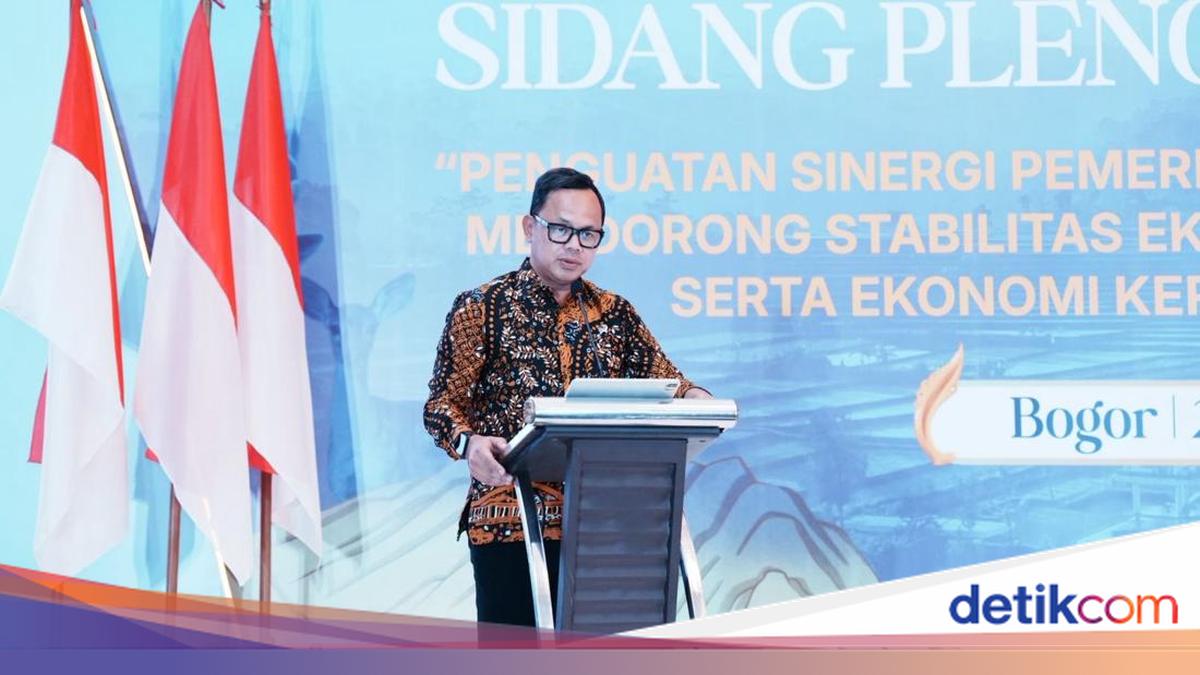
Deputy Minister of Home Affairs (Wamendagri) Bima Arya Sugiarto is pushing for changes in the implementation of regional autonomy so that it no longer focuses solely on the division of authority. According to him, regional autonomy must be directed towards creating added value and strengthening new centres of economic growth.
Bima conveyed this while speaking at the National Seminar of the Indonesian Economists Association (ISEI) at the IPB International Convention Center Botani Square, Bogor City, West Java, on Thursday (27/8/2026).
In that forum, he emphasised the importance of reinterpreting fiscal decentralisation as an instrument to encourage more equitable economic growth across regions.
“Fiscal decentralisation today must also become an instrument that creates more growth centres, not merely a division of authority,” he said in a written statement on Friday (28/8/2026).
In line with this, the Ministry of Home Affairs (Kemendagri) is currently finalising the Grand Design for Regional Autonomy Arrangement. This arrangement is directed at clarifying the division of authority between levels of government while refining the Revenue Sharing Fund (DBH) and General Allocation Fund (DAU) formulas to be more proportional for regions.
He said there are three paradigm transformations that local governments (Pemda) need to undertake to strengthen fiscal independence sustainably.
First, shifting the development approach from one based solely on resources towards the creation of added value. Regions cannot simply rely on the commodities or resources they possess, but need to develop economic ecosystems from upstream to downstream to generate added value.
“From resource-based decentralisation towards value creation-based decentralisation. So we encourage our regions, we ask them, we inspire them, we provide motivation. Not only based on resources, but there is value creation there,” he stressed.
Second, changing the pattern of inter-regional relations from competition towards collaboration. Inter-regional cooperation is needed to build supply chains, strengthen economic potential, and create mutually supportive growth.
Third, changing the role of local governments from merely institutions that spend budgets into drivers of development. Local governments are encouraged to open investment space, reduce various barriers, optimise alternative financing sources, and strengthen collaboration with various stakeholders.
According to him, the success of this transformation depends heavily on leadership capacity in the regions. This is important considering that most regional heads today are new leaders who do not yet have much experience in running government.
“80 per cent of regional heads are newcomers. And most are Gen X, with some millennials as well. So no longer baby boomers. So they are young and not incumbents. On one hand this is new hope, on the other hand they do not yet have much experience,” he revealed.
According to him, the presence of new leaders in the regions opens up opportunities as well as challenges. The presence of a new generation can encourage the birth of various innovations, but on the other hand capacity building and mentoring are needed so that the resulting policies continue to operate according to the principles of good governance.
For this reason, the Ministry of Home Affairs continues to provide guidance and assistance to local governments to strengthen leadership capacity, encourage accountable innovation, and realise local government administration that is increasingly responsive to the needs of the community.