
Bima Arya Praises Kepri's Economic Growth, Urges Consistent Achievement to be Maintained
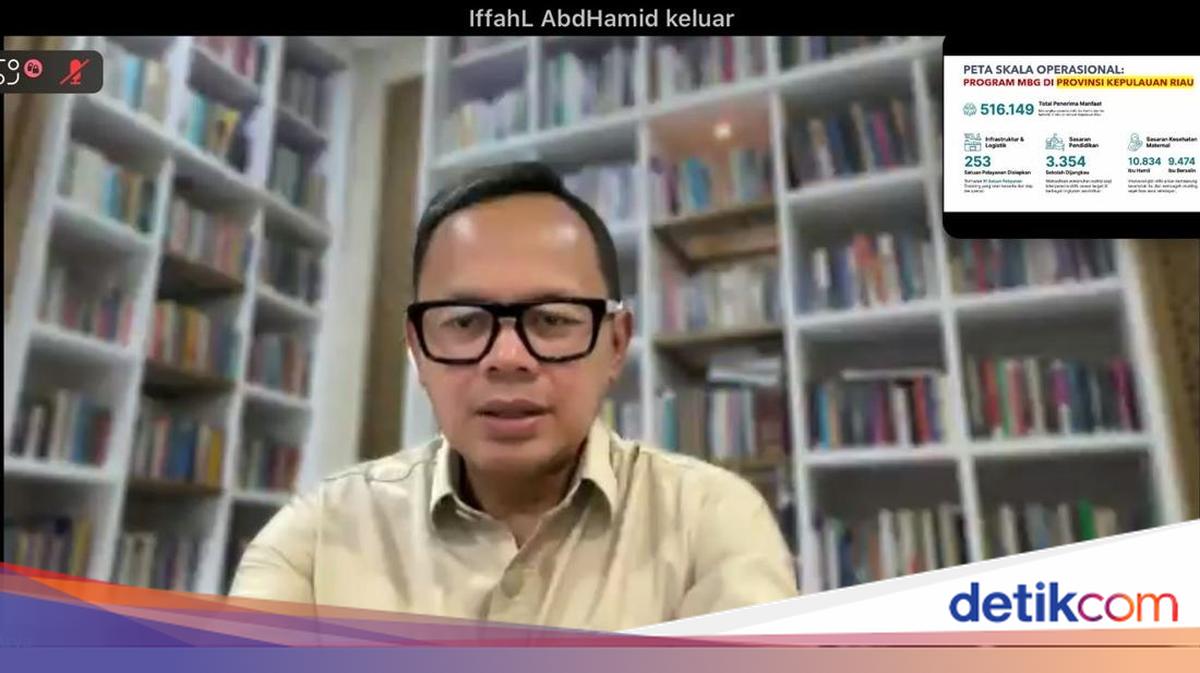
Deputy Minister of Home Affairs (Wamendagri) Bima Arya Sugiarto has appreciated the stability of economic growth in Riau Islands Province (Kepri). He assessed that this achievement needs to be maintained consistently so that it can contribute to achieving the national economic growth target.
“Well, once again, we appreciate Riau Islands’ good economic growth, good economic figures, and they must continue to hold steady to contribute to national economic growth,” said Bima Arya Sugiarto on Monday (6/4/2026).
Bima stated that this achievement also serves as one of the keys for Indonesia to avoid the middle-income trap. He conveyed this during the Deliberation on Development Planning (Musrenbang) for the Riau Islands Provincial Government’s Work Plan (RKPD) for 2027, held virtually from Jakarta.
Bima explained that the Ministry of Home Affairs (Kemendagri) classifies regional fiscal capacity into three categories: strong, medium, and weak.
In this context, Bima detailed that Riau Islands Province falls into the category of regions with strong fiscal capacity through contributions from Regional Original Revenue (PAD) reaching 54.52%. This figure is higher compared to central government transfers to the region at 45.44%.
In addition, several macro indicators also show good performance, including the Human Development Index (IPM) reaching 80.53. This achievement positions Kepri as one of the regions with the highest IPM nationally after DKI Jakarta and the Special Region of Yogyakarta.
Nevertheless, Bima assessed that the optimisation of regional spending still needs to be improved. He revealed that the budget structure in the RKPD is still dominated by supporting expenditures, such as civil servant salaries and operations, reaching 40.20% at the provincial level and 49.50% at the district/city level. Therefore, according to him, budget allocations for programmes that directly impact the community need to be increased.
“However, the homework is the realisation of the spending. The spending is still quite low, Governor. The homework is how to balance revenue allocation with maximal spending,” Bima explained.
Bima also encouraged local governments to synergise in supporting national priority programmes, particularly the Free Nutritious Meals (MBG) programme. He asked regional heads to actively participate in ensuring the smooth operation of the ecosystem and supply chain for the programme from upstream to downstream so that its implementation runs optimally.
Furthermore, Bima emphasised that the implementation of Musrenbang should not merely be a ceremonial agenda, but rather a collaborative forum with a pentahelix approach. This approach involves various stakeholders, such as communities, academics, and business actors.
“I just entrust this to you, Governor, so that Kepri can maintain its solidity and compactness, because the figures are already good as mentioned earlier. So, the togetherness between local government elements, Forkopimda, legislature, executive, province, city, district, this is the key to continuing our national targets,” Bima concluded.