
Billionaire Who Opposed the President Arrested by Armed Forces
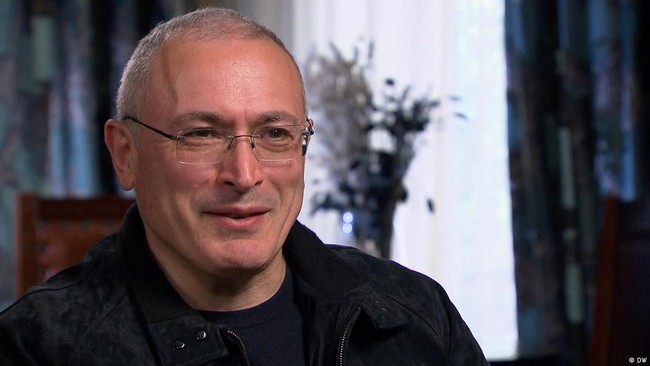
Jakarta, CNBC Indonesia - Possessing billions of US dollars does not make someone immune to state power. This was proven in Russia in 2003, when Russian President Vladimir Putin shocked the world by arresting the country’s richest man, Mikhail Khodorkovsky, deploying elite troops to do so. Khodorkovsky was the owner of the giant oil company Yukos and a symbol of the rise of the Russian oligarch class following the collapse of the Soviet Union. At the peak of his success, he was among the world’s wealthiest individuals. Forbes recorded his fortune at US$15 billion, placing him among the richest people on the planet. His wealth story began in the 1990s when Russia undertook massive privatisation after the Soviet Union dissolved. In that process, many state assets moved into private hands at relatively low prices. Khodorkovsky was among the most successful in seizing that opportunity. Through various acquisitions, he managed to control strategic oil assets and built Yukos into one of Russia’s largest energy companies. That success transformed him into one of the most influential oligarchs in the country. At that time, oligarchs possessed not only economic power but also significant political influence. They were often involved in funding political parties and had direct access to circles of power. The situation began to change when Putin became President of Russia in 2000. According to The Guardian, he sought to reassert state control and limit the oligarchs’ influence over national policy. Amidst these changes, Khodorkovsky became increasingly active in politics. He was known to support several political parties, including opposition groups. On various occasions, he also openly criticised corruption and governance in Russia. These moves worsened his relationship with the Kremlin. Many observers assessed that Khodorkovsky had crossed an unwritten line imposed by Putin on the oligarchs: they could run businesses, but not help determine the country’s political direction. The conflict reached its peak on 25 October 2003. When Khodorkovsky’s private jet stopped to refuel in Novosibirsk, Siberia, Russian security forces carried out an arrest operation. The billionaire was immediately taken to Moscow to face legal proceedings. Citing Al Jazeera, the Kremlin stated the arrest was made on charges of fraud and tax evasion. The court later upheld the charges and sentenced him to 10 years in prison. As a result, Yukos was declared bankrupt for being unable to pay massive tax obligations to the state. Its main assets subsequently moved to state-controlled energy companies. Nevertheless, many viewed the event as more than just a business or tax case. Khodorkovsky was at the time one of the most vocal oligarchs criticising the Russian government. Whatever the interpretation, Khodorkovsky’s arrest became a crucial turning point in modern Russian history. Citing BBC International, since that moment most major Russian businessmen have chosen to keep their distance from political activity and avoid open confrontation with the Kremlin. Even on various sensitive issues, including after the outbreak of the Russia-Ukraine war, the oligarchs tend to remain silent and not become involved in the political vortex.