
Billionaire Investor Sounds the Alarm over Risks to Stock Markets
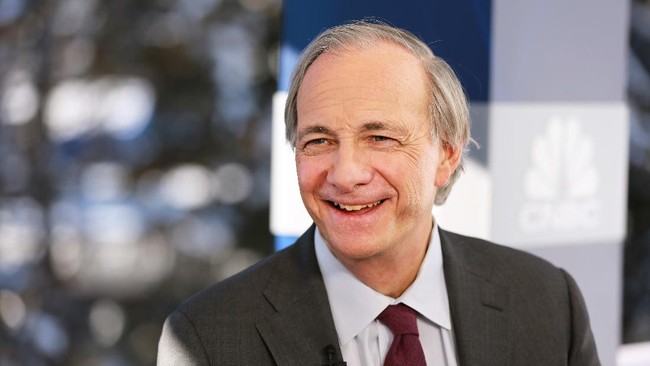
Jakarta, CNBC Indonesia – Billionaire investor Ray Dalio has warned that global stock markets are becoming increasingly vulnerable to rising bond yields. Corporate earnings growth, which has supported equities, is beginning to lose its strength, while financing costs and cash-flow risks are mounting.
The founder of Bridgewater Associates said shares had so far held up amid a global bond sell-off because earnings growth kept the potential returns on equities attractive compared with fixed-income instruments. However, that advantage is shrinking.
If bond yields continue to rise while share prices have already climbed, the stock market will have less room to absorb pressure from higher interest rates.
“We are at a point in the cycle when interest rates can rise without causing the stock market to fall because there is still earnings growth and a sufficient expected return,” Dalio told CNBC International at the Milken Institute Asia Summit in Singapore last week, as quoted on Monday (12 October 2026.
“But as that cushion shrinks, it means we are moving into a later phase of the cycle. And that is where we are now,” he said.
The warning comes as US government bond yields remain near their highest levels in decades. Investors face a combination of large government budget deficits, persistent inflation and growing financing needs for investment in artificial intelligence (AI).
Dalio said that early in the current cycle, shares offered much higher expected returns than bonds. This helped sustain investor interest in equities despite rising borrowing costs.
However, rising share prices alongside higher bond yields have narrowed that relative advantage. The shift in valuations is also beginning to show in credit spreads – the difference between the yields on riskier debt instruments and benchmark bonds – which Dalio said were starting to widen.
Rising profits, but cash flow under pressure
Dalio also urged investors not to focus solely on corporate earnings growth. In his view, free cash flow should be a key consideration when assessing a company’s financial health.
Free cash flow is the money left after a company has paid for operating needs and capital expenditure. If earnings rise but investment absorbs too much cash, a company could come under liquidity pressure.
“I think investors should pay attention to free cash flow, not just earnings,” Dalio said.
He expects corporate earnings could continue to improve, while free cash flow may deteriorate. This matters amid substantial corporate investment needs, particularly in developing new technologies and AI infrastructure.
Aggressive investment can increase the potential for long-term returns. At the same time, however, it also absorbs large amounts of funding.
Dalio did not directly forecast a fall in corporate earnings or an imminent stock market correction. He said financial conditions were not yet tight enough to significantly constrain credit and spending.
Nevertheless, he said developments should be monitored, as tighter financial conditions could affect economic activity and capital markets.
Dalio expects bond sell-off to continue
Dalio also expects pressure on global bonds to persist. Governments and companies are now competing for funding in the markets, he said.
Governments need financing to cover budget deficits, while companies are raising funds for technology investment and other business needs.
As debt issuance increases, investors have to absorb a larger supply of bonds. This can push bond prices down and yields up, particularly if demand does not grow at a similar pace.
“We are in a bear market for bonds. I think that is quite clear, and my expectation is that the pressure will continue,” Dalio said.
Rising borrowing costs could eventually force companies and governments to reduce lending and spending. The effects could spread to economic activity and add to pressure on stock markets.
For now, earnings growth continues to support equities. However, Dalio believes the process of tightening financial conditions is only at an early stage.
His warning is a reminder to investors that stock markets are influenced not only by corporate earnings, but also by financing costs, cash flow and competition for capital amid rising global borrowing needs.
Source: jawawa.id (https://jawawa.id/newsitem/billionaire-investor-sounds-the-alarm-over-risks-to-stock-markets-1791773489)
Originally published by CNBC Indonesia (https://www.cnbcindonesia.com/market/20261012081310-17-775194/investor-miliarder-bunyikan-alarm-ada-warning-ke-pasar-saham), translated from Indonesian