
Billboard for Film 'I Must Die' Causes Concern, Potential to Provoke Suicide
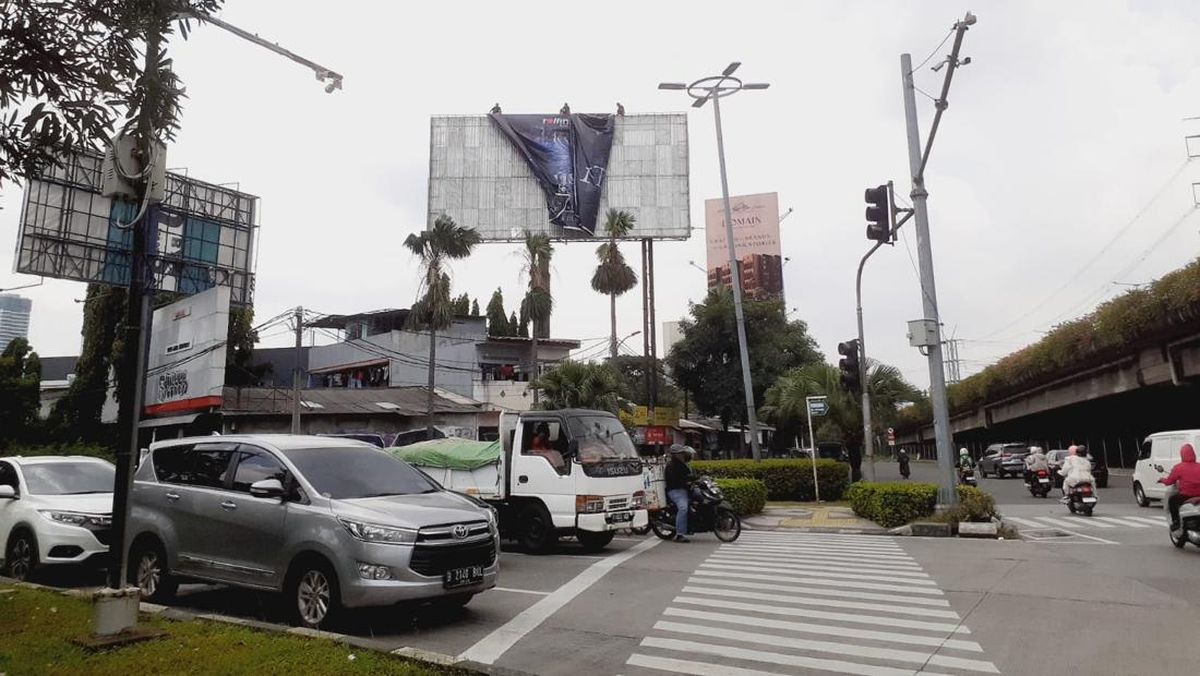
The promotional billboards for the film ‘Aku Harus Mati’ have been removed in several locations because they were deemed disturbing, psychologically disruptive to residents, and potentially provocative in encouraging suicide.
Jakarta Governor Pramono Anung has responded to public complaints regarding the presence of these film promotional billboards in the administrative area of Jakarta.
After receiving reports, he ensured that his team directly monitored the issue.
“The first concerns the poster for the film ‘Aku Harus Mati’. I have received reports from the Deputy Coordinator of Special Staff and also from the Head of the Diskominfotik Agency,” said Pramono at Pasar Gardu Asem, Central Jakarta, on Monday (6/4).
As a concrete measure, the DKI Jakarta Provincial Government quickly coordinated with relevant institutions to regulate the promotional materials that sparked controversy.
The removal of the advertisements was executed immediately to prevent further disturbance to the public passing by.
“Then in the field, we have coordinated with the DKI Jakarta KPI and Satpol PP, including the advertising bureau; those billboards have been taken down,” Pramono explained.
Furthermore, Pramono issued a stern warning to those in the creative industry and advertising bureaus to be more prudent in displaying visual materials in public spaces.
He emphasised that the use of provocative marketing strategies that ignore social impacts on Jakarta residents would not be tolerated.
“But the principle is that this must not happen again,” said Pramono.
“Things like this, just to attract the public by placing sensitive advertisements that impact society, must not happen again,” he added.
Previously, the promotion of the horror film titled “Aku Harus Mati” sparked debate due to its visuals on the billboards, which were considered too extreme.
To prevent suicide provocation
The Ministry of Health (Kemenkes) stated that controversial film promotional materials, such as ‘Aku Harus Mati’, in public spaces risk triggering suicide imitation among vulnerable individuals.
Director of Health Services for Vulnerable Groups at Kemenkes, Imran Pambudi, said that media and promotional materials have the power to shape how people understand issues. Titles, images, or narratives that simplify suicide as a solution to suffering can lower resistance thresholds for those who are fragile.
“Repeated exposure to messages that romanticise or normalise such actions can trigger individuals with histories of depression, impulsivity, or traumatic experiences,” he said in Jakarta on Monday.
The public debate as a reaction to the advertising materials, he said, is not merely about aesthetics or freedom of expression. When suicide themes are presented without caution, the impact can affect public safety. According to him, advertisements must be presented safely, as outlined in advertising ethics.
Therefore, the context of presentation is crucial, he said, whether the message places suicide within the framework of mental health complexity and prevention, or highlights dramatic elements that glorify the act.
“The concerns of mental health professionals and the regulation of promotional materials as reported show that provocative effects are not mere speculation. Word choices that seem trivial, portraying suicide as a ‘choice’ or ‘liberation’, can be interpreted as legitimisation by desperate individuals,” he said.
On the other hand, presentations that emphasise help availability, highlight complex causal factors, and direct people to support services can reduce imitation risks and help shift the narrative from sensation to prevention.
“Data from crisis services and recorded death reports reinforce that mental health issues are increasingly real in society. Police reports in 2023 recorded 1,350 suicide deaths, increasing to 1,450 in 2024,” he said.
In addition, mental health crisis services show a surge in demand. The volume of calls and messages to the healing119 service increased from around 400 calls in August 2025 to 550 calls per day in 2026.
These figures affirm that public exposure to sensitive materials occurs in a context of rising service needs, so irresponsible public communication risks worsening the situation.
“The increase in reports and help requests also signals two things at once. First, more people are experiencing mental health crises. Second, more people are trying to seek help, an important signal that access and service responses must be strengthened,” said Imran.
However, the reported death figures also remind that prevention efforts are not yet fully effective and that unsafe media exposure can add to the burden on vulnerable populations.
Modern research on suicide exposure estimates that one suicide death can affect up to around 135 people in various degrees, from intense grief to secondary exposure causing stress or mental health risks.
According to him, to address this reality, collective responsibility is needed. Filmmakers, marketing teams, public space managers, and media have roles to ensure that disseminated messages do not amplify risks.
“Consultation with mental health experts when designing campaigns, removal or revision of risky promotional materials, and inclusion of support messages and service referrals in every material touching on suicide themes are steps that can change the tone of communication from provocative to protective,” he said.
At the community level, it is important to foster awareness that suicide is rarely the result of a single cause. It usually emerges from a combination of mood disorders, social pressures, situational crises, and