
Bill Working Committee Urges Industrial Estates to Involve Local Communities and MSMEs
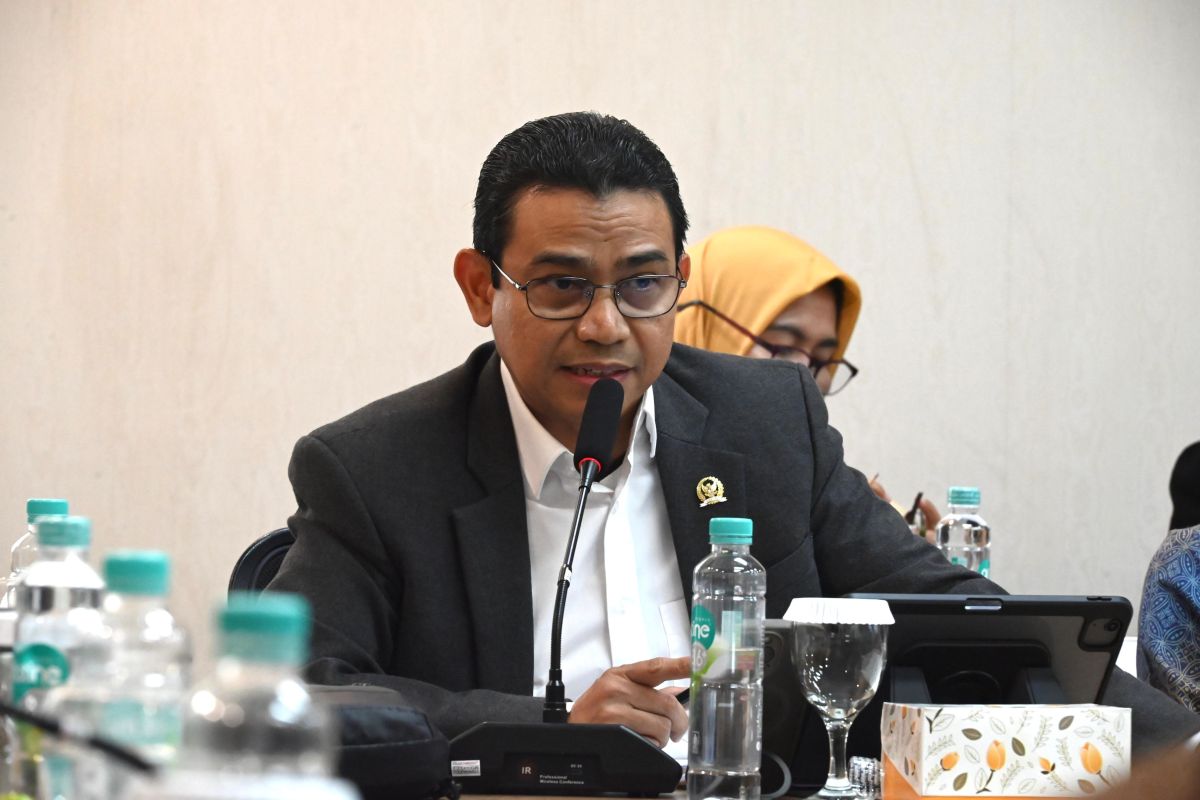
Jakarta (ANTARA) - The Working Committee (Panja) for the Industrial Estate Bill of Commission VII of the Indonesian House of Representatives (DPR RI) is encouraging the development of industrial estates into business ecosystems that connect industry with local labour, communities, small-scale industries (IKM), and MSMEs in the surrounding areas.
Member of the Industrial Estate Bill Working Committee, Hendry Munief, stated in Jakarta on Tuesday that industrial estates should not merely be viewed as locations for factories and incoming investment, but must be capable of driving the economy of the surrounding community.
This was conveyed by Hendry during a working visit by the Industrial Estate Bill Working Committee to Karawang, West Java, on Monday (5/10).
According to him, inter-sectoral linkages need to be strengthened so that the benefits of industrial presence do not remain confined within the estates, but also create economic activities for the surrounding population.
“The industrial ecosystem will not be complete if the local community only remains a spectator. Therefore, the involvement of local labour, partners, suppliers, IKM, and MSMEs needs to be strengthened through skill development, partnerships, and connectivity with the industrial supply chain,” said Hendry.
He noted that one of the aspects under the Committee’s attention is the availability of infrastructure and utilities, such as electricity, gas, raw water, waste processing, telecommunications, roads, and logistical connectivity.
According to Hendry, each of these services needs to have clear service standards to maintain industrial productivity while providing certainty for business actors.
In addition to the connection between industry and the community, Hendry emphasised the need for a change in approach towards corporate Social and Environmental Responsibility (TJSL) programmes to be more empowerment-oriented.
“Do not just give the fish, but provide the fishing rod,” he said.
He stated that TJSL programmes could be directed towards training and skill enhancement, business mentoring, certification, product quality improvement, and opening access for MSMEs to become part of industrial requirements.
According to him, this direction aligns with the discussions of the Industrial Estate Bill Working Committee, which places the development of industrial human resources, partnerships with IKM and MSMEs, and the role of industrial estates towards the surrounding community as vital components of the Bill.
With this approach, Hendry said the success of industrial estates should not only be measured by the amount of investment or the number of operating companies, but also by the absorption of local labour, the growth of MSMEs, the increase in community productivity, and the formation of an economic chain around the estates.
“Industry must grow alongside its environment and community. All sectors must have linkages and provide a positive impact,” Hendry asserted.
Therefore, the Industrial Estate Bill Working Committee is pushing for regulations that provide legal certainty and infrastructure services for investors, while simultaneously creating space for local labour, partners, suppliers, IKM, MSMEs, and the community to thrive.