
Bill Gates Warns of Major Catastrophe, Everyone Must Begin to Prepare
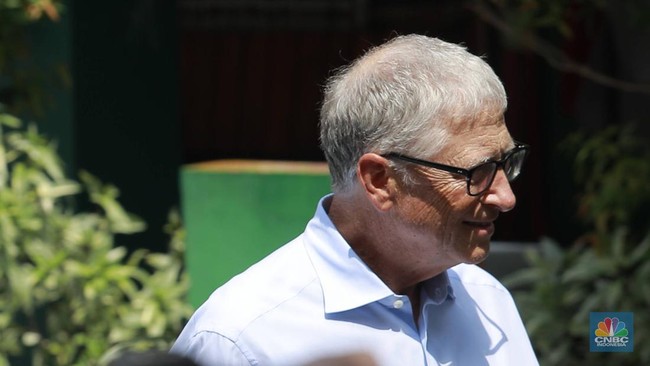
Microsoft founder and philanthropist Bill Gates has again issued a stern warning about the massive impact of artificial intelligence (AI) on the labour market. He cautioned that millions of jobs are now in danger, while the world is deemed not to have a mature plan to protect those who will be affected.
In a lengthy essay released on Tuesday (26/8), Gates said the transition to the AI era will be one of the “most turbulent periods in human history.” He stressed that we are currently in a transition period, but so far he has not seen adequate signs of readiness from world leaders in facing this social disruption.
“Unfortunately, we are not preparing for it right now,” Gates wrote. “I do not see evidence that leaders, experts, and communities are adequately addressing this challenge. There is no plan yet to ease the transition into the AI era.”
Facts on the ground are already beginning to confirm Gates’s warning. A recent study from Stanford University this week showed that the hardest-hit sector in the United States is entry-level job vacancies. Meanwhile in the United Kingdom, The Guardian reported that graduate job vacancies have plunged to their lowest level in a decade.
According to Gates, many parties underestimate this threat because the AI revolution is very different from past innovations. “We have no experience with technology that can be adopted so quickly or that can think and move like humans,” he wrote. AI adapts to us, whereas with previous technologies, we were the ones who had to adapt to them.
As AI develops to the point where it “can work as smoothly as humans,” various labour sectors are certain to be shaken. Gates openly acknowledged that he has financial interests in companies that benefit from AI, but he still warned that strong economic and geopolitical forces continue to drive the development of this technology regardless of the chaos it may cause.
The threatened job sectors are no longer just white-collar jobs such as law, customer service, and software programming, but also blue-collar jobs. “Many Americans I talk to do not realise how quickly agile robots are developing, because most of that advanced work is being done in other countries, especially China,” he said.
Gates admitted he is worried about how an economy that has so far relied on job creation will function in the future. He highlighted the impact on human dignity if mass unemployment occurs. “We must think now about how to reduce job losses so that everyone can enjoy the prosperity created by AI,” he stressed. “Waiting until people have already lost their jobs or are underemployed is far too late. AI is a structural challenge to the way our economy is organised, and it demands thought and action now.”
Beyond labour disruption, Gates also warned of other dangers. Advanced AI has the potential to give people without special skills the ability to commit serious crimes, including dangerous cyberattacks and potential biological weapons. A surge in fraud, disinformation, deepfakes, and excessive surveillance are also real threats.
Although he believes AI can be a positive force in education, agriculture, climate change mitigation, and healthcare, he worries that if the first impact felt by the public is only a wave of mass layoffs, optimism about AI will turn into despair.
As a solution, Gates stressed that the highest priority now is to build domestic and international frameworks to regulate AI—something he says has not yet materialised. He recommended considering taxes on AI tokens and robots, both to dampen incentives to replace human labour and to raise funds for retraining and strengthening social safety nets for communities hardest hit by automation.