
Bill Gates Once Spoke Openly About Signs of Doomsday, Pointing to Indonesian Region
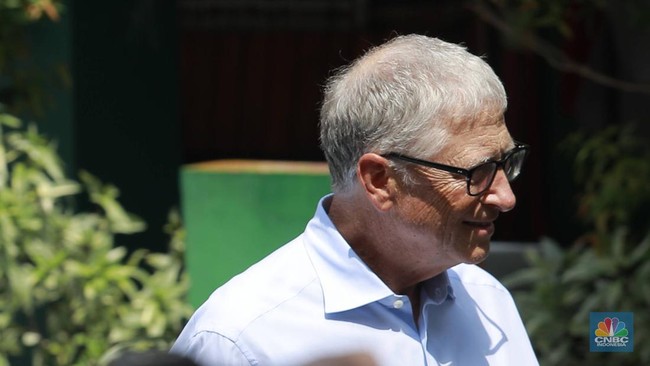
Bill Gates, the founder of Microsoft, wrote an article on his personal blog at the end of 2023, indicating a shift in his views on climate change issues. Gates, who has long been known for raising alarms about the dangers of environmental changes, suddenly appeared to soften his position. He bluntly stated that the view of climate change bringing ‘doomsday’ to human civilisation is misguided. Previously, Gates had written about the crucial need to achieve zero emissions.
Gates once mentioned that activities on Earth produce 51 billion tonnes of greenhouse gases. Seven percent comes from the production of fats and oils from animals and plants.
“To combat climate change, we must reduce that figure to zero,” he said through his personal blog at the time.
Nevertheless, Gates recognises that plans to eliminate animal fat consumption for humans are unrealistic. This is because humans have logically become dependent on animal fats.
Animal fats store the nutrients and calories that humans need. However, there are ways to obtain fats without producing emissions, torturing animals, or generating harmful chemicals.
The solution, according to Gates, has been found by a startup called ‘Savor’. Gates is one of its investors.
Savor creates fats through a process involving carbon dioxide from the air and hydrogen from water. These compounds are then heated and oxidised, leading to the separation of acid components that create a fat formulation.
Gates claims that the resulting fat has similar molecules to those found in milk, cheese, beef, and vegetable oils.
Indonesia and Malaysia as Culprits in the Palm Oil Problem
In addition to animal fat production, which harms the environment, Gates also spotlighted a factor with an even greater impact: palm oil.
“Currently, palm oil is the most consumed vegetable fat in the world. It is found in everyday foods such as cakes, instant noodles, coffee creamer, frozen foods, and even in makeup, body soap, toothpaste, detergent, deodorant, cat food, baby formula, and more. Palm oil is also used for biofuel and diesel engines,” he explained.
Gates emphasised that the problem with palm oil is not its use, but how it is produced. Most native palm species from West and Central Africa do not grow in many regions. Those trees only thrive in places crossed by the equator.
“This causes deforestation in equatorial areas to convert them into palm plantations,” Gates said.
This process has a detrimental impact on biodiversity and delivers a severe blow to climate change efforts. Forest burning creates substantial emissions in the atmosphere and leads to temperature increases.
“In 2018, the destruction in Malaysia and Indonesia alone was severe enough to contribute 1.4% of global emissions. That figure is larger than the entire state of California and nearly equal to the global aviation industry,” Gates explained.
Unfortunately, Gates acknowledges that the role of palm oil is hard to replace. This is because the commodity is cheap, odourless, and abundant.
“Palm oil is also the only vegetable oil with a nearly equal balance of saturated and unsaturated fats, which is why it is so versatile. If animal fats are a main ingredient in some foods, palm oil is a team player that can work to make almost all foods and non-food items better,” Gates explained.
For these reasons, Gates said there are companies trying to address it. One is C16 Biosciences, which aims to create an alternative to palm oil.
Since 2017, Gates noted that C16 has developed products from wild yeast microbes using a fermentation process that produces no emissions at all.
Although chemically different from conventional palm oil, C16 oil contains the same fatty acids, so it can be used for similar applications.
“This oil is as natural as palm oil, only it grows on fungi, not trees. Like Savor, the C16 process is completely free from agriculture. Its ‘farming’ is a laboratory in the middle of Manhattan,” Gates said.
Source: jawawa.id (https://jawawa.id/newsitem/bill-gates-once-spoke-openly-about-signs-of-doomsday-pointing-to-indonesian-region-1777463589)
Originally published by CNBC Indonesia (https://www.cnbcindonesia.com/tech/20260429153943-37-730982/bill-gates-pernah-buka-bukaan-tanda-kiamat-tunjuk-wilayah-ri), translated from Indonesian