
Biggest Ally Turns Critic: Europe Angered by Trump-Putin Fuel Deal
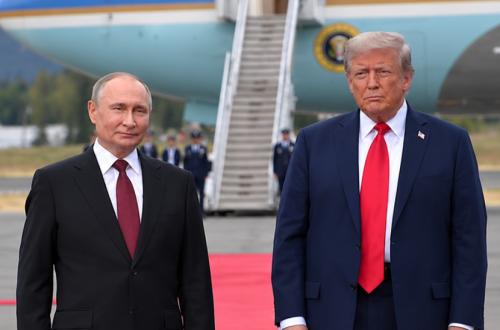
US President Donald Trump’s decision to ease energy sanctions on Russia has prompted opposition from European leaders, Ukraine and members of the US Congress. The policy, intended to bring down fuel prices, is seen as risking economic and diplomatic gains for Moscow while the Russia-Ukraine war continues.
The controversy intensified after Trump signed an executive order on Friday (16 October 2026) suspending the implementation of a new package of sanctions and tariffs on Russia. The decision came shortly before provisions of the Lindsey O. Graham Sanctioning Russia and Iran Act of 2026 were due to take effect. Trump signed the law in September.
The US government said the suspension was in the national interest. The Kremlin welcomed the move, while European Union leaders questioned its impact on international efforts to pressure Russia to end the war in Ukraine.
According to Reuters and Euronews, the law was designed to widen pressure on Russia, including through sanctions on officials, financial institutions and vessels connected to Russian energy trade. It also provides for tariffs on certain countries that continue to buy Russian oil and gas.
Russian President Vladimir Putin’s envoy, Kirill Dmitriev, welcomed the suspension as an important moment in economic relations between the two countries. He said Washington’s decision could prevent economic cooperation between Russia and the United States from grinding to a halt.
Trump’s latest decision follows the energy deal he announced with Putin on 9 October. The deal allows additional supplies of Russian diesel to enter international markets after Washington granted a temporary exemption from restrictions on the fuel trade.
The two measures have different legal bases. The diesel trade exemption was granted through temporary authorisation by the US Treasury Department, while the 16 October decision concerns the suspension of sanctions and tariff provisions in the broader law.
Both, however, point to a change in Washington’s approach to economic pressure on Moscow.
Deal for millions of tonnes of Russian diesel
In his 9 October announcement, Trump said Russia was ready to supply more than 300,000 metric tonnes of diesel to the US and international markets immediately.
Moscow was also scheduled to provide a further 500,000 tonnes in November and one million tonnes after that. Trump said a further three million tonnes could be shipped later, depending on the condition of Russia’s oil-processing facilities.
The total volume announced could therefore exceed 4.8 million tonnes. However, some of it remains planned and depends on Russia’s production and shipping capacity.
The US Treasury Department subsequently issued a temporary licence allowing trade in Russian diesel until April 2027.
Trump said the deal would help lower diesel prices in the United States and worldwide.
His administration is under pressure over high fuel prices, particularly for transport and agriculture. Rising energy costs have become a significant political issue ahead of the US congressional midterm elections on 3 November 2026.
However, Reuters reported on 12 October that the initial volume of fuel announced by Trump was relatively small compared with US demand.
The 300,000-tonne shipment is equivalent to around 2.25 million barrels. According to US Energy Information Administration (EIA) data cited by Reuters, the US transport sector uses about 2.94 million barrels of diesel a day.
That means the initial volume announced by Russia would not meet the US transport sector’s diesel needs for even one day.
Reuters also said the next shipments of 500,000 tonnes and one million tonnes combined would amount to less than four days of US transport-sector demand.
The comparison has raised questions about how much the Russian deal could affect US diesel prices.
Beyond the volume, deliveries also face obstacles. Some Russian oil tankers remain on sanctions lists, while parts of the country’s oil-processing infrastructure have been disrupted by Ukrainian attacks.
Nevertheless, Russian diesel trade is beginning to show signs of movement.
Reuters reported on 15 October that the Kremlin said shipments to international markets had begun. LSEG shipping data showed that a vessel loaded around 40,000 tonnes of very-low-sulphur diesel at Russia’s Primorsk port on 13 October, bound for Morocco.
The finding confirms that export activity has resumed, but does not mean that all the volumes announced by Trump have been shipped.
Europe condemns move; Meloni calls it highly risky
The strongest opposition has come from EU leaders, who say easing sanctions could weaken international pressure on Russia.
In the conclusions of the European Council meeting held in Brussels on 15–16 October, EU leaders formally expressed regret over the US decision to temporarily lift restrictions on Russian diesel.
Their position reinforced criticism previously voiced by EU foreign ministers at a meeting in Luxembourg on 12 October.
Source: jawawa.id (https://jawawa.id/newsitem/biggest-ally-turns-critic-europe-angered-by-trump-putin-fuel-deal-1792399866)
Originally published by Republika (https://news.republika.co.id/berita/tn53ho451/sekutu-terbesar-jadi-kritikus-eropa-murka-atas-kesepakatan-bbm-trumpputin), translated from Indonesian