
BIG Tells Parliament: We Are Not Yet Sovereign, Complete Satellite Data Controlled by Foreigners
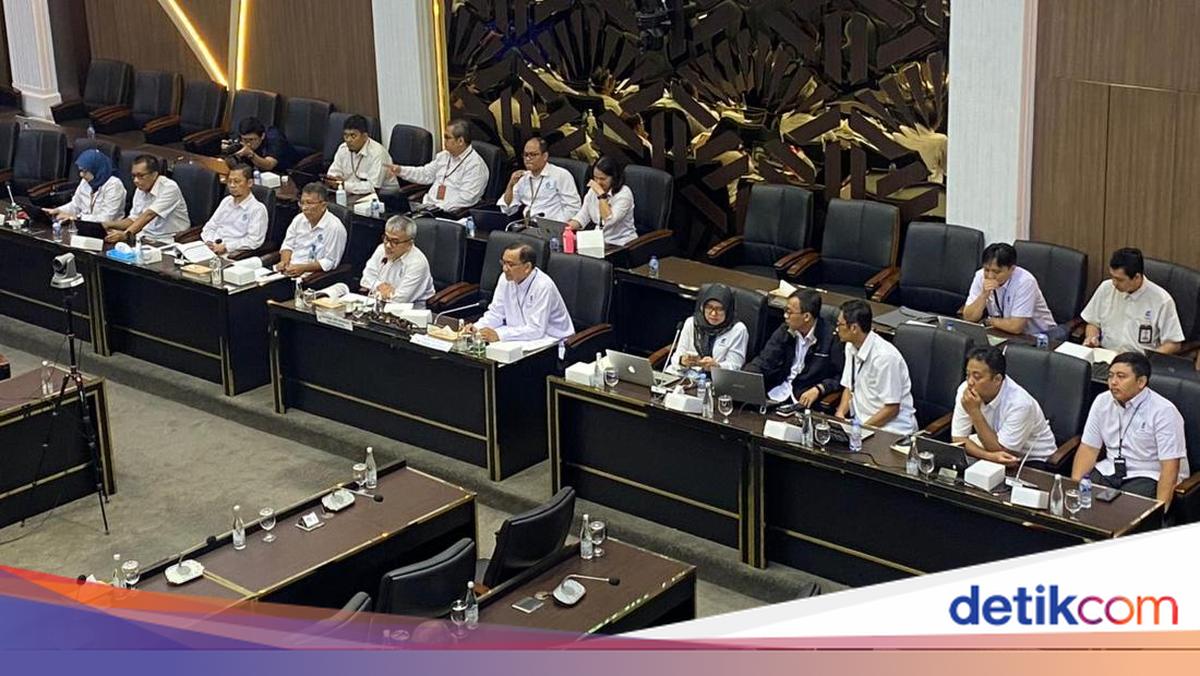
The Geospatial Information Agency (BIG) has explained that remote sensing or satellite technology is currently highly advanced. However, BIG revealed that Indonesia’s satellite data is not yet sovereign, as it is controlled by foreign parties.
This was conveyed by Acting Head of BIG, Mohamad Arief Syafii, during a Hearing Meeting with the DPR’s Legislation Body discussing the Single Data Indonesia Bill at the parliamentary complex in Senayan, Jakarta, on Monday (6/4/2026). Deputy Chairman of the Legislation Body, Sturman Panjaitan, cited the advanced satellite technology possessed by the United States in 1996, capable of viewing an object.
“We once saw the satellite used by America when it could see a car; this is a satellite, sir, the car at the Pentagon that size (indicating half a finger). That was 1:1000, the car this size (finger-sized) but the shape not as good as a car if we photograph from 10 metres away,” said Sturman during the meeting, recounting his experience as a TNI member.
Sturman noted that US satellite technology can even track the whereabouts of officials. He hopes the Geospatial Information Agency can develop such technology.
“But it can see if that’s a car, meaning 1996 technology, sir; now it can even see where officials are—they can track them. Meaning current technology is much easier, and anyone can use technology to view Indonesia’s data,” said Sturman.
Acting Head of BIG, Mohamad Arief Syafii, explained that satellite developments are indeed increasingly advanced. He noted that one obstacle to remote sensing technology in Indonesian territory is geographical factors.
“So that’s absolutely correct, sir, as mentioned earlier, that current remote sensing technology, satellites are very advanced; the highest resolution published for the public—not the military version, sir, which we can’t access,” said Arief.
Arief mentioned that navigation mapping in Indonesia is often hindered by cloud geography. He then exemplified technology with more detailed reach.
“Now, the challenge in Indonesia is not just technology, sir, but also cloud geographical conditions; these satellites can’t penetrate clouds—they depend on clouds. We found satellites can also use radar technology, not optical. What we’ve seen so far is mostly optical technology, like regular photography,” he revealed.
Arief stated that Indonesia can rely on aircraft technology if satellites are not feasible. Arief hopes Indonesia will eventually have data sovereignty, including navigation technology like foreign companies.
“Now, if this satellite deviates by metres, sir, far off. With aircraft technology, not only can we increase resolution to 8 cm, sir—that 1:1000 needs 8 cm resolution, meaning this glass can be captured, sir, but also positional accuracy,” said Arief.
“We hope moving forward we have sovereignty over this data, sir; honestly, right now we are not sovereign. Let alone the technology, sir, the complete data is owned by Google Maps, Here Maps—all foreign; we don’t control this data,” he added.
Arief hopes Indonesia can build its own satellites to map the territory. He cited the war between the US-Israel and Iran involving satellite imagery technology to target objects.
“Now, moving forward, if this can be regulated in this Bill, we must be technologically independent; we must build our own satellites. The Iran war with America-Israel is an example of how they use satellite imagery to determine which objects to shoot,” said Arief.
Arief said that if Indonesia does not have such a system, air defence could miss targets. He wants Indonesia’s satellite technology to advance further.
“If we don’t have this, our bullets could go anywhere; this is what might be needed because besides for mapping, we also need it for updating, sir,” said Arief.
“Mr Sturman mentioned changes in the field; we need fast technology—this can only be done with satellites; using aircraft is expensive and covers a small area, but with satellites we can do it quickly,” he added.