
Bicycle Tax Raids: Residents Who Don't Pay Tax Face Fines or Imprisonment
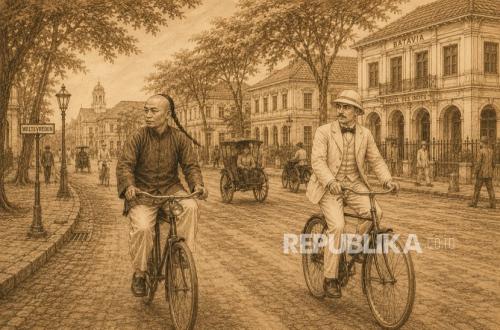
In recent weeks, rumours have emerged that the government will impose a tax on bicycles, although the Ministry of Transportation has denied the issue. Since the era of President Susilo Bambang Yudhoyono, he has urged regents and mayors to create bicycle lanes as an alternative transport option for workers commuting to their offices.
Bicycles are not new to Indonesia. As far back as the 1950s, they dominated transportation in Jakarta, alongside becaks. People cycled to school and university, and workers commuted to and from their offices by bicycle. At these locations, including cinemas and entertainment venues, there were dedicated parking areas for bicycles. Understandably, at that time, the number of cars and motorbikes—which have since increased drastically—was still very small.
The first bicycle appeared in Batavia in 1890. At that time, a Rover bicycle was a source of immense pride for its owner. The first bicycle shop was owned by a Dutchman named Gruyter, located in Gambir, near what is now Monas. He also owned a plot of land used as a racing track for his customers. Naturally, the participants were only the Dutch and Chinese communities, as they were the only ones who could afford to buy bicycles.
If the millions of Jakarta residents were to cycle to work, the capital’s almost unbearable pollution could be reduced. Likewise, the traffic congestion caused by the ever-increasing number of cars and motorbikes would also decrease.
Source: jawawa.id (https://jawawa.id/newsitem/bicycle-tax-raids-residents-who-dont-pay-tax-face-fines-or-imprisonment-1784832648)
Originally published by Republika (https://news.republika.co.id/berita/tin3ix282/razia-pajak-sepeda-warga-yang-tak-bayar-pajak-akan-ditilang-atau-dipenjara), translated from Indonesian