
BI Urges PUVA Development to Move from Foundations to Market Activity
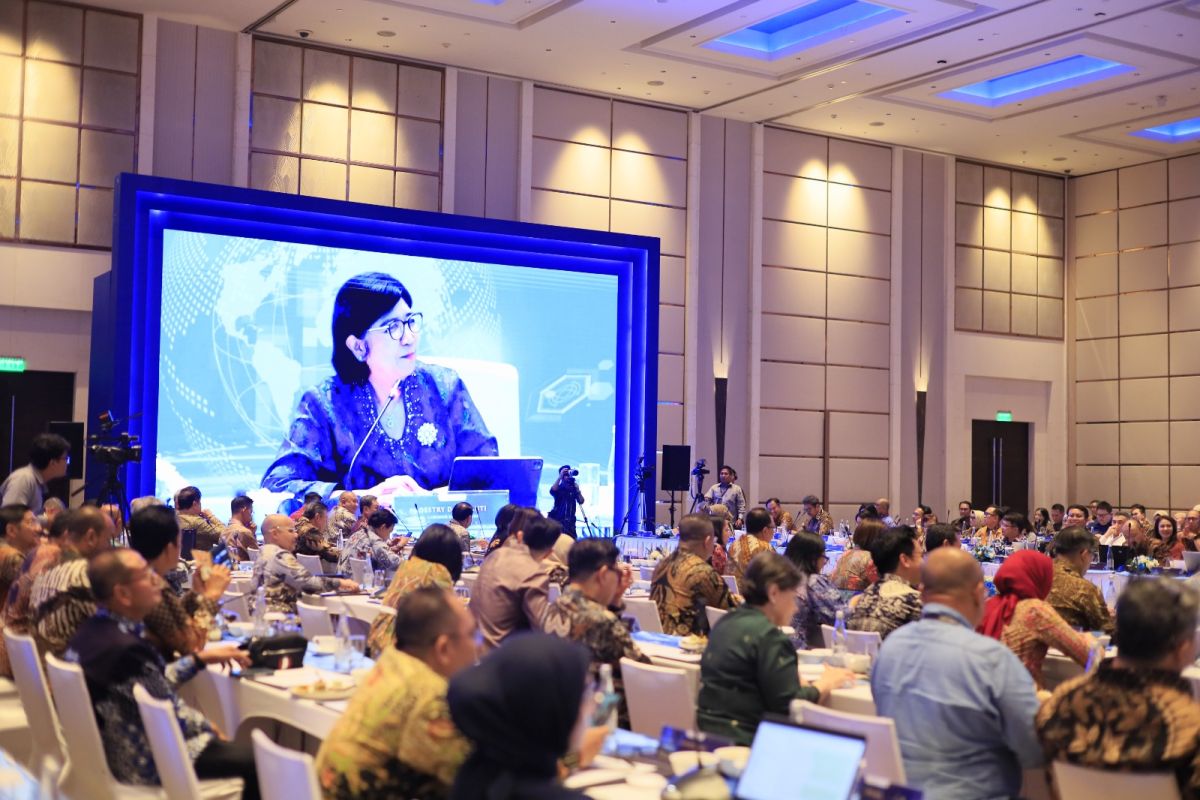
Jakarta (ANTARA) — Bank Indonesia (BI) is urging the development of the money and foreign exchange markets (PUVA) to move from strengthening foundations towards increasing activity and the use of market products and infrastructure.
BI Governor Destry Damayanti stressed the importance of accelerating implementation of the 2030 Money Market and Foreign Exchange Market Development Blueprint (BPPU 2030).
“Successful PUVA development cannot stop at the availability of regulations and infrastructure. It must be reflected in increased transaction activity, broader participation by competent market players, improved price formation, and stronger market governance and integrity,” Destry said in a statement received in Jakarta on Wednesday.
The industry is therefore being encouraged to play a more active role in providing liquidity, developing innovation and overcoming implementation barriers to accelerate PUVA development.
BI and the Indonesian Money Market and Foreign Exchange Market Association (APUVINDO) strengthened their cooperation at a High-Level Meeting in Jakarta on Friday (23 October).
BI said implementation of BPPU 2030 was continuing to be strengthened through product development, price formation, capacity-building for market participants and upgrades to financial-market infrastructure.
Strategic achievements include developing repo transactions to improve money-market liquidity, strengthening INDONIA as an interest-rate benchmark, and developing hedging instruments and foreign-exchange transactions.
These achievements have been supported by a stronger role for PUVA primary dealers, improvements in market participants’ competence and integrity, and infrastructure development to make transactions more efficient and secure.
From 2027, BI and APUVINDO will accelerate BPPU 2030 implementation through four strategic priorities: developing the money market, developing the foreign-exchange market, strengthening market participants and developing financial-market infrastructure.
Money-market development will focus on strengthening Commercial Paper (SBK) as an alternative source of financing for the real sector, expanding the use of INDONIA as an interest-rate benchmark for a range of financial products, and increasing liquidity in Overnight Index Swaps (OIS) to support more efficient interest-rate formation.
These efforts will be supported by broadening the investor base and increasing secondary-market trading.
Foreign-exchange market development will involve widening access to hedging and strengthening links between domestic and global markets.
Optimising foreign-exchange hedging transactions through partner banks (VASTRA) is intended to make hedging more accessible to global investors, increase the appeal of rupiah-denominated assets and support sustainable portfolio investment flows.
Meanwhile, strengthening the renminbi ecosystem, including developing a Renminbi Clearing Bank, is intended to improve the liquidity and efficiency of renminbi-rupiah transactions and support the implementation of local currency transactions (LCT) between Indonesia and China.
Strengthening market participants will focus on improving competence, professionalism and integrity through the application of Indonesian National Work Competency Standards (SKKNI) and the Indonesian National Qualifications Framework (KKNI), the development of the Indonesian Treasury Professional Certification Institute (LSP Tresuri Indonesia), and the adoption of a market code of conduct.
This will be supported by an expanded role for APUVINDO as a self-regulatory organisation (SRO) promoting standardised market practices and governance.
Financial-market infrastructure development will focus on optimising the use of a central counterparty and tri-party repo agents, expanding products and participants, and strengthening connectivity between infrastructures to improve the efficiency, security and risk management of PUVA transactions.
At the High-Level Meeting, which also involved the Financial Services Authority (OJK), Hasan Fawzi, OJK’s Executive Head of Capital Markets, Derivatives Finance and Carbon Exchanges, also stressed the importance of deepening financial markets to strengthen sources of financing for national economic development.
He said market deepening depended not only on increased transaction volumes and the development of instruments, but also on good governance, market participants’ integrity, transparency and market confidence.
OJK is committed to strengthening cooperation with BI, APUVINDO and other relevant stakeholders to create a deeper, sounder and more competitive financial market.