
BI Stresses Urgency of Quality Financing Transformation
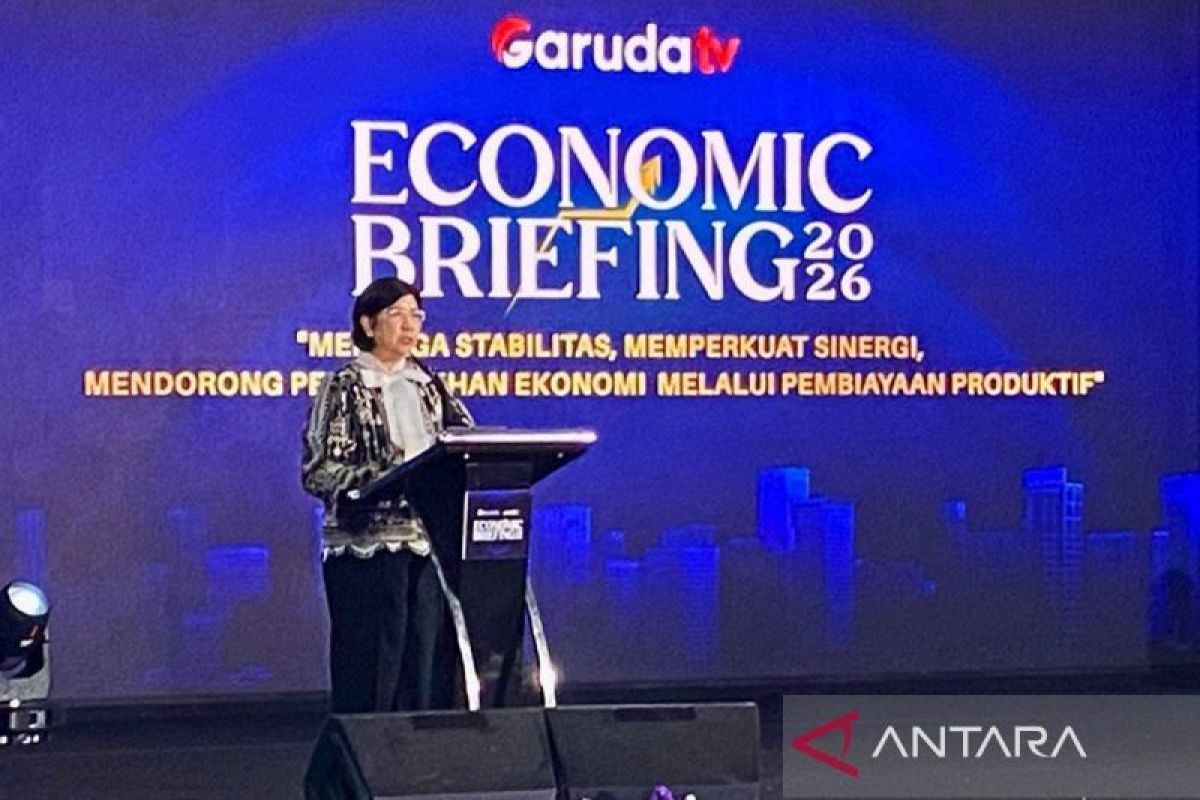
Senior Deputy Governor of Bank Indonesia (BI) Destry Damayanti has emphasised the urgency of transforming financing to be of higher quality in order to provide greater benefits. “To ensure financing provides greater benefits for the economy, a transformation is needed from merely pursuing credit growth towards quality financing, from individual financing towards ecosystem-based financing, and from various standalone programmes towards national orchestration through synergy among stakeholders,” she stated in Jakarta on Saturday. She conveyed that financing plays a strategic role in driving economic growth. The channelling of credit to the business sector is said to increase productivity, job creation, and business competitiveness. However, Destry cautioned that good policy does not stop at the decision-making level of authorities or the availability of funds within the financial system. “The impact of policies must be felt by business actors, from large corporations to traders, farmers, artisans, and young entrepreneurs across the regions,” she said while delivering a keynote speech at a national seminar titled “Maintaining Stability, Strengthening Synergy, Driving Economic Growth Through Productive Financing”. In this context, she continued, strengthening financing for Micro, Small, and Medium Enterprises (MSMEs) is an important part of efforts to bolster the productive sector and national economic transformation. BI itself continues to strengthen its policy mix to encourage financing for priority sectors through the Macroprudential Liquidity Incentive Policy (KLM) and the Macroprudential Inclusive Financing Ratio (RPIM). From the payment system side, BI is also continuously strengthening digitalisation through QRIS, BI-FAST, and SNAP to expand the integration of business actors into the digital financial ecosystem. These various policy mixes complement each other in supporting more inclusive, productive, and impactful financing for the economy. Secretary of the Ministry of MSMEs Loto Srinaita Ginting stated that MSMEs play a strategic role as drivers of the national economy. For this reason, the government continues to strengthen various policies and programmes to expand financing access and increase the capacity and competitiveness of MSMEs, including through strengthening People’s Business Credit (KUR), supporting MSMEs in the Free Nutritious Meals Programme (MBG), and establishing an MSME holding company. Head of the MSME and Sharia Finance Regulation and Development Department at the Financial Services Authority (OJK) Ayahandayani K. conveyed that strengthening inclusive financing access is a prerequisite for increasing the productivity and competitiveness of MSMEs. Based on this prerequisite, OJK continues to strengthen various policies and programmes through the development of an integrated financing ecosystem, increasing financial literacy and inclusion, strengthening the capacity of MSME actors, and enhancing consumer protection. PermataBank Chief Economist Josua Pardede also assessed that there is still room to expand financing to sectors with higher added value, particularly the processing industry, amidst a positive credit growth trend supported by the acceleration of MSME digitalisation. “MSME credit is expected to continue to be encouraged through the synergy of the OJK Regulation on MSME Credit, Bank Indonesia’s liquidity incentive policy, and the government’s priority programmes tailored to market needs by banks. The maintenance of banking indicator stability to support productive MSME financing, especially working capital, is a prerequisite for future inclusive growth,” he said. Credit growth in June 2026 was recorded at 12.67 percent year-on-year (yoy), an increase from the previous month’s 11.51 percent yoy. The high credit growth was mainly supported by investment credit, which grew significantly by 24.90 percent yoy. Bank Indonesia forecasts that credit growth in 2026 will remain within the range of 8-12 percent, supported by potential demand in line with the large amount of undisbursed loan facilities, which reached Rp2,490 trillion or 21.52 percent of the available credit ceiling. From the supply side, the lending appetite also remains accommodative and is supported by high third-party fund (DPK) growth, which reached 10.21 percent yoy.