
BI stresses synergy and digitalisation to support women’s MSMEs in the halal sector
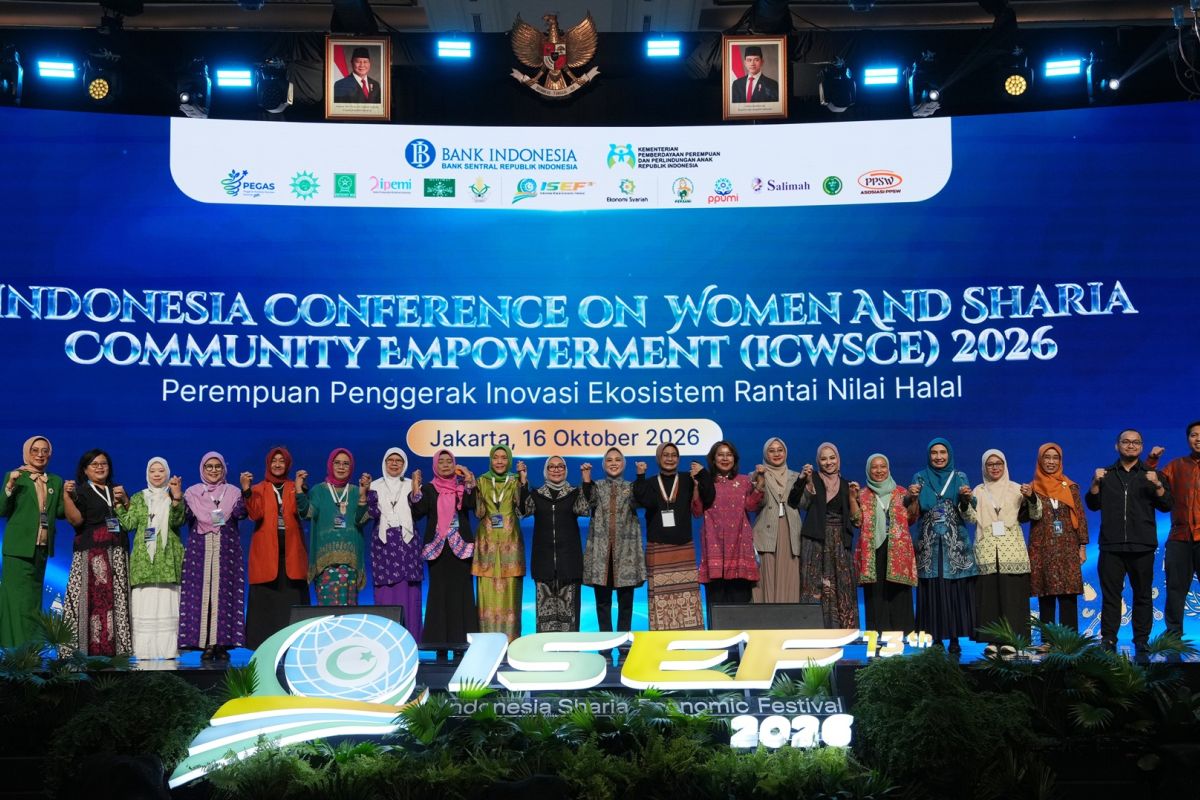
Jakarta (ANTARA) – Bank Indonesia (BI) has stressed the importance of synergy and digital transformation to accelerate the development of micro, small and medium-sized enterprises (MSMEs) in the national halal industry.
BI Senior Deputy Governor Aida S. Budiman said empowering women in the sharia economy played an important role in increasing MSME productivity and strengthening household economies.
“Investing in women benefits the wider economy, as the income they earn also supports family welfare, children’s education and health,” Aida said at the Women’s Community and Sharia Empowerment Conference, held as part of the 2026 Indonesia Sharia Economic Festival (ISEF), according to a press statement issued in Jakarta on Saturday.
Aida said BI was pursuing three strategic measures to strengthen women’s economic empowerment.
First, it is improving institutional capacity and access to financing through brand development, incorporation, halal certification, and business training and mentoring.
Second, it is facilitating the use of digital payment systems to make transactions more efficient and secure.
Third, it is broadening market access through promotion and business partnerships at local, national and international levels.
The measures are considered important given that about 37 million MSME operators in Indonesia, or 64.5 per cent, are women, according to 2024 data from Statistics Indonesia (BPS).
Meanwhile, data from the Halal Product Assurance Agency (BPJPH) show that the halal industry is estimated to contribute around 27 per cent of Indonesia’s gross domestic product (GDP), equivalent to Rp4,900 trillion, in 2026.
Halal product exports reached US$35.7 billion in the first half of 2026, while 14.06 million products had received halal certification by July 2026.
At the same event, Minister of Women’s Empowerment and Child Protection Arifah Fauzi stressed the importance of equal opportunities for women to achieve economic independence.
“Empowered women can not only improve their own and their families’ welfare, but also make a tangible contribution to the progress of the nation and country,” Arifah said.
She said cooperation among stakeholders was needed to expand business opportunities and improve women’s productivity and competitiveness in the halal industry ecosystem.
Source: jawawa.id (https://jawawa.id/newsitem/bi-stresses-synergy-and-digitalisation-to-support-womens-msmes-in-the-halal-sector-1792245041)
Originally published by Antara (Indonesian) (https://www.antaranews.com/berita/5793637/bi-tekankan-sinergi-dan-digitalisasi-umkm-perempuan-di-sektor-halal), translated from Indonesian