
BI still prioritises stability as global pressures have yet to subside
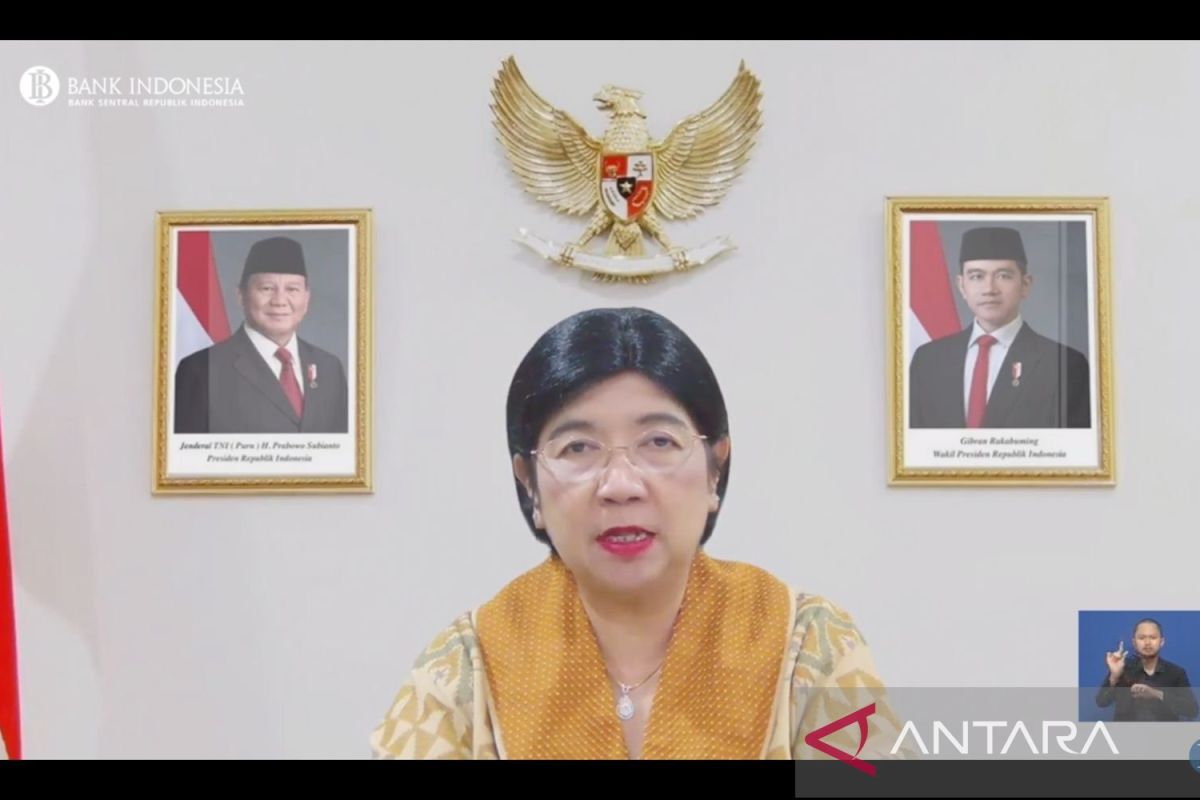
Bank Indonesia (BI) has stated that it is still prioritising stability as global pressures are considered to have not fully subsided. While seeking to maintain stability, the central bank is also taking steps to balance its policy mix in order to support growth.
“Although we are currently holding the interest rate, we have held it at the same level of 5.75 percent for two months now, on the other hand we are issuing policies or other instruments aimed at maintaining the stability of the rupiah,” said BI Acting Governor Destry Damayanti at a press conference following the BI Board of Governors Meeting in Jakarta on Wednesday.
Destry explained that Indonesia’s central bank has issued a number of incentives, particularly to support inflows entering Indonesia. “Because of course we do not want our SRBI rate to increase. So if we look at the last two weeks, the SRBI interest rate or SRBI yield has continued to decline,” she said.
Foreign portfolio investment flows in the third quarter of 2026 up to 14 August 2026 recorded net inflows of 1.8 billion US dollars. This development was supported by the government’s global bond issuance as well as inflows into Government Securities (SBN) and Bank Indonesia Rupiah Securities (SRBI).
Previously, at the July 2026 Board of Governors Meeting, BI announced incentives for sell-side swap hedging which were increased to 12.5 percent, as well as incentives for sell-side DNDF (domestic non-deliverable forward) hedging of 15 percent.
“What we are doing is providing incentives for hedging costs, for foreign funds entering here so that we can maintain an attractive spread and they will enter our financial instruments,” said Destry.
On the inflation side, Destry confirmed that BI continues to coordinate with central and regional governments through the Central/Regional Inflation Control Teams (TPIP/TPID) in implementing the Inflation Control and Prosperous Food Movement (GPIPS).
“So it is a joint collaboration. And we are also trying to ensure the rupiah can be stable and can trend towards strengthening. Because of course we are also paying attention to the pass-through impact of imported inflation, which is certainly a concern for us so that we can limit its impact by maintaining rupiah stability and striving for a trend of continued appreciation,” said Destry.
In order to support growth, BI is also strengthening its Macroprudential Liquidity Policy (KLM) to encourage increased bank lending/financing to priority sectors. Up to the first week of August 2026, KLM incentives obtained by banks were recorded at Rp446.5 trillion, with allocation to the financing channel amounting to Rp368.4 trillion, the interest rate channel amounting to Rp73.2 trillion, and the financing to funding channel amounting to Rp4.9 trillion.
Bank lending in July 2026 grew 13.58 percent year-on-year (yoy), up from growth of 12.67 percent (yoy) in June 2026.
Previously, BI through its Board of Governors Meeting on 18-19 August 2026 decided to hold the BI-Rate at 5.75 percent, the deposit facility rate at 4.75 percent, and the lending facility rate at 6.50 percent.
According to BI, this decision remains consistent with efforts to strengthen rupiah exchange rate stability from the impact of high global turmoil due to the war in the Middle East, to maintain the inflation target of 2.5 percent plus or minus 1 percent (range of 1.5-3.5 percent) in 2026 and 2027, and to support sustainable economic growth.