
BI: SRBI Ownership by Banks is for Liquidity Management, Not Investment
Bank Indonesia (BI) has emphasised that Bank Indonesia Rupiah Securities (SRBI) are intended as a liquidity management instrument for banks, not as a long-term investment vehicle for accumulating assets.
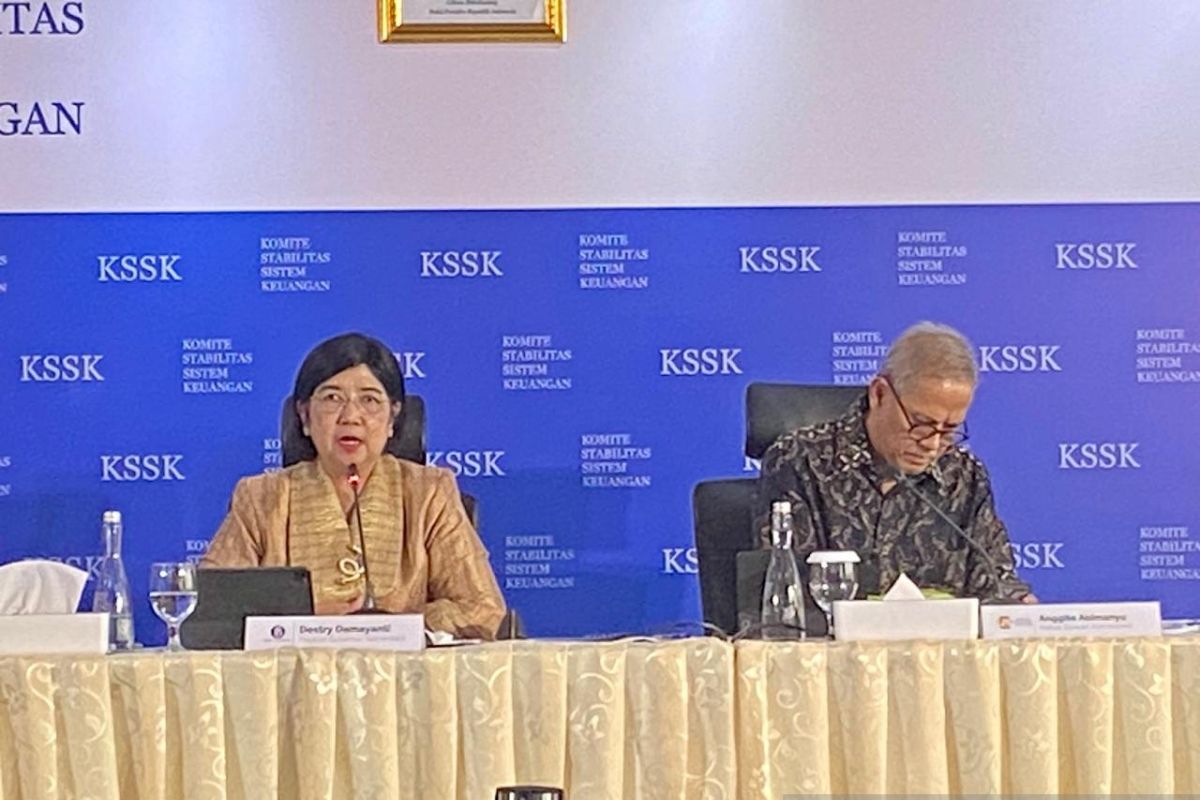
This was conveyed by BI’s Acting Governor, Destry Damayanti, in response to the high proportion of bank ownership of the instrument. During a press conference on the results of the Financial System Stability Committee (KSSK) periodic meeting in Jakarta on Monday, Destry stated that around 63 percent of outstanding SRBI is currently held by banks. Meanwhile, the portion of Government Securities (SBN) held by banks is relatively more controlled, at around 19-20 percent.
‘Therefore, our future policy regarding SRBI will be more targeted, namely to encourage inflows,’ said Destry. She also noted that SRBI yields have started to decline. As of Friday (31/7), outstanding SRBI was recorded at approximately Rp1,050 trillion, down around Rp40 trillion in half a month from the peak of Rp1,097 trillion on 16 July 2026. ‘We also want banks to be more active in their role as intermediation institutions in credit distribution,’ Destry added.
On the same occasion, Destry highlighted the substantial amount of undisbursed loan facilities, which stands at around Rp2,500 trillion, indicating that there is still room for banks to channel funds. ‘This means there is actually still space for banks to distribute their funds. However, this space has not been optimally utilised,’ she said.
BI recently announced improvements to the Macroprudential Liquidity Incentive Policy (KLM), effective from 1 September 2026. One of the measures is the Money Market Deepening KLM, which provides incentives of up to 2.0 percent of Third-Party Funds (DPK) to banks that maintain an optimal ratio of securities holdings as determined by BI. If a bank maintains its holdings of government securities and non-repo SRBI below 19 percent of total funding, it will receive the maximum incentive of 2 percent or 200 basis points of DPK. Conversely, if the ratio reaches or exceeds 19 percent, the bank will not receive the incentive.
Banking credit grew by 12.67 percent year-on-year (yoy) in June 2026, reaching Rp9,080.9 trillion. BI raised the BI-Rate by 50 bps to 5.25 percent at the May 2026 Board of Governors Meeting, by 25 bps to 5.50 percent at the Weekly Board of Governors Meeting on 9 June 2026, and by another 25 bps to 5.75 percent at the June 2026 meeting. At the July 2026 meeting, BI held the BI-Rate at 5.75 percent and expanded incentive policies and other measures to increase foreign portfolio investment inflows and strengthen rupiah exchange rate stability, accelerate money market and foreign exchange market deepening, and increase liquidity and reduce liquidity segmentation in the money market and banking sector. Foreign portfolio investment inflows in the second quarter of 2026 recorded a net inflow of 8.5 billion US dollars, mainly supported by SBN and SRBI, and this continued into the third quarter of 2026, driven by rising yields on domestic financial instruments. Indonesia’s foreign exchange reserves at the end of June 2026 remained solid at 145.6 billion US dollars, equivalent to 5.5 months of imports or 5.4 months of imports and government external debt payments, and well above the international adequacy standard of around 3 months of imports.
Source: jawawa.id (https://jawawa.id/newsitem/bi-srbi-ownership-by-banks-is-for-liquidity-management-not-investment-1785772461)
Originally published by Antara (Indonesian) (https://www.antaranews.com/berita/5678351/bi-kepemilikan-srbi-oleh-bank-guna-kelola-likuiditas-bukan-investasi), translated from Indonesian