
BI Says Rupiah Pressure Remains Normal After MSCI Announcement
JAKARTA — Bank Indonesia (BI) has responded to the impact of Morgan Stanley Capital International’s (MSCI) announcement downgrading Indonesia’s capital market from emerging-market to standalone-market status. BI said the rupiah had come under pressure as a result of the sentiment, but that its weakening remained within normal bounds.
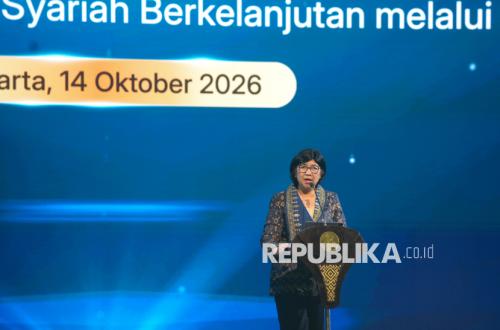
“MSCI is certainly a matter of concern. We have assessed the situation, and the rupiah did come under pressure for two days at the time. However, we believe the pressure remained relatively within normal bounds, as conditions across the region were also not particularly favourable,” BI Governor Destry Damayanti said at a press conference following the October 2026 Board of Governors’ Meeting at BI headquarters in Jakarta on Wednesday (21 October 2026).
According to BI data, after strengthening until mid-September 2026, the rupiah stood at Rp17,985 to the US dollar on 20 October 2026. This represented a 0.61 per cent point-to-point weakening from its position at the end of September 2026.
Destry said the central bank continued to monitor capital-market developments as the effects of MSCI’s announcement, issued on 16 October 2026, unfolded. BI was also closely tracking capital outflows following the announcement.
“We have been discussing very intensively how to respond. We now want more targeted policies. We know that outflows are occurring, so what does that mean? We have to try to attract inflows and turn those outflows into inflows,” Destry said.
In light of these developments, Destry said BI had several main priorities, foremost among them maintaining rupiah stability amid global uncertainty.
The central bank is also seeking to keep inflation within its target range of 2.5 per cent, plus or minus one percentage point. She acknowledged pressure on volatile food prices, but said core inflation remained under control.
“The 100-basis-point increase we implemented over May and June 2026 has also helped anchor inflation and inflation expectations at the target we are pursuing. The increase has also led to repricing in some of our financial markets, so our focus is on bringing inflows back,” Destry said.
She said the central bank’s policies would therefore be more targeted. One measure is to maximise the range of incentives offered to investors to encourage greater capital inflows into Indonesia.
“What we are doing is optimising the incentives we offer investors to attract inflows — to bring in funds to buy Indonesian portfolio assets, including government bonds (SBN), Bank Indonesia rupiah securities (SRBI), as well as loans and other instruments,” Destry said.
At its October 2026 meeting, BI also optimised its foreign-exchange intervention strategy to strengthen the rupiah. This included Non-Deliverable Forward (NDF) transactions in offshore markets, as well as spot and Domestic Non-Deliverable Forward (DNDF) transactions in the domestic market.
Source: jawawa.id (https://jawawa.id/newsitem/bi-says-rupiah-pressure-remains-normal-after-msci-announcement-1792590735)
Originally published by Republika (https://ekonomi.republika.co.id/berita/tn9e3l370/bi-sebut-tekanan-rupiah-masih-normal-usai-pengumuman-msci), translated from Indonesian