
BI Releases Scheme to Protect Global Investors' Rupiah Assets from Exchange Rate Volatility
Bank Indonesia (BI) has officially released a new scheme in the form of a foreign exchange (forex) market transaction facility for hedging purposes for global investors. The new scheme is called Vastra.
The scheme is stipulated in Board of Governors Regulation (PADG) Number 20 of 2026 concerning Foreign Exchange Market Transactions for Hedging through Partner Banks, which has been effective since 23 July 2026.
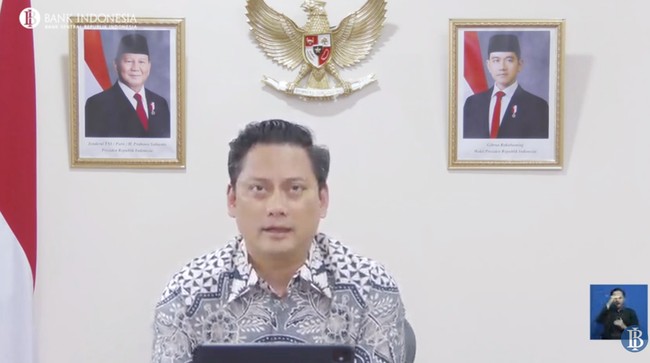
BI Deputy Governor Thomas A.M. Djiwandono explained that the scheme is designed to make it easier for global investors to conduct hedging transactions without having to deal directly with the constraints of domestic market access or time zone differences.
“Foreign exchange market hedging transactions through partner banks, or what we call Vastra. Vastra is a hedging instrument in which we open a channel for global investors to conduct hedging transactions easily through banks abroad that are directly connected to partner banks in the domestic market designated by BI,” said Thomas at a press conference following the BI Board of Governors Meeting (RDG), Wednesday (19/8/2026).
With that note, Vastra is essentially a hedging mechanism for exposure to portfolio investment assets that investors already hold in Indonesia, not a scheme for making new portfolio investments.
Therefore, the scheme is intended for foreign investors who already hold investment assets in the rupiah market, such as Government Securities (SBN), Bank Indonesia Rupiah Securities (SRBI), or Bank Indonesia Sukuk (SUVBI), and are registered with BI under the term Registered Global Investor (RGI).
“In the initial phase, these hedging transactions will be supported by rupiah investment portfolios. The instruments currently supported are SBN, SRBI, and SUVBI, and going forward we will continue to expand them,” Thomas stressed.
In practice, foreign investors holding rupiah-denominated assets face the risk of exchange rate changes when they later convert the investment value into their home currency. The rupiah exchange rate can change between the time they enter and the time they exit the investment.
When the rupiah weakens against the investor’s home currency, the value of the investment converted back can decrease, so that part or all of the investment gains in rupiah can be eroded by exchange rate losses.
Therefore, with the hedging scheme through forward instruments, domestic non-deliverable forwards (DNDF), and swaps facilitated by Vastra, investors can lock in the forex transaction rate for a future period, so that the value of their rupiah assets is better protected from exchange rate volatility.
In addition, with the Vastra scheme opening up space for back-to-back bank transactions, between the bank abroad where the investor submits the transaction and the partner bank domestically, the time zone problem can also be resolved, especially regarding the operational hours of banking services in Indonesia.
“The Vastra scheme is expected to accommodate hedging transaction decisions by global investors, including in dealing with time zones and limited direct access to the domestic market. With this, investors can also be directly connected to BI hedging instruments, including DNDF and BI Swaps,” said Thomas.