
BI reforms payment system industry regulations through seven key reinforcements
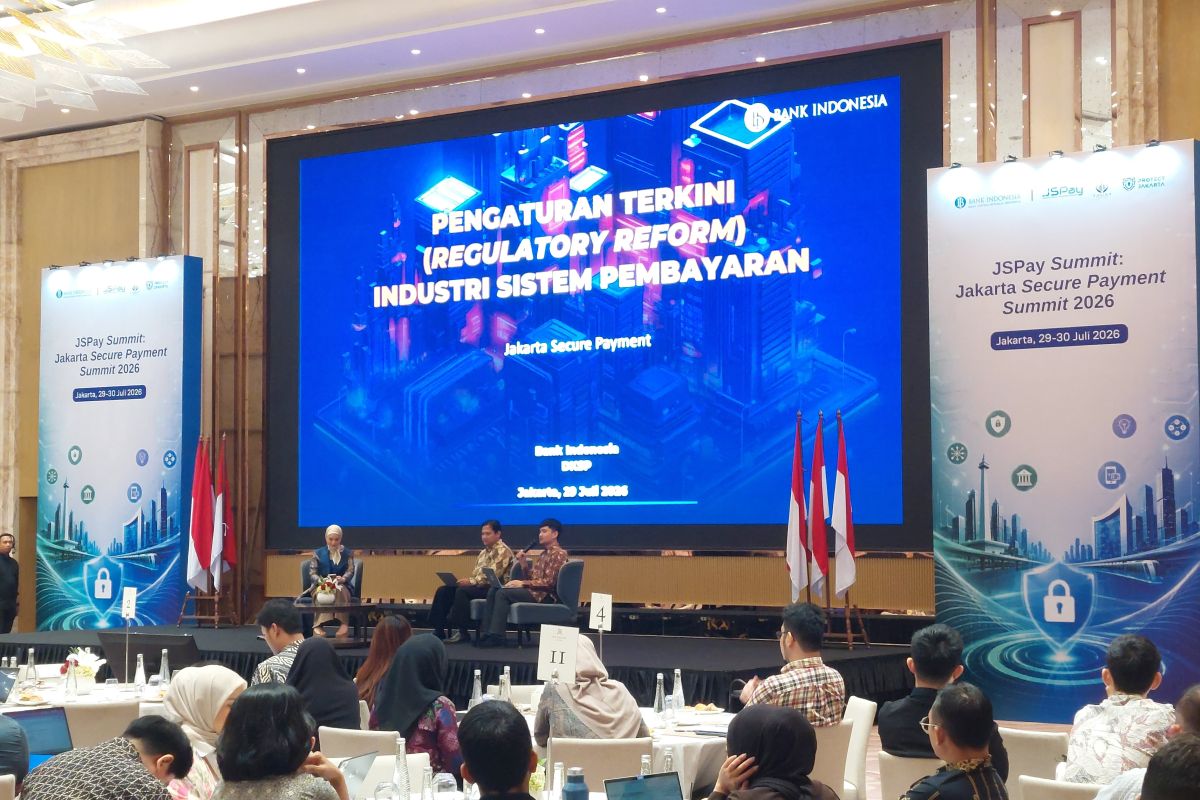
Jakarta (ANTARA) - Bank Indonesia (BI) is reforming the regulation of the payment system industry through seven areas of strengthening, in order to build an industry that is more adaptive, resilient, and able to keep pace with the rapid growth of digital transactions.
Aldo Ersan Mangasi, an analyst at Bank Indonesia’s Payment System Policy Department, said the reform forms part of the implementation of the Indonesian Payment System Blueprint (BSPI) 2030, prepared to safeguard the industry’s resilience amid rising digitalisation.
“Regulatory reform is being carried out to ensure the payment system industry remains agile in adapting to developments in digitalisation,” Aldo said in Jakarta on Wednesday.
Aldo explained that the reform comprises seven main aspects. First, the use of indicators covering Transactions, Interconnection, Competence, Risk Management, and Technological Infrastructure (TIKMI) as a measuring tool in the licensing process, the conduct of activities, performance evaluation, and the cessation of payment system providers’ activities.
Second, BI is reorganising participation in retail payment system infrastructure based on the classification of Principal and Non-Principal providers, according to each provider’s business scale and capability.
Third, the reform also covers the structuring of business activities according to risk level and the classification of payment system providers.
Fourth, strengthening regulations on providers’ cooperation with third parties. Fifth, aligning the supervisory function with TIKMI assessments, supported by integrated data infrastructure.
Sixth, strengthening the payment system infrastructure along with its data infrastructure. Seventh, strengthening institutions to support the development of digital innovation.
Aldo said all of these policies are designed so that innovation development continues in step with stronger governance and risk control.
He noted that the reform is set out in Bank Indonesia Regulation (PBI) Number 10 of 2025 on the Regulation of the Payment System Industry, reinforced by Board of Governors Member Regulation (PADG) Number 32 of 2025 as well as Technical Guidelines Number 1 of 2026 as the implementing guide in the field.
Nevertheless, Aldo said, restructuring the payment system industry requires the support of all industry players, associations, authorities, ministries, and related institutions.
“Bank Indonesia cannot go it alone, so collaboration is the key to building a healthy, competitive, and sustainable payment system ecosystem,” he said.