
BI Rate Rises to 5.25%, Rupiah Could Strengthen to Rp17,300
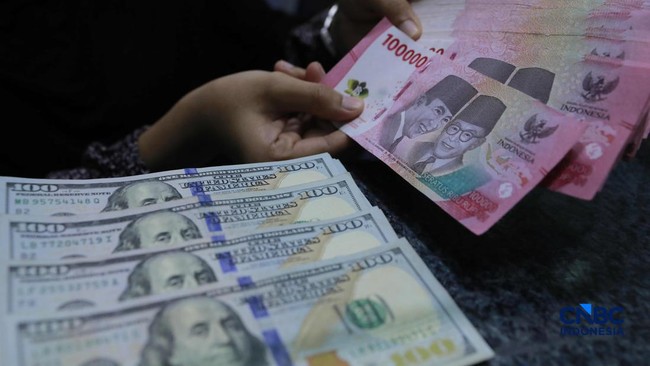
Jakarta, CNBC Indonesia – Bank Indonesia’s decision to raise the policy rate by 50 basis points to 5.25% could be an aggressive move needed to safeguard rupiah stability.
Fakhrul Fulvian, Chief Economist at Trimegah Sekuritas Indonesia, said the move is correct and shows the monetary authority does not want to be late in responding to market volatility. Consequently, if BI is slow to respond to the weakness, stabilisation costs would be much higher.
‘The decision is correct. This is not just a rate hike; it is a statement that Indonesia’s policy anchor is still being maintained. In such a situation BI should not be late. If late, stabilisation costs will be much higher,’ Fakhrul said in a statement released on Thursday (21 May 2026).
According to Fakhrul, the pressure on Indonesia is not ordinary volatility but a phase requiring pre-emptive monetary response. The policy rate increase will be a turning point for the rupiah after previously facing heavy pressure against the US dollar.
He projects the rupiah could strengthen gradually with an initial target around Rp17,300 per US, beforemovingtowardanewequilibriumaroundRp16, 800/US.
‘The rupiah has completed its overshooting phase. With a firm BI response, the market now has a new anchor. The Rp17,300 level becomes the first stopping point, and if policy coordination goes well, the Rupiah could move toward Rp16,800,’ he said.
Furthermore, with a combination of the BI Rate rise, FX interventions, strengthening DNDF/NDF, and expansion of CNH-Rupiah and LCT transactions, market confidence in rupiah strengthening will improve.
‘This is the time to gradually reduce dollar holdings. Not because global risk has disappeared, but because Indonesia has finally delivered a policy response strong enough,’ he said.
After BI raises the policy rate, the next step is to fix the structure of the domestic money and bond markets. According to Fakhrul, SRBI rates should begin to be reduced gradually to avoid drawing liquidity from government bonds and long-duration assets.
‘After the BI Rate rise, SRBI should not remain the main magnet for liquidity for too long. If SRBI is too attractive, funds will stay concentrated in short instruments. This could disrupt the SBN market, flatten the yield curve, and make policy transmission unhealthy,’ Fakhrul said.
He views normalising the yield curve as vital for markets to function normally again. A healthier yield curve would help investors re-enter long-term bonds, support financing for development, and improve expectations for the Rupiah.
Moreover, cohesion between Bank Indonesia and the Ministry of Finance is important. He said BI’s rate increase should be followed by clear fiscal communication, especially regarding energy subsidies, the strategy for issuing government bonds (SBN), and the government’s funding direction.
‘BI and the MoF must be in sync. BI anchors stability, MoF preserves fiscal credibility. If both move together, the Rupiah could strengthen, yields could be healthier, and markets will regain confidence in Indonesia’s broader story,’ Fakhrul said.
As is known, the rupiah exchange rate opened flat against the US dollar in Thursday trading (21 May 2026). Refinitiv data show the rupiah opening this morning at Rp17,600/US, unchangedfromthepreviousclose.OnWednesday(20May2026), therupiahclosedup0.54, after BI raised the policy rate by 50 basis points to 5.25%.