
BI Rate on Hold, a Cautious Move That Could Backfire
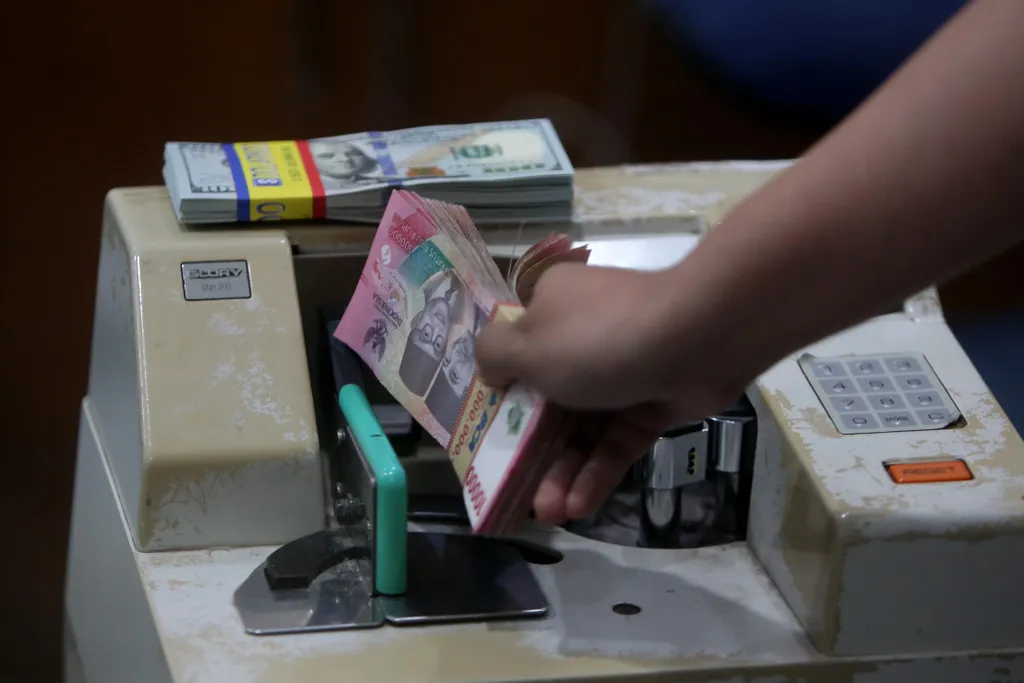
The government still needs to improve economic fundamentals, policy governance, and law enforcement.
KOMPAS
By Nina Susilo, Iqbal Basyari
23 Jul 2026 13:44 WIB · Ekonomi & Bisnis
JAKARTA, KOMPAS – The decision by Bank Indonesia to maintain the interest rate at 5.75 percent is appreciated as a cautious step that could encourage capital inflow. However, this relatively high maintained interest rate still carries risks and wide-ranging impacts.
“Bank Indonesia’s decision to maintain the BI Rate at 5.75 percent is a prudent and measured step amidst the increasing global uncertainty,” said Shinta Kamdani, Chairperson of the Indonesian Employers’ Association (Apindo), when contacted on Thursday (23/7/2026).
Previously, within a month, BI had taken quite aggressive interest rate policies. On May 19-20, 2026, BI raised its benchmark interest rate by 50 basis points from 4.75 percent to 5.25 percent.
Subsequently, on June 9, 2026, BI also raised the interest rate by 25 basis points to 5.50 percent. This action was taken outside the monthly schedule amid a sharp depreciation of the rupiah. On June 17-18, 2026, BI again increased the benchmark interest rate to 5.75 percent.
In the monthly Governor’s Board Meeting (RDG) on July 21-22, 2026, in addition to maintaining the benchmark interest rate, BI also did not change the Deposit Facility and Lending Facility rates by 25 basis points (bps), remaining at 4.75 percent and 6.5 percent, respectively.
Bank Indonesia believes that the increasing uncertainty in the global economy and financial markets necessitates a strengthening of responses and synergy between fiscal and monetary policies to enhance external resilience, maintain stability, and encourage domestic economic growth.
According to Shinta, the decision to maintain interest rates provides some leeway for the real sector. Moreover, considering that BI had previously raised the benchmark interest rate quite aggressively.
Globally, the re-escalation of conflict in the Middle East has pushed oil prices back above US$90 per barrel. Furthermore, expectations of higher-for-longer US central bank policy, the Federal Reserve (The Fed), continue to exert pressure on financial markets and exchange rates in developing countries, including Indonesia.
In this situation, according to Shinta, the business world continues to view macroeconomic stability as an important prerequisite for the sustainability of investment and business activities. However, at the same time, this stability needs to be balanced with sufficient space for the real sector to continue to grow and expand.
Although the decision to maintain the BI Rate provides a positive signal as it does not add new pressure on business financing, Shinta acknowledges that the challenges faced by business actors at present have not fully diminished.
Amidst the re-escalation of geopolitical dynamics, the business world is still facing multiplier effects such as high production costs due to rising energy and raw material prices, exchange rate volatility, and various components of the high-cost economy at the domestic level.
“On the other hand, the impact of rising interest rates in recent months has also begun to be felt through increased capital costs and loan interest, particularly for companies that rely on bank financing for working capital and investment,” he stated.
Therefore, according to Shinta, the business world views that stability and growth are not two conflicting objectives, but rather must proceed in tandem.
Maintaining macroeconomic stability will enhance market confidence and provide certainty for business actors. The continuity of investment and activities in the productive sector is a crucial factor in sustaining economic growth momentum, strengthening competitiveness, and creating job opportunities.
He also assessed that the main challenge at present is no longer solely the interest rate level, but how to maintain a balance between macroeconomic stability and the momentum of growth in the real sector. The business world requires stability, but it also needs a conducive financing climate so that investment, business expansion, and job creation can continue to progress.
“Going forward, APINDO hopes that BI will continue to prioritize a balanced and data-dependent policy mix, so that exchange rate stability is maintained without excessive pressure on the productive sector. Furthermore, coordination between monetary and fiscal policies also needs to be continuously strengthened,” he said.
The government also appreciates Bank Indonesia’s decision to maintain the BI Rate. Coordinating Minister for Economic Affairs Airlangga Hartarto believes that the increase in interest rates will still have an impact on the real sector.
“By holding this, we hope the real sector can continue to move. After all, raising (interest rates) is the same as stepping on the brakes,” he told reporters at the Presidential Palace Complex in Jakarta on Wednesday (July 23, 2026).
Although the rupiah has only strengthened slightly, according to Airlangga, economic growth and credit growth are more important. By keeping the interest rate at 5.75 percent, credit growth is expected to be stimulated.
Contacted separately, University of Indonesia economist Kiki Verico assessed that the decision to hold interest rates showed that BI was quite confident that capital inflow had occurred, although it might not come from long-term foreign investment (FDI).
So far, according to Kiki, although interest rates were raised for the first time in May and for the second and third times in the following month, the value of the rupiah continued to weaken. However, when government policies in the real sector, including law enforcement actions, met market expectations, the value of the rupiah began to strengthen slightly.
According to him, the stabilization of the rupiah’s value currently heavily depends on investor expectations. Moreover, export performance appears to be declining with nickel dem