
BI Rate Hiked to 5.50%, Economist Predicts Rupiah Will Remain Under Pressure
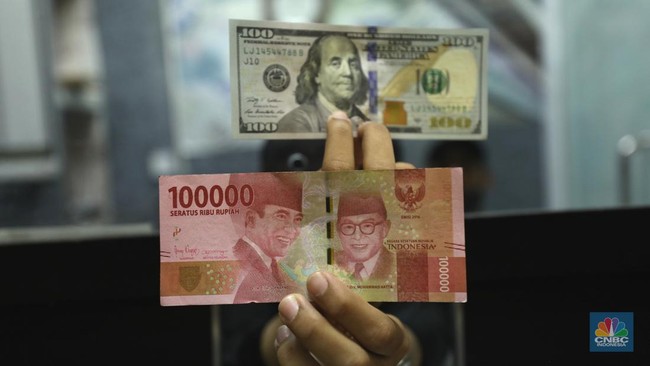
Economist Faisal Rahman of Bank Danamon views Bank Indonesia’s (BI) decision to raise the benchmark interest rate by 25 basis points to 5.5% today as a preemptive step to safeguard macroeconomic and financial stability amidst global turmoil. “We see the latest policy package as signalling a more hawkish monetary stance. Besides the 25bps policy rate hike, BI has implemented a comprehensive set of measures, including higher SRBI yields, lower hedging costs, expanded liquidity facilities, and increased foreign exchange intervention. These steps are designed to stabilise the Rupiah, restore investor confidence, attract capital inflows, and keep inflation under control amid an increasingly challenging global environment,” he stated on Tuesday.
Faisal believes BI still has room to raise interest rates further in the remainder of the third quarter. “We expect BI to raise the policy rate by an additional 25bps to 5.75% in the third quarter of 2026 as part of its ongoing effort to maintain macroeconomic and financial market stability amid escalating uncertainty,” Faisal said. Global uncertainty, Faisal noted, is also causing market participants to view the policy direction of the United States central bank, the Federal Reserve, as leaning hawkish. The Fed is also anticipated to raise interest rates once by the end of this year.
“Under these conditions, BI will likely maintain its pro-stability policy bias to preserve an adequate interest rate differential against the Fed Funds Rate, thereby sustaining the appeal of domestic financial assets in the eyes of global investors,” Faisal added. Vulnerabilities also extend domestically, particularly concerning the potential spillover effects of rising global energy and fuel prices on Indonesia’s inflation outlook, fiscal position, and external balance. Faisal said these risks could contribute to a widening twin deficit.
On the fiscal side of the twin deficit, weaker-than-expected government revenue collection could reduce fiscal flexibility at a time when interest payment obligations and energy subsidy spending are increasing, especially if the government continues to pursue an expansive growth agenda. Meanwhile, the external sector is likely to face mounting pressure from rising import costs, particularly for energy and other imported inputs, while export performance may remain weak amid slowing global economic activity and persistent uncertainty. Consequently, the current account deficit could widen further, adding pressure on the Rupiah. “We expect the currency to remain under pressure in the short to medium term, with the exchange rate potentially weakening towards the low of Rp18,300-18,500 per US$,” Faisal explained.