
BI Rate Hiked to 5.5 Percent: Positive and Negative Impacts According to Economist
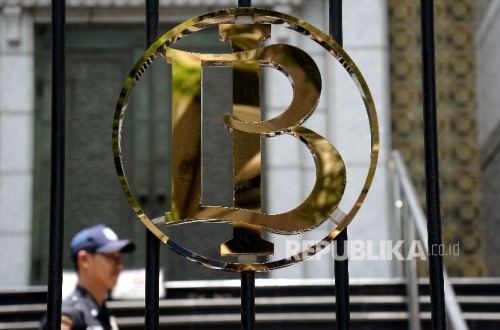
An economist at the Institute for Development of Economics and Finance (Indef), Rizal Taufikurahman, assesses that Bank Indonesia’s (BI) sudden decision to raise its benchmark interest rate, or BI Rate, by 25 basis points (bps) to 5.5 percent is a move with both pluses and minuses. The policy is judged capable of stemming the heavy outflow of capital, but it also has the potential to slow economic growth.
“In my opinion, Bank Indonesia’s decision to raise the BI Rate by 25 bps to 5.5 percent, outside the regular Board of Governors Meeting schedule, is a bold step and shows that the pressure on rupiah exchange rate stability has reached a level requiring a swift response,” Rizal said on Tuesday.
He stated that the BI policy is a strong signal to the market that the central bank continues to prioritise macroeconomic stability and is striving to maintain the attractiveness of domestic financial assets amid high global volatility and heavy capital outflows.
“On the positive side, the interest rate hike has the potential to strengthen the rupiah, keep inflation expectations in check, increase investor confidence, and reduce dependence on foreign exchange reserve interventions whose costs are increasingly large,” he said.
Nevertheless, Rizal assesses that there are also side effects from BI’s policy of raising its benchmark rate again, primarily the impact of stalling economic growth amid still-weakening public purchasing power.
“On the other hand, there are not insignificant consequences, namely increasing credit costs, stalling investment expansion and household consumption, as well as the potential for slowed economic growth when people’s purchasing power has not yet fully recovered,” he stated.
“This means that this policy is a difficult choice (policy trade-off), where BI chooses to sacrifice some short-term growth space in order to maintain more fundamental economic stability,” he continued.
Rizal said this means the success of the policy is not solely determined by the interest rate hike. According to him, what is far more important is the synergy between monetary and fiscal policy to restore market confidence, strengthen economic fundamentals, and boost the real sector.
“If we only rely on the BI Rate, the effect tends to be limited. However, if accompanied by fiscal discipline and credibility, structural reforms, fiscal productivity, and increased foreign exchange supply, then this policy can become a turning point as well as a bright spot in maintaining rupiah stability and supporting more sustainable economic growth,” he concluded.
BI abruptly announced its decision to raise the benchmark interest rate by 25 basis points to 5.5 percent. This was decided through a weekly Board of Governors Meeting (RDG) on Tuesday.
“The Board of Governors Meeting decided to again raise the BI Rate by 25 bps to 5.50 percent, the Deposit Facility rate by 25 bps to 4.50 percent, and the Lending Facility rate by 25 bps to 6.25 percent,” BI Governor Perry Warjiyo stated in an official release.
Perry explained that the BI Rate hike is a further step to strengthen rupiah exchange rate stabilisation from the impact of high global turmoil due to the war in the Middle East, as well as a pre-emptive measure to keep inflation in 2026 and 2027 within the government’s target range of 2.5±1 percent.
“This policy is also intended to increase yields to enhance the attractiveness of foreign portfolio investment inflows into Indonesia,” he said.
He explained that in evaluations since the 18-19 May 2026 RDG, the rupiah exchange rate showed weaker-than-expected developments. Aside from being caused by ongoing global turmoil and high domestic foreign exchange demand, the weakening was also driven by foreign portfolio investment outflows from Indonesia.
“In connection with this, Bank Indonesia views it as necessary to take further steps to strengthen rupiah exchange rate stabilisation by again increasing yields and a number of other incentives in monetary operations to encourage the inflow of foreign investment,” he said.
Source: jawawa.id (https://jawawa.id/newsitem/bi-rate-hiked-to-5-5-percent-positive-and-negative-impacts-according-to-economist-1780995455)
Originally published by Republika (https://ekonomi.republika.co.id/berita/tgctn6423/bi-rate-naik-ke-55-persen-ini-dampak-positif-dan-negatif-menurut-ekonom), translated from Indonesian